




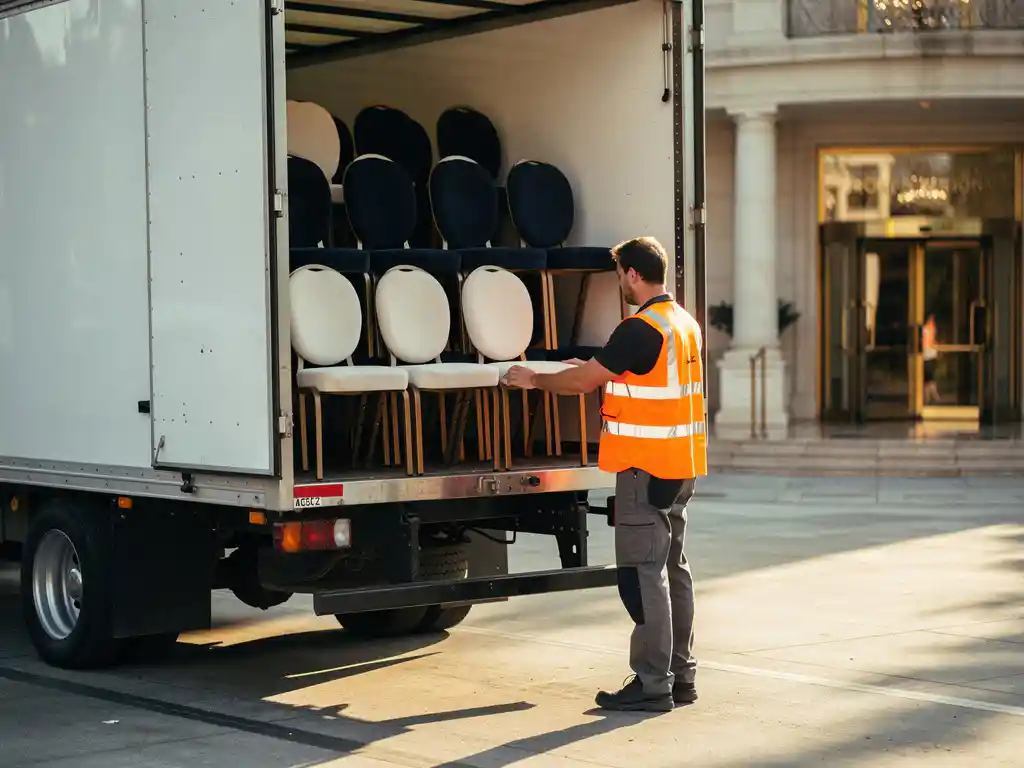
Managing furniture delivery and collection at events requires more than just booking a van and hoping for the best. Whether you are organising a trade show, a corporate conference, a product launch, or a large hospitality event, the logistics behind getting furniture to the right place at the right time can make or break the entire experience. A well-executed plan ensures your event looks polished, runs on schedule, and avoids the costly chaos of last-minute scrambling.
This guide walks you through every stage of event furniture management, from the initial planning phase right through to post-event collection. Follow these steps to keep your furniture logistics running smoothly from start to finish.
Plan your delivery and collection schedule in advance
Start by mapping out the full timeline of your event, working backwards from the moment doors open to guests. Furniture delivery at events is time-sensitive, and a clear schedule prevents clashes with other suppliers, venue restrictions, and setup crews. The earlier you lock in your logistics timeline, the more flexibility you have to adjust if something changes.
- Confirm the venue’s access windows for deliveries, including any restrictions on vehicle size or loading bay availability.
- List every furniture item required, noting quantities, dimensions, and assembly requirements.
- Set delivery windows that give setup crews enough time to position and arrange furniture before the event begins.
- Schedule collection immediately after the event ends or within the venue’s agreed breakdown window.
- Build buffer time into both delivery and collection slots to absorb delays without disrupting the wider event schedule.
After completing this step, you should have a written schedule that shows exact delivery and collection windows, the names of responsible contacts at each stage, and a clear understanding of venue constraints. Share this document with everyone involved in the logistics chain before moving forward.
Coordinate transport and vehicle requirements
With your schedule confirmed, the next step is matching your furniture inventory to the right transport. Event furniture transport involves more variables than standard deliveries. You may be moving large volumes of seating, tables, display units, or lounge furniture across multiple trips, often to venues in city centres with restricted access.
- Calculate the total volume and weight of all furniture to determine how many vehicles you need.
- Check whether the venue requires tail-lift vehicles, narrow-access vans, or specific loading equipment.
- Confirm parking permits or loading zone access with the venue or local authority if the location is in a restricted area.
- Arrange for enough drivers and handling crew to meet your delivery and collection windows without overtime pressure.
A common point where teams get stuck is underestimating vehicle requirements. It is better to arrange one extra vehicle than to discover on the day that a second trip is needed and there is no time for it. Verify your transport plan against your furniture list at least one week before the event.
Prepare furniture for safe transit and handling
Furniture that arrives damaged reflects poorly on the event and creates expensive problems. Proper preparation before loading protects your items during transit and speeds up the unloading process on arrival. This step is especially important for delicate, high-value, or branded furniture pieces.
- Wrap upholstered items in protective covers or shrink wrap to prevent scuffs and moisture damage.
- Disassemble any items that are safer to transport in parts, and keep all fixings in clearly labelled bags attached to the relevant piece.
- Use furniture blankets or foam padding for hard surfaces, corners, and glass elements.
- Label every item clearly with its destination zone or room within the venue to speed up placement on arrival.
- Create a loading manifest that lists every item, its condition before transit, and its assigned vehicle.
Once loaded, do a final check against your manifest before the vehicle leaves. This gives you a documented baseline if any damage occurs during transit and ensures nothing has been left behind. Good preparation at this stage saves significant time during the on-site setup phase.
Execute on-site delivery and placement
Arriving at the venue is where your preparation either pays off or falls short. On-site furniture delivery at events needs to be coordinated precisely, especially when multiple suppliers are working in the same space simultaneously. Clear communication and a designated point of contact on the ground are essential.
- Assign a logistics coordinator to be present throughout the delivery window and act as the single point of contact for drivers and venue staff.
- Unload items in the order they are needed, prioritising pieces that go into areas being set up first.
- Cross-reference each item against your manifest as it is unloaded to catch any missing pieces immediately.
- Follow the venue floor plan to place furniture in its correct position, checking against the event layout before finalising placement.
- Dispose of all packaging materials promptly to keep the venue clean and safe for other crews working in the space.
After delivery is complete, walk through the entire space with the event manager or venue contact to confirm everything is in place and undamaged. This sign-off step protects you and creates a shared record that delivery was completed as agreed. Any issues identified at this point can still be resolved before the event opens.
Manage collection after the event
Event furniture collection is often the most pressured part of the entire process. Venues typically impose strict breakdown deadlines, and fatigue among the crew after a long event day can lead to mistakes. Planning your collection with the same rigour as your delivery prevents damage, loss, and venue penalty charges.
- Brief your collection crew on the breakdown schedule and their specific responsibilities before the event ends.
- Conduct a quick condition check on each item as it is packed, noting any damage that occurred during the event.
- Repack items using the same protective materials used for delivery wherever possible.
- Load vehicles in reverse order to your delivery plan so that the first items off the truck at the warehouse are the last loaded.
- Complete a final sweep of the venue to ensure nothing has been left behind before signing off with venue staff.
Once all items are back at your storage facility, update your inventory records and flag any damaged pieces for repair or replacement before the next event. A post-event debrief with your logistics team, even a brief one, helps identify what worked well and what to improve for next time.
Work with a logistics partner for large-scale events
For events that involve high volumes of furniture, multiple venues, tight timelines, or international locations, working with a specialist project logistics partner transforms a complex operation into a manageable one. The steps above remain relevant, but a dedicated logistics partner takes on the heavy lifting of coordination, transport, and on-site execution so your team can focus on the event itself.
We specialise in exactly this kind of furniture logistics for events. Our team works from detailed floor plans and data before arriving on site, mapping every process and dependency in advance so that execution on the day is precise and efficient. Whether it is building out a full exhibition floor in two days or coordinating furniture delivery across a multi-day conference, we bring the vehicles, the crew, the warehousing, and the experience to handle it end to end.
Our warehousing solutions also mean that furniture can be stored, inspected, and prepared between events without you needing to manage storage logistics independently. For recurring events or ongoing event programmes, this creates a reliable, repeatable supply chain that reduces cost and effort over time.
If you are planning a large-scale event and want to discuss how we can support your furniture logistics, get in touch with our team to talk through your requirements. With more than a century of logistics experience and operations across 150 locations worldwide, we are well placed to help you deliver an event that runs exactly as planned.