




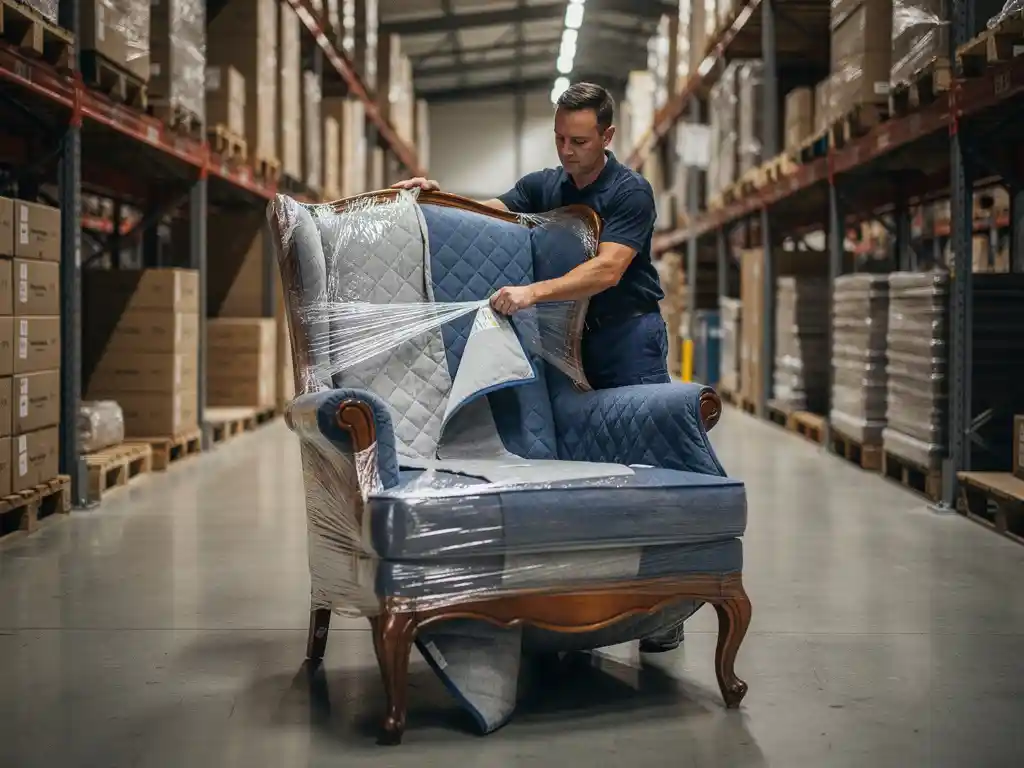
Large-scale furniture transport is one of those operations where small mistakes compound quickly. A missing component, an unlabelled crate, or a poorly wrapped corner piece can delay an entire delivery, damage expensive goods, and create costly rework. Whether you are managing a single commercial fit-out or coordinating deliveries across multiple sites, knowing how to pack furniture for transport correctly is the foundation of a smooth operation.
This guide walks you through each stage of the process, from gathering materials to verifying the final shipment. Follow these steps in order, and you will significantly reduce the risk of transit damage, inventory errors, and loading inefficiencies. For large-scale furniture logistics, precision at every stage is what separates a clean delivery from a chaotic one.
Gather the right materials before packing starts
Before a single piece of furniture is touched, make sure every packing material you need is on site and ready to use. Scrambling for supplies mid-pack leads to improvised solutions that rarely hold up during transport. Preparing your materials in advance also helps you estimate how long the packing process will take and how much space you will need.
For large-scale furniture packing, your standard material kit should include:
- Heavy-duty stretch wrap and bubble wrap for surface protection
- Moving blankets and furniture pads for cushioning during transit
- Corrugated cardboard sheets and corner protectors
- Packing tape, strapping bands, and a tape gun
- Foam padding in varying thicknesses for fragile components
- Resealable bags for hardware, screws, and small parts
- Permanent markers and pre-printed labels for identification
- Shrink wrap for bundling flat-pack components
Once everything is assembled, organise your materials by type and keep them accessible throughout the packing area. A well-stocked and organised packing station prevents delays and ensures every item receives the same standard of protection.
Disassemble and prepare each furniture piece correctly
Disassembly is where many large-scale furniture transport operations lose time and introduce errors. Rushing this stage or skipping it entirely increases the risk of damage and makes reassembly at the destination far more difficult. Approach each piece methodically.
- Identify which components can and should be removed, such as legs, shelves, doors, and drawers.
- Remove all detachable parts before wrapping the main frame.
- Place all screws, bolts, and fixings into labelled resealable bags immediately after removal.
- Tape or attach the hardware bag directly to the furniture piece it belongs to.
- Take a photograph of each item before and after disassembly for reference during reassembly.
After disassembly, inspect each piece for pre-existing damage and note it in your inventory. This protects you from disputes at the delivery point and gives you a clear picture of the condition of each item before it enters the transport chain. With all pieces disassembled and documented, you are ready to begin wrapping.
Wrap and protect furniture to prevent transit damage
Wrapping is your primary defence against scratches, dents, and breakage during transit. For large-scale operations, consistency matters as much as thoroughness. Every piece should be wrapped to the same standard regardless of size or perceived fragility.
Protecting surfaces and edges
Start by applying corner protectors to all exposed edges and corners, which are the most vulnerable points during loading and transit. Follow with a layer of bubble wrap or foam padding secured with stretch wrap. For high-gloss or lacquered surfaces, use non-adhesive foam sheeting directly against the finish before applying any tape or stretch wrap.
Wrapping frames and upholstered pieces
For upholstered furniture, wrap the entire piece in a moving blanket first, then secure it tightly with stretch wrap to hold the blanket in place. Avoid wrapping upholstered items in plastic alone, as trapped moisture can cause mould or fabric damage during longer journeys. Wooden frames benefit from a double layer of corrugated cardboard on flat surfaces before the outer wrap is applied.
Once wrapped, press gently on each piece to confirm that padding is even and that no hard edges are exposed. If you can feel a corner or edge through the wrapping, add another layer before moving on.
Label and inventory every item before loading
A well-wrapped piece of furniture that cannot be identified on arrival is a problem waiting to happen. Labelling and inventory management are not administrative extras; they are operational necessities for large-scale furniture logistics.
- Assign a unique reference number to each furniture piece or bundle.
- Create a master inventory list that maps each reference number to its description, destination room or zone, and any handling notes.
- Attach a durable, clearly printed label to each item in a visible location that will not be obscured by wrapping.
- Cross-reference the label against the inventory list before the item moves to the loading area.
- Mark fragile items with both a written label and a visual indicator such as a coloured sticker or arrow showing the correct orientation.
For multi-site deliveries, include the destination address on every label, not just the delivery manifest. This single habit prevents misrouted items and saves significant time during unloading. With your inventory complete and every piece labelled, you are ready to begin the loading process.
Load furniture in the correct sequence and configuration
Loading order and configuration directly affect both the safety of the goods and the efficiency of the delivery. Loading without a plan almost always results in items that need to be moved mid-route or unloaded in the wrong order at the destination.
- Load the heaviest and most structurally stable pieces first, positioning them against the front wall of the vehicle.
- Stack lighter items on top of heavier ones, never the reverse.
- Place fragile or high-value pieces where they will not be compressed by surrounding items.
- Use strapping bands to secure groups of items to the vehicle walls or load bars at regular intervals.
- Fill gaps between items with moving blankets or foam blocks to prevent shifting during transit.
- For multi-stop deliveries, load in reverse delivery order so the first delivery comes off last in and first out.
Once loading is complete, walk the length of the vehicle and check that no items are leaning, unsecured, or at risk of toppling. Gently push against stacked items to test stability. A properly loaded vehicle should have no movement or rattling when you rock the load by hand.
For complex project deliveries across multiple locations, project logistics planning can help structure loading sequences and delivery schedules to minimise handling errors at scale.
Inspect and verify the shipment before departure
The final check before the vehicle leaves is your last opportunity to catch errors without consequence. A structured pre-departure inspection takes only a few minutes and can prevent hours of rework at the other end.
- Walk through the loaded vehicle with your master inventory list and confirm that every item on the list is present and accounted for.
- Check that all labels are visible and readable from the vehicle entrance.
- Confirm that all strapping and securing is tight and that no items have shifted during the final stages of loading.
- Verify that hardware bags are attached to their corresponding furniture pieces.
- Ensure that the driver has a copy of the inventory list and the delivery schedule with addresses and contact details for each stop.
Sign off the shipment only when every item on the checklist is confirmed. If anything is missing or incorrectly packed, resolve it before departure rather than after arrival. This final verification step is what closes the loop on the entire packing process and gives you confidence that the shipment will arrive as planned.
Packing furniture for large-scale transport without errors is a matter of process discipline, not a single action. Each step builds on the last, and consistency across all of them is what produces reliable results. If you are managing high-volume or specialist furniture deliveries and want a partner with the infrastructure and experience to handle the full chain, our furniture transport services cover everything from packing and warehousing through to final installation. We have been doing this since 1924, and we know what it takes to get furniture where it needs to go, intact and on time.