




A hotel renovation rarely stops the world. Guests check in, staff keep working, and construction crews push forward, all at the same time. Coordinating furniture delivery on top of that is one of the most demanding challenges in hotel fit-out planning. Get it wrong and you end up with sofas blocking fire exits, beds arriving before the flooring is finished, or entire shipments sitting in a corridor for days because the room is not ready.
This guide walks you through how to phase furniture delivery during a hotel renovation so that every item arrives at the right time, in the right place, without disrupting operations or damaging your investment. Follow these five steps and you will have a delivery plan that holds up under real-world pressure.
Map your renovation phases before scheduling deliveries
Before a single delivery date goes into the calendar, you need a clear picture of how the renovation unfolds. Hotel fit-out projects are almost always divided into zones, floors, or wings that progress in sequence. Your furniture delivery schedule must mirror that construction sequence exactly, not run parallel to it on its own timeline.
- Obtain the full construction programme from your project manager and identify the practical completion date for each zone, not just the theoretical handover date.
- Add a buffer of at least three to five working days between practical completion and the first furniture delivery for each zone. Snagging, deep cleaning, and final inspections always take longer than planned.
- List every furniture category by zone: beds, case goods, soft seating, loose accessories, and fixed items that require installation. Assign each category to a specific delivery phase.
- Cross-reference your delivery phases with the hotel’s occupancy calendar. Avoid scheduling large deliveries during high-occupancy periods or around major events.
Once you have mapped the phases, share the schedule with your project logistics partner as early as possible. A detailed phase map is the foundation everything else is built on. Without it, every subsequent step becomes reactive rather than planned.
Coordinate storage and staging for each delivery phase
Phased delivery almost always means that some furniture arrives before the space is ready to receive it. That gap between arrival and installation requires a storage and staging strategy. Without one, items pile up in corridors, get damaged, or disappear into the wrong rooms.
Identify a dedicated staging area for each phase. This could be a cleared floor of the hotel, a secure area within the building, or an off-site warehouse. Off-site warehousing solutions are often the most practical option for large renovations because they keep the construction site clear and allow furniture to be pre-assembled, inspected, and labelled before it ever enters the building.
- Calculate the volume of furniture arriving in each phase and confirm your staging area can accommodate it with room to manoeuvre.
- Label every item clearly with the destination room number, floor, and phase number before it leaves the warehouse.
- Create a staging inventory list for each phase so you can verify all items are present before the delivery window opens.
- Establish a check-in and check-out process for the staging area so nothing leaves without being logged.
After completing this step, you should have a named staging location for each phase, a labelled inventory, and a process for tracking movement. If any of those three elements are missing, resolve them before moving forward.
Plan access routes and delivery windows around live operations
A hotel renovation does not pause for deliveries. Guests are using lifts, housekeeping is moving through corridors, and contractors are working in adjacent areas. Planning your access routes and delivery windows around these realities is what separates a smooth fit-out from a chaotic one.
- Walk every proposed delivery route with your logistics coordinator before the first delivery. Note lift dimensions, door widths, corridor turning points, and any areas where guest or staff traffic will conflict with delivery movement.
- Agree on dedicated delivery time windows with hotel management. Early morning slots before guest activity peaks are typically the most practical for large items.
- Confirm which lifts are designated for goods and which are reserved for guests. If a goods lift is not available, factor stair-carry time into your delivery schedule.
- Brief the delivery crew on the access plan before they arrive on site. Do not assume they will figure it out on the day.
With your access plan confirmed, communicate it in writing to all parties: the hotel operations team, the construction project manager, and your logistics provider. A shared, written access plan prevents the most common on-site conflicts and gives everyone a reference point when questions arise.
Protect furniture in transit and on-site during renovation
Renovation sites are hostile environments for furniture. Dust, debris, moisture, and foot traffic can damage items that survived the journey from the factory in perfect condition. Protection needs to be active at every stage, from loading to final placement.
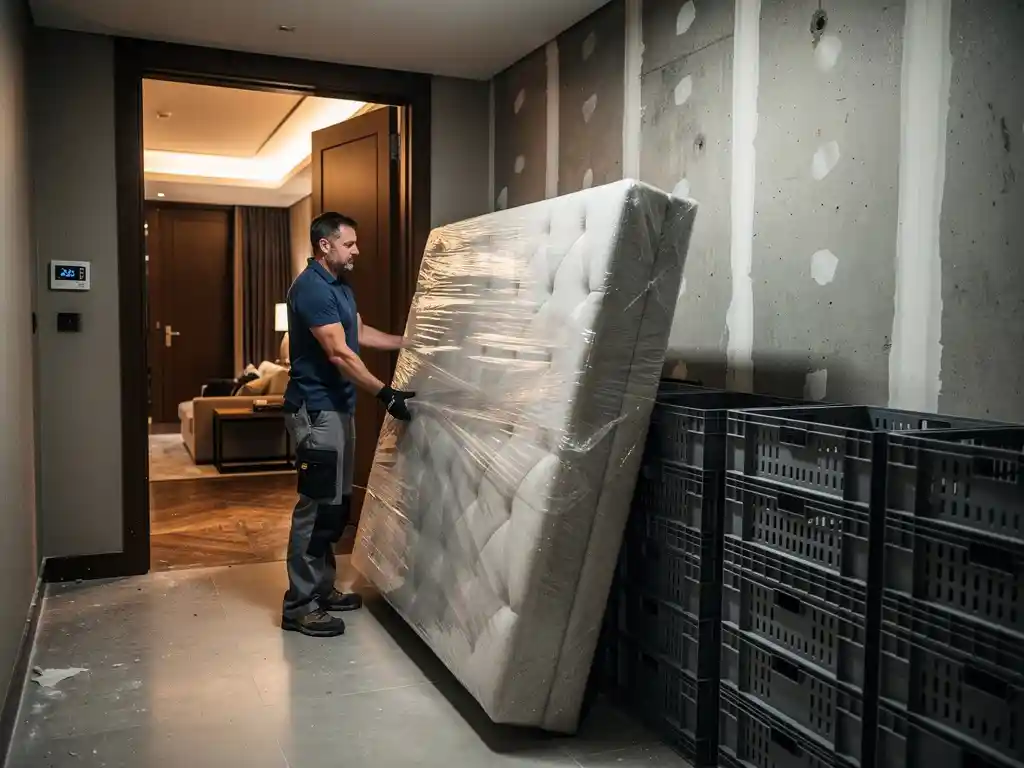
Specify your protection requirements clearly when briefing your logistics provider. Furniture transport for hotel fit-outs should include blanket wrapping or custom packaging for upholstered pieces, corner protection for case goods, and sealed plastic wrap for any items that will be staged in a construction zone. Specialist furniture transport teams understand these requirements and can apply the right protection without slowing the delivery process.
- Inspect all packaging on arrival at the staging area before items are moved into the hotel. Document any transit damage with photographs immediately.
- Keep protective wrapping on furniture until the room is fully clean and ready for final placement. Remove it only at the point of installation.
- Use floor protection in all delivery routes: hardboard or corrugated cardboard on finished floors, and edge protection on any door frames that will carry heavy or bulky items.
- Store fragile or high-value items separately from general furniture and restrict access to those areas.
After each delivery, do a visual check of the staging area and any installed items. Catching damage early means you can raise a claim or arrange a replacement before it affects the room handover date.
Verify completion and close out each delivery phase
Each phase of a phased furniture delivery should be formally closed out before the next one begins. This discipline keeps the project accountable, surfaces problems early, and gives you a clear record for snagging and handover purposes.
- Check every delivered item against the phase inventory list. Confirm quantities, room assignments, and condition for each piece.
- Walk the completed rooms with the hotel project manager and sign off on placement, assembly, and any installation work.
- Raise a formal snag list for any items that are damaged, missing, or incorrectly placed. Assign responsibility and a resolution deadline for each item.
- Clear the staging area used for that phase fully before the next delivery phase begins. A clean staging area prevents mix-ups between phases.
- Update the master delivery schedule to reflect what has been completed and confirm the timeline for the next phase.
Closing out each phase properly is what gives you control over the whole project. By the time the final phase is complete, you will have a documented record of every delivery, every room, and every resolved snag. That record protects everyone involved and makes the final hotel handover straightforward.
Phased hotel renovation furniture delivery is a discipline, not just a schedule. The teams that do it well plan in detail before the first truck arrives, stay flexible when the construction programme shifts, and treat every phase completion as a milestone worth verifying. If you are managing a hotel fit-out and want to discuss how we can support your project logistics from warehousing through to on-site installation, get in touch with our team to talk through what your project needs.