




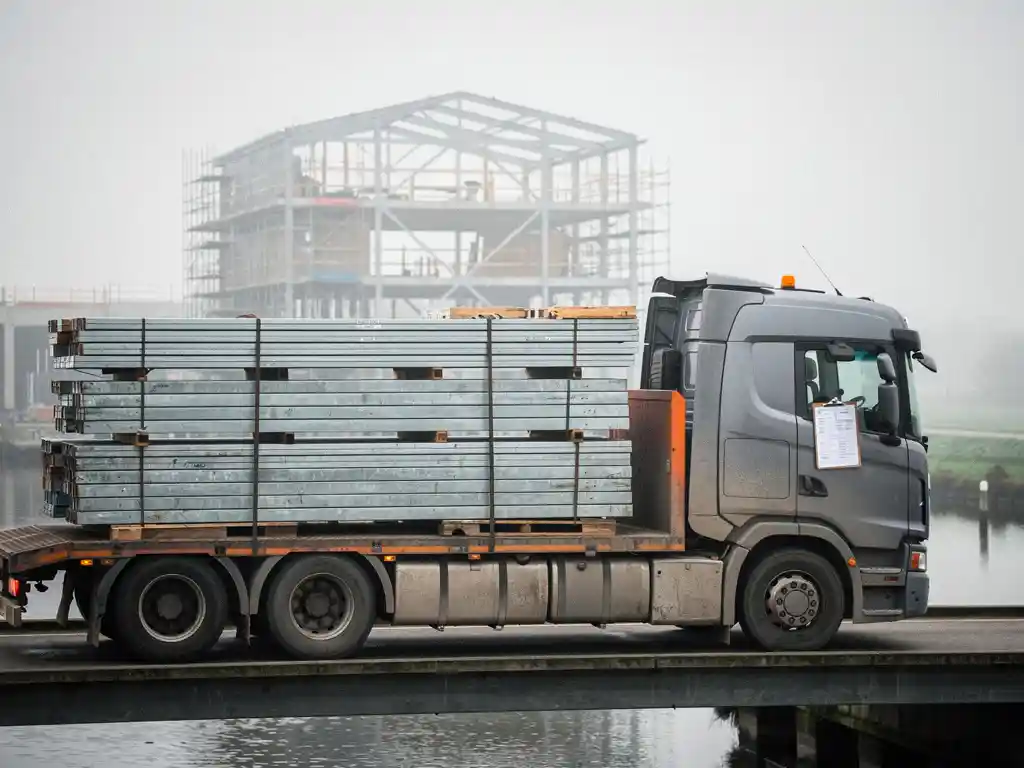
Planning international deliveries to construction projects in the Netherlands takes more than booking a truck and hoping for the best. Between cross-border regulations, tight site schedules, and the coordination of multiple parties, even experienced logistics teams can run into costly delays. This guide walks you through the process step by step, from gathering your initial project requirements all the way through to evaluating what went well and what to improve next time.
Whether you are shipping furniture, fixtures, or specialist equipment from outside the EU, the principles here apply broadly to any international freight destined for an active construction site in the Netherlands. Follow each step in order and you will achieve a smooth, on-time delivery with minimal surprises.
Gather project requirements before planning begins
Before any transport can be arranged, you need a complete picture of what is being shipped, where it is going, and what constraints exist at the destination. Skipping this step is the single most common reason deliveries go wrong. Incomplete information at the start creates expensive problems later.
Collect the following details upfront:
- Full inventory of goods, including dimensions, weight, and any fragile or high-value items
- Delivery address and specific entrance or unloading point at the construction site
- Site access restrictions, such as low bridges, narrow roads, or permit requirements for heavy vehicles
- Name and contact details of the site manager or project coordinator on location
- Any installation or assembly requirements that affect how goods must be packaged or sequenced
- Country of origin for each item, as this affects customs documentation
Once you have gathered this information, you can confirm whether a single delivery will suffice or whether phased deliveries are needed to match the construction programme. A complete requirements list also prevents last-minute changes that disrupt the entire supply chain.
Map the transport route and select the right freight mode
With your project requirements confirmed, the next step is identifying the most practical route from origin to the Dutch construction site and choosing the freight mode that fits your cargo, timeline, and budget.
For most international deliveries to the Netherlands, road freight is the dominant choice for European origins because of the country’s excellent motorway network and proximity to major logistics hubs. For intercontinental shipments, sea or air freight will be required for the primary leg, with a road connection for the final delivery.
- Identify the origin country and assess whether the cargo qualifies for road, sea, air, or a multimodal combination
- Check the total transit time against the construction site’s delivery window and work backwards to establish a dispatch date
- Evaluate whether the cargo dimensions require a standard curtainsider, a flatbed, or a specialist vehicle such as a crane truck for heavy lifts
- Confirm whether the construction site can receive a full truckload or whether groupage is more practical given the cargo volume
- Identify any route-specific restrictions in the Netherlands, including municipal low-emission zones or time-window restrictions in city centres
After completing this step, you should have a confirmed freight mode, a realistic transit timeline, and a clear understanding of any vehicle requirements at the delivery end. If the route involves multiple legs or carriers, document each handover point clearly before moving forward.
Arrange customs clearance and cross-border documentation
For goods entering the Netherlands from outside the European Union, customs clearance is a critical stage that can halt a delivery entirely if documentation is incomplete. Even for intra-EU shipments, certain goods categories require specific certificates or compliance documents.
Prepare the following documents well in advance of the planned departure date:
- Commercial invoice with accurate goods descriptions, values, and HS tariff codes
- Packing list that matches the invoice line by line
- Bill of lading or airway bill, depending on the freight mode used
- Certificate of origin where required for preferential duty rates
- Import declaration (in the Netherlands, filed through the Douane portal or via a licensed customs agent)
- Any product-specific certificates, such as CE marking documents for equipment or CITES permits for regulated materials
Engage a licensed customs broker early, particularly if the goods are high-value or fall into a complex tariff category. Errors on customs declarations can lead to holds at the border that last days. Our project logistics team handles customs clearance as part of an integrated service, which removes this coordination burden from your team entirely. Verify that your customs entry has been accepted and that no queries are outstanding before the shipment departs the origin country.
Coordinate delivery timing with the construction site schedule
With your route confirmed and customs documentation in order, the next step is aligning the physical delivery with what is actually happening on site. Construction projects run to strict programmes, and arriving with materials before the relevant trade is ready, or after a critical installation window has closed, creates real problems for the project team.
- Contact the site manager or project coordinator to confirm the delivery window and any blackout dates when the site cannot accept deliveries
- Check whether a Just-in-Time delivery is required to avoid goods sitting unprotected on site, or whether a staging area is available for temporary storage
- Confirm the unloading method available on site, such as a forklift, crane, or manual handling, and ensure the vehicle and packaging are compatible
- Agree on a communication protocol so the site team receives a confirmed arrival time at least 24 hours in advance
- Build contingency time into the schedule for customs delays, traffic disruptions, or vehicle breakdowns on long-haul routes
After this step, you should have a confirmed delivery slot that is locked into both the logistics plan and the construction programme. If warehousing near the site is needed to bridge the gap between goods arriving in the Netherlands and the site being ready, arrange this in advance rather than improvising on the day.
Execute the delivery and manage on-site handover
Execution day is where all the preparation pays off. The goal is a controlled, documented handover that leaves no ambiguity about what was delivered, in what condition, and to whom.
Brief the driver or delivery team on the site access requirements, the contact person on site, and any specific unloading instructions before departure. Confirm that all delivery documentation, including the packing list and any installation instructions, travels with the shipment.
- Arrive within the agreed delivery window and check in with the site manager before beginning unloading
- Unload goods in the sequence agreed with the site team, prioritising items needed immediately for ongoing work
- Inspect goods jointly with the site representative as they are unloaded and note any visible damage on the delivery receipt before signing
- Obtain a signed proof of delivery that records the date, time, recipient name, and condition of goods
- Remove all packaging waste from site if this was agreed as part of the service scope
Once the handover is complete and a signed delivery receipt is in hand, the physical delivery is done. Any discrepancies between the packing list and what was actually received must be noted immediately, as claims become significantly harder to resolve once the delivery team has left the site.
Evaluate the delivery process and resolve common issues
After every international delivery to a construction site, take time to review what happened against what was planned. This step is often skipped under time pressure, but it is the fastest way to improve performance on the next project.
Common issues to review include:
- Customs delays: Were documents submitted early enough? Were HS codes accurate? If clearance was slow, identify the specific cause and update your documentation checklist
- Timing misalignment: Did the delivery arrive during a period when the site could not receive it? Review the communication process with the site team and tighten the confirmation protocol
- Damage on arrival: Was packaging adequate for the freight mode used? Were fragile items clearly marked and handled accordingly?
- Vehicle access problems: Did the vehicle type match the site access constraints? Update your site survey checklist to capture this information earlier next time
Document the outcomes, share findings with everyone involved in the delivery chain, and update your planning templates before the next project begins. For complex or recurring construction project deliveries, working with a specialist logistics partner who has direct experience across more than 150 locations worldwide means that many of these common issues are anticipated and resolved before they arise. The goal is not a perfect first delivery but a consistently improving process that protects your project timelines every time.