




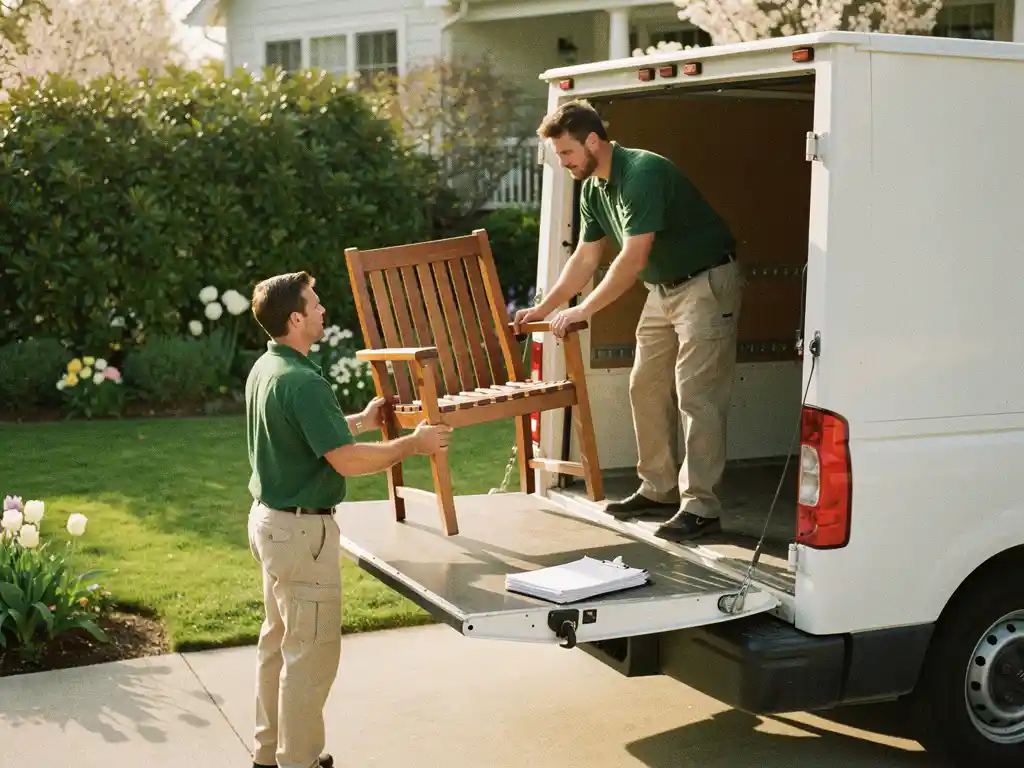
Spring is the busiest season for garden furniture sales, and the pressure on delivery teams builds fast. Retailers, distributors, and logistics managers all face the same challenge: how do you handle a surge in last-mile delivery volume without missing windows, frustrating customers, or burning out your drivers? The answer lies in structured time-slot delivery planning, set up well before the first warm weekend of the year.
This guide walks you through exactly how to plan time-slot delivery for garden furniture during the spring peak. Follow these steps in order and you will have a delivery scheduling system that handles volume, reduces failed deliveries, and keeps customers informed from booking to doorstep.
Gather what you need before scheduling deliveries
Before you open a single planning tool or assign a single driver, collect the inputs your scheduling system depends on. Trying to build a time-slot delivery plan without complete data is one of the most common reasons spring logistics operations run into trouble. Garden furniture is bulky, often requires two-person handling, and frequently involves assembly on site, so the margin for planning errors is low.
Pull together the following before you begin:
- Your full product catalogue for the season, including dimensions, weights, and whether items ship assembled or flat-packed
- Driver and vehicle availability across the full spring period, including any pre-booked leave
- Warehouse capacity and current stock locations, particularly for oversized items like garden sets and parasols
- Any service commitments already confirmed with retail or B2B clients, including agreed lead times
- Postcodes or delivery zones you will be covering, grouped by geography
- Your delivery software or transport management system login and current configuration
Once you have these inputs gathered in one place, you are ready to move into volume forecasting. If anything on this list is incomplete, resolve it now. A gap in vehicle availability or unclear product specs will create bottlenecks later that are much harder to fix mid-season.
Map your spring delivery volume and peak windows
Spring delivery planning for garden furniture is not a single peak, it is a series of them. Volume typically builds from late March, spikes around Easter, dips briefly, then surges again through May bank holidays and into early June. Understanding this shape helps you allocate resources proportionally rather than scrambling week by week.
Use your previous years’ order data as a starting point. Look at order volumes by week, average items per delivery, and the ratio of residential to commercial drops. If you are entering a new market or growing your garden furniture offer in 2026, use your supplier’s sell-through forecasts and any confirmed pre-orders to model demand.
- Plot weekly order volume across March through June using historical data or forecasts
- Identify your top three or four peak weeks and mark them clearly in your planning calendar
- Calculate average delivery time per stop for garden furniture, factoring in unloading, placement, and any light assembly
- Multiply stops per day by average stop time to find your realistic daily delivery capacity per vehicle
- Compare that capacity against your peak week volume to identify where you will need additional resources
After completing this step, you should have a clear picture of where your capacity is tight and where it is comfortable. The weeks where demand exceeds capacity are your planning priority. Address those gaps now, whether through additional vehicles, subcontracted furniture transport capacity, or adjusted lead times communicated to customers in advance.
Set up time-slot windows that match operational capacity
With your volume map complete, you can now design time-slot windows that are realistic rather than aspirational. The most common mistake in delivery scheduling is offering customers too many narrow slots without accounting for travel time between stops, loading time at the warehouse, and the unpredictability that comes with large item delivery.
For garden furniture, two-hour windows are generally the practical minimum. Tighter slots work for parcels, but a garden dining set or a large corner sofa requires unloading, positioning, and sometimes basic assembly. Build your windows around what your drivers can actually achieve in a day, not what looks neat on a booking calendar.
- Define your working day start and end times, accounting for warehouse loading before the first drop
- Divide the day into two-hour or three-hour windows, for example 08:00-10:00, 10:00-12:00, 13:00-15:00, 15:00-17:00
- Set a maximum number of bookable slots per window per route, based on your capacity calculation from the previous step
- Block out a buffer at the end of each day for late runs, traffic delays, or re-attempts on failed deliveries
- Configure these windows in your transport management system or booking platform before opening slots to customers
Verify this step by running a test route through your system with a realistic stop count. If the route finishes comfortably within the day with buffer time remaining, your slot structure is workable. If it runs over, reduce the number of bookable slots per window or extend your window lengths before going live.
Communicate and confirm slots with end customers
A well-structured time-slot delivery system only works if customers receive clear, timely information and respond to it. For garden furniture, where deliveries often require someone to be home to receive bulky items, communication quality directly affects your first-attempt delivery rate.
Send a slot confirmation as soon as a delivery is booked or dispatched from the warehouse. Include the date, the time window, a contact number for the driver or depot, and clear instructions on what the customer should prepare, for example, clearing access to the garden or having a second person available for heavy items.
- Trigger an automated confirmation message at the point of booking, via email or SMS
- Send a reminder 24 hours before the delivery window with the driver’s estimated arrival if available
- Include a simple reschedule link or phone number so customers can change their slot without calling a general queue
- Confirm the driver has the customer’s contact details loaded before leaving the depot
After setting this up, track your first-attempt delivery rate across the first two weeks of the season. A rate above 90 percent suggests your communication flow is working. If you are seeing frequent missed deliveries, review whether customers are receiving messages in time and whether your slot windows are realistic enough for customers to plan around. Our team at Jan Krediet has found that proactive communication, rather than reactive chasing, is what separates smooth spring seasons from chaotic ones. You can learn more about how we approach this on our about us page.
Adjust your plan when spring disruptions occur
Even the best spring delivery plan will face disruptions. A late frost delays garden furniture assembly work. A supplier shipment arrives two days behind schedule. A driver calls in sick on the busiest Saturday of April. The difference between a resilient operation and a reactive one is how quickly and calmly you can adjust without letting the disruption cascade through the week.
Build a disruption response process before the season starts, not during it. Define in advance who has the authority to reassign slots, which customers get priority rebooking, and what your communication template looks like when a slot needs to move.
- Identify a single point of contact for daily disruption decisions, typically a dispatch manager or planning lead
- Maintain a short list of flexible customers who have indicated they can accept a changed slot at short notice
- Keep a reserve of unassigned capacity on your two or three highest-risk weeks, even if it means slightly lower utilisation on those days
- When a disruption occurs, notify affected customers within two hours with a new slot offer rather than a vague delay message
- Log every disruption and its cause so you can identify patterns and adjust your planning model for the following week
After each disruption event, spend ten minutes reviewing what triggered it and whether your planning model could have absorbed it better. Over the course of a spring season, these small reviews compound into a significantly more robust operation. If your volume or geographic spread is growing and in-house capacity is consistently stretched, it may be worth exploring contract logistics arrangements that give you flexible surge capacity without permanent overhead costs.