




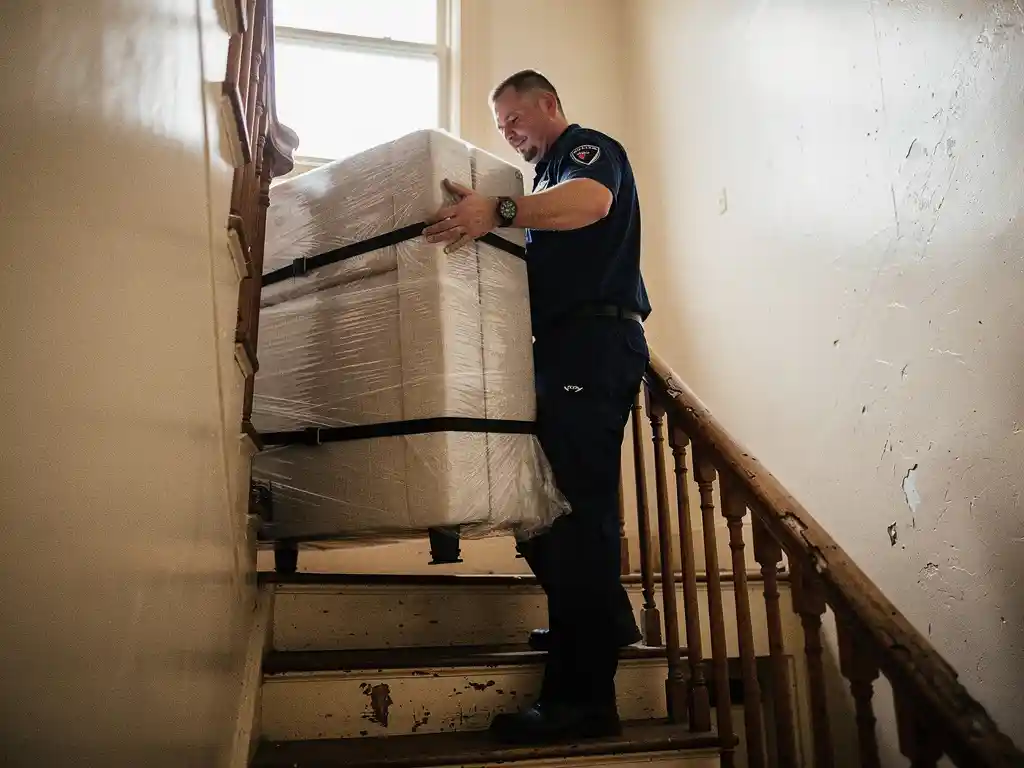
Moving furniture to upper floors is one of the most physically demanding and damage-prone parts of any delivery or relocation. Whether you are delivering a sofa to a third-floor apartment or furnishing an entire office building, the risk of scratches, dents, and structural damage increases significantly the moment stairs are involved. The good news is that most damage is entirely preventable with the right preparation and technique.
This guide walks you through every stage of the process, from gathering your equipment to inspecting the finished delivery. Follow these steps and you will protect both the furniture and the building throughout the move.
Gather the right tools and materials beforehand
Successful furniture transport to upper floors starts well before anyone lifts a single item. Arriving on site without the right equipment forces improvisation, which is where most damage occurs. Prepare everything in advance so the team can work efficiently and safely from the first carry to the last.
- Moving blankets and furniture pads for wrapping surfaces
- Stretch wrap or plastic film to hold padding in place
- Corner protectors for sharp edges and legs
- Furniture dollies and hand trucks for flat surfaces and corridors
- Lifting straps to distribute weight evenly between two carriers
- Floor runners or carpet protectors for hallways and stairways
- Foam padding or bubble wrap for glass panels and fragile components
- Tape, zip ties, or bungee cords to keep drawers and doors closed during the carry
Once you have confirmed all materials are on hand, do a quick inventory check before loading the vehicle. Missing a single item, such as a furniture strap, can slow the entire job down or force a risky workaround on the stairs.
Assess the staircase and plan your route
Before any piece of furniture leaves the vehicle, walk the entire delivery route from the entrance to the final room. Staircases vary enormously in width, ceiling height, and turn radius, and what fits comfortably in a showroom may need to be tilted, disassembled, or carried at an angle to navigate a tight landing. Planning the route in advance eliminates surprises mid-carry.
- Measure the staircase width, ceiling height at the top of the stairs, and any landing turns.
- Measure the furniture at its widest and tallest points, including any packaging still attached.
- Identify tight corners, low ceilings, or narrow doorways along the route.
- Decide whether any items need to be partially disassembled before carrying upstairs.
- Confirm where the furniture will be placed in the destination room so you are not repositioning it multiple times.
After this assessment, you should have a clear mental picture of how each item will move through the space. If a piece genuinely cannot navigate the staircase safely, consider whether it can be brought in through a window or balcony using appropriate lifting equipment. Our project logistics team regularly handles exactly these kinds of complex access challenges in multi-story buildings.
Wrap and secure furniture correctly
Proper wrapping is your primary defence against scratches, dents, and broken components during upper floor furniture transport. The goal is to cover every vulnerable surface before the item is moved, not after damage has already occurred on the first flight of stairs.
- Remove all loose parts such as cushions, shelves, and glass panels and wrap them separately.
- Tape drawers and cabinet doors shut so they cannot swing open during the carry.
- Place moving blankets or furniture pads around all flat surfaces, securing them with stretch wrap.
- Fit corner protectors onto every exposed edge and leg.
- Wrap glass components in bubble wrap first, then cover with a furniture pad and stretch wrap over the top.
- Check that no hardware, handles, or feet are exposed before carrying the item inside.
Once wrapped, give the item a firm shake to confirm nothing is loose inside and no padding has shifted. A well-wrapped piece of furniture should feel solid and uniform, with no exposed wood, fabric, or glass visible from any angle.
Use proper lifting and carrying techniques on stairs
The staircase itself is where most furniture delivery damage happens, and the cause is almost always poor technique rather than bad luck. Carrying heavy items up stairs puts enormous strain on both the furniture and the carriers, so correct body mechanics and clear communication are essential throughout this step.
Lifting safely from the ground
Before approaching the stairs, lift correctly from the floor. Bend at the knees, keep your back straight, and grip the item firmly at its base or a structural point rather than pulling on a drawer or door. Use lifting straps whenever the item is too heavy or awkward for a clean two-person grip.
Navigating the stairs as a team
- Position the stronger carrier at the bottom to bear the majority of the weight on the way up.
- Tilt the item at an angle if the staircase ceiling is low, moving the top of the furniture forward and slightly downward.
- Communicate every step out loud, including pauses, direction changes, and when to set the item down to rest.
- Move one step at a time on tight or steep staircases rather than trying to maintain a walking pace.
- Keep the item away from walls and banisters throughout the carry to avoid contact damage.
After reaching the upper floor, set the item down gently on a furniture pad or floor runner before repositioning. Never drag furniture across a floor to adjust its position, even a short distance.
Protect floors and walls throughout the move
Preventing damage when moving furniture upstairs is not only about protecting the furniture itself. Floors, walls, door frames, and banisters are equally at risk, and damage to a building can be just as costly as damage to the item being delivered. Protecting the space is part of a professional delivery standard.
Lay floor runners or carpet protectors along the entire route before carrying anything inside. Pay particular attention to stair edges, which are vulnerable to heavy items being set down abruptly. Fit door frame protectors or wrap the frames with moving blankets when carrying wide items through doorways. Assign one person specifically to watch for wall contact during the carry, particularly on landings where the angle of the furniture changes.
Check that banisters and handrails are not used as leverage points at any stage. They are rarely built to take the lateral force of a heavy piece of furniture being pushed against them, and damage here can be expensive to repair.
Inspect for damage after delivery
With the furniture in place, a thorough inspection is the final step in any professional furniture delivery damage prevention process. This check protects both the client and the delivery team by creating a clear record of the item’s condition at the point of handover.
- Remove all wrapping carefully, cutting stretch wrap rather than tearing it to avoid scratching surfaces underneath.
- Inspect every surface, edge, and corner under good lighting for scratches, dents, or chips.
- Check that all drawers, doors, and moving parts still function correctly after the carry.
- Reattach any components that were removed for transport and confirm they are secure.
- Walk the delivery route one final time to check for any damage to floors, walls, or door frames.
- Document the condition of the furniture and the space with photos before leaving the site.
If any damage is found, record it immediately with clear photographs and report it through the correct channel before leaving. A prompt, transparent response to damage builds trust and allows for faster resolution. For complex or high-value deliveries, our furniture transport specialists follow structured inspection protocols as standard practice on every job.
With the inspection complete, the delivery is finished. Following these steps consistently, from preparation through to the final check, is what separates a smooth upper floor delivery from one that ends with avoidable damage and difficult conversations. The effort invested at each stage pays off in protected furniture, a well-maintained building, and a satisfied client.