




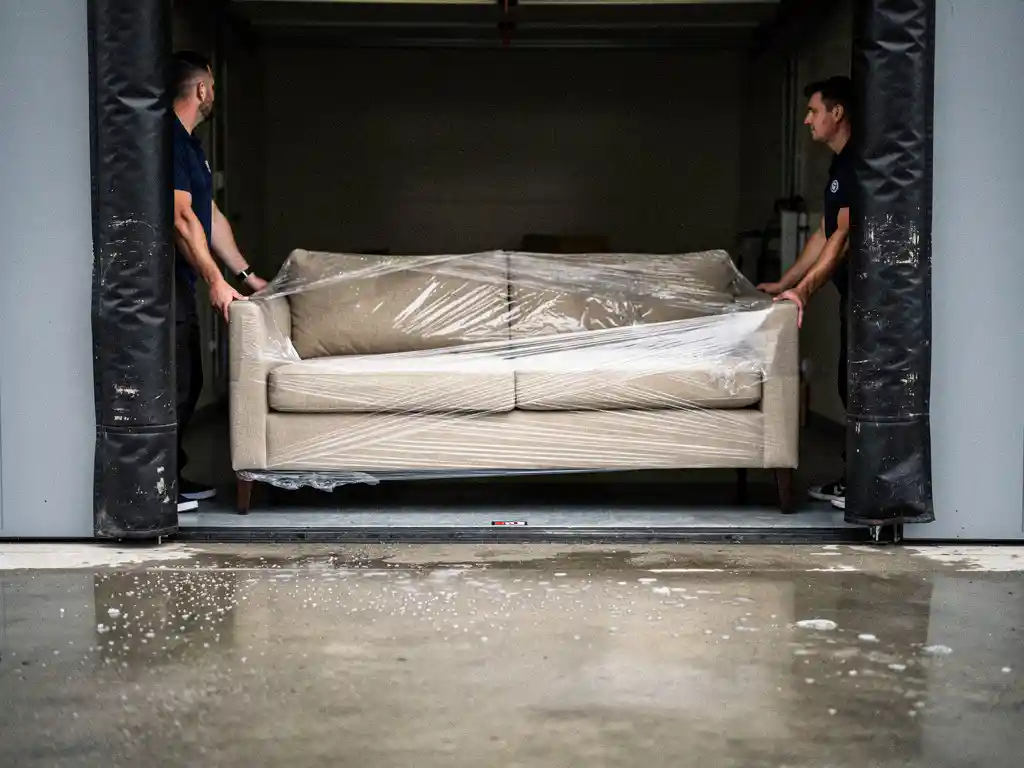
Moisture is one of the most underestimated threats in furniture logistics. A damp loading area can warp wooden frames, stain upholstery, cause metal components to rust, and leave customers with damaged goods before a delivery even reaches the road. The good news is that moisture damage incidents involving furniture are largely preventable when you follow a consistent, structured process before, during, and after loading.
This guide walks you through every stage of that process, from reading humidity levels at the dock to choosing the right wrapping materials and verifying protection before departure. Whether you are managing a single consignment or coordinating daily furniture transport operations, these steps will help you protect furniture in transit and reduce costly damage claims.
Assess moisture levels before loading begins
Before a single piece of furniture moves toward the loading dock, take a moment to evaluate the environment. Loading dock humidity can vary significantly depending on the season, time of day, and weather conditions outside. Acting on that information early is what separates a proactive team from one that discovers damage after the fact.
- Use a calibrated hygrometer to measure relative humidity at the loading area. Readings above 60% relative humidity signal elevated moisture risk for most furniture materials, particularly solid wood and MDF-based products.
- Check the floor surface for condensation, standing water, or damp patches. These are common in dock areas that experience temperature differences between the warehouse interior and the outside air.
- Inspect the vehicle interior as well. A trailer that has been parked overnight in cold or wet conditions may have condensation on its walls and floor, even if the loading area itself appears dry.
- Record your readings. If you operate a regular route or loading schedule, tracking humidity trends over time helps you identify high-risk windows and plan accordingly.
After this assessment, you will have a clear picture of the moisture conditions you are working with. If levels are high, do not proceed straight to loading. Move to the preparation step first and address the environment before introducing furniture.
Prepare the loading area to reduce moisture risk
Once you know what you are dealing with, take targeted action to bring the loading area into a safer condition. Furniture damage prevention starts with the environment, not the wrapping. Even the best protective materials perform poorly when the surrounding space is saturated with moisture.
- Ventilate the loading bay by opening doors strategically to allow air circulation without drawing in rain or cold air directly. Cross-ventilation is effective when outdoor humidity is lower than indoor levels.
- Place absorbent floor mats or pallets beneath furniture staging areas to keep items off damp concrete floors. Direct contact with wet or cold surfaces is a fast route to moisture damage.
- Use portable dehumidifiers in enclosed loading bays where ventilation is limited. These are especially useful during autumn and winter months when temperature swings cause persistent condensation.
- If the vehicle interior showed signs of moisture, wipe down walls and floors with dry cloths and allow airflow through the trailer for at least 15 to 20 minutes before loading begins.
With the environment prepared, the loading area should now present a significantly lower moisture risk. You are ready to select the right protective materials for the specific furniture types you are handling.
Choose the right protective materials for each furniture type
Not all furniture responds to moisture in the same way, and not all protective materials offer the same level of defence. Matching your protection to the material you are transporting is a critical step in preventing moisture damage to furniture during transit.
Consider the following guidance by material type:
- Solid wood and veneer furniture: Use breathable transit blankets combined with a moisture-barrier outer layer such as polythene sheeting. Avoid sealing wood completely in non-breathable plastic for extended periods, as trapped humidity can cause swelling.
- Upholstered items: Polythene covers provide strong protection against surface moisture and splashes. Ensure covers extend fully to the base and are sealed at the bottom to prevent wicking from damp floors.
- Metal components and frames: Silica gel sachets placed inside packaging help absorb residual moisture and reduce the risk of rust or oxidation during longer journeys.
- Flat-pack and MDF products: These are among the most moisture-sensitive. Double-wrap with polythene and avoid stacking directly against vehicle walls where condensation tends to collect.
- Glass and mirror elements: Use moisture-resistant corner protectors and ensure packaging is fully sealed. Water ingress around glass can damage frames and backing materials.
Our furniture transport operations use material-specific protection protocols as standard practice, but the principles above are applicable to any loading team working with mixed furniture consignments.
Apply correct wrapping and stacking techniques
Having the right materials is only half the equation. How you apply them, and how you arrange furniture in the vehicle, determines whether that protection actually holds up during transit. Poor wrapping technique can leave gaps that allow moisture to penetrate, while incorrect stacking can compress protective layers and reduce their effectiveness.
- Wrap each item individually before grouping pieces together. Shared wrapping between multiple items creates pathways for moisture to travel from one piece to another.
- Start wrapping from the top of the item and work downward, overlapping each layer by at least a third. This ensures that any moisture running down the surface is directed away from the furniture rather than channelled into it.
- Seal all open edges with adhesive tape rated for cold and damp conditions. Standard office tape loses adhesion quickly in humid environments.
- When stacking in the vehicle, place the heaviest and most moisture-resistant items at the base. Keep upholstered and wood-veneer pieces elevated on load bars or platforms where possible to maintain airflow beneath them.
- Leave a small gap between furniture and the vehicle walls. Condensation on metal trailer walls is common, and direct contact transfers that moisture directly into packaging.
Once wrapping and stacking are complete, do a visual check of the entire load before moving to the final verification stage. Look for any loose edges, compressed corners, or items that have shifted during loading that might compromise the seal.
Inspect and verify protection before the vehicle departs
A pre-departure inspection is your last opportunity to catch any moisture protection gaps before they become damage claims. This step should be treated as non-negotiable, not a quick glance before closing the doors.
- Walk the full length of the load and check that all wrapping is intact, sealed, and free from tears or open edges.
- Verify that no furniture is in direct contact with vehicle walls or the floor without a protective barrier between them.
- Check that silica gel sachets or other moisture absorbers are positioned inside sealed packaging rather than sitting loose in the vehicle.
- Confirm that load securing straps or bars are not cutting into or compressing protective wrapping in ways that could create gaps.
- Document the condition of the load with photographs before departure. This creates a clear record should any damage queries arise at the point of delivery.
After this inspection, you can close and seal the vehicle with confidence. The load is protected, documented, and ready for transit. If the inspection reveals any issues, address them before departure rather than accepting the risk.
Handle recurring damp conditions with structural fixes
If moisture problems at your loading area are a regular occurrence rather than an occasional challenge, individual protective measures will only take you so far. Structural improvements to the loading environment deliver lasting results and reduce the daily effort required to manage warehouse moisture control.
Evaluate the following longer-term solutions:
- Dock seals and shelters: Installing rubber dock seals around loading bay doors reduces the amount of outdoor air and rain that enters during loading. This single improvement can dramatically lower humidity levels at the point where furniture transitions from warehouse to vehicle.
- Permanent dehumidification systems: Industrial dehumidifiers integrated into the loading bay ventilation system maintain consistent humidity levels regardless of external weather conditions. These are particularly cost-effective for high-volume operations.
- Insulated flooring: Cold concrete floors are a primary source of condensation in loading areas. Anti-condensation floor coatings or raised flooring systems reduce this effect significantly.
- Drainage improvements: Poor drainage around loading bays allows rainwater to pool near doors and seep inside. Ensuring adequate drainage channels and surface gradients keeps water away from the loading area.
- Staff training and process documentation: Recurring moisture damage is often a symptom of inconsistent practice. Formalising the steps in this guide as a standard operating procedure ensures every team member follows the same approach every time.
For operations that handle significant furniture volumes on a regular basis, investing in the right warehousing infrastructure is one of the most effective ways to reduce moisture risk at the source. A well-designed facility with controlled loading conditions removes much of the variability that makes moisture management difficult in the first place.
Preventing furniture damage from a damp loading area is not a matter of luck or expensive equipment. It is a matter of following a consistent process, using appropriate materials, and addressing the root causes when problems repeat. Apply these steps systematically and you will see a meaningful reduction in moisture-related damage across your furniture logistics operations.