




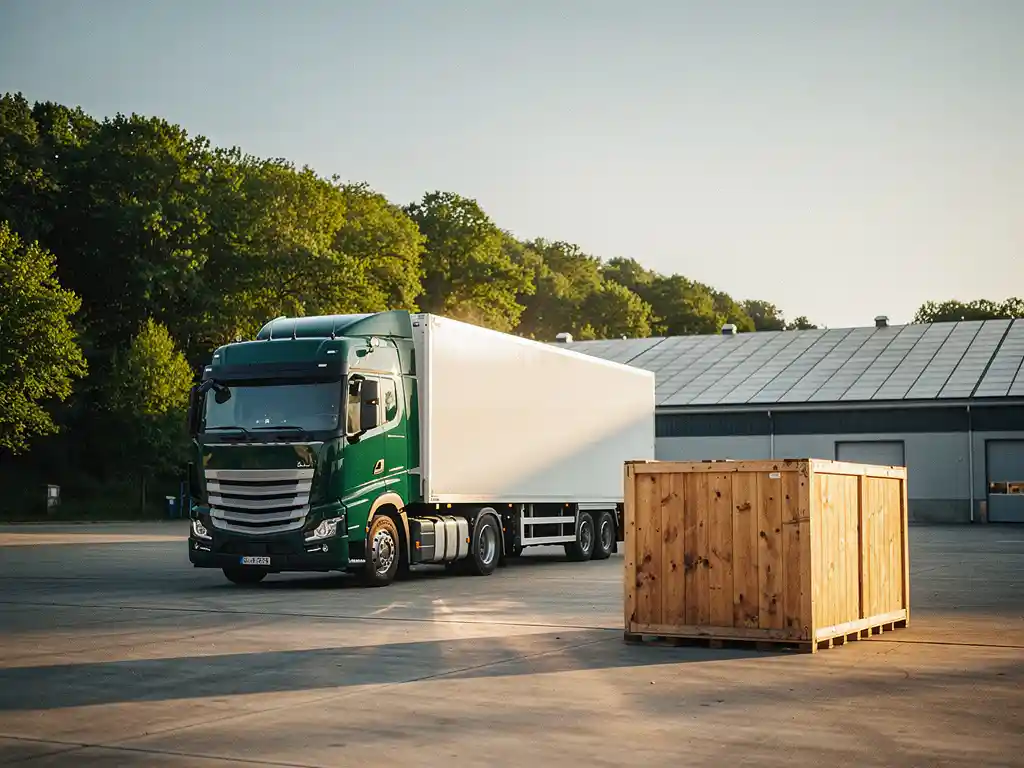
Sustainability is no longer optional in logistics. Clients, regulators, and partners across Europe are asking harder questions about carbon emissions, and the pressure to act is growing every year. For businesses managing complex, large-scale deliveries, sustainable project logistics requires more than good intentions. It requires a structured process that identifies where emissions come from, sets meaningful targets, and builds cleaner habits into every stage of the supply chain.
This guide walks you through six practical steps to reduce CO2 in your project logistics operations. Whether you are coordinating a single large project or managing ongoing deliveries across multiple sites, these steps give you a clear path from measuring your current impact to reporting measurable progress.
Map your current CO2 footprint across the supply chain
Before you can reduce emissions, you need to understand where they come from. A carbon footprint mapping exercise gives you a baseline, and without a baseline, any reduction target is guesswork. Start by identifying every stage of your logistics chain where energy is consumed or fuel is burned.
- List all transport legs involved in a typical project, including long-haul trunking, last-mile delivery, and return trips.
- Record fuel consumption data for each vehicle type used, broken down by route or delivery type where possible.
- Include warehousing energy use, such as heating, lighting, and equipment operation, in your inventory.
- Account for upstream emissions where data is available, including packaging materials and subcontracted services.
Once you have gathered this data, calculate CO2 equivalent values using recognised conversion factors, such as those published by the European Environment Agency. You should now have a clear picture of which parts of your CO2 emissions supply chain contribute most. This is your starting point for everything that follows.
Set realistic CO2 reduction targets for project logistics
With your footprint mapped, the next step is to set targets that are ambitious enough to matter but grounded enough to achieve. Vague commitments like “reduce our environmental impact” do not drive action. Specific, time-bound targets do.
- Identify your highest-emission activities from the mapping exercise and prioritise those for reduction.
- Set a percentage reduction target per tonne-kilometre transported, which normalises for changes in business volume.
- Define a timeline, for example a 20% reduction in transport emissions by 2028 compared to your 2026 baseline.
- Align your targets with recognised frameworks such as the Science Based Targets initiative (SBTi) if your organisation is ready for that level of commitment.
Targets should be reviewed annually and shared internally so that operations teams, planners, and partners understand what they are working toward. Targets that live only in a sustainability report rarely change behaviour on the ground.
Optimise route planning and load efficiency
Route and load optimisation is one of the fastest ways to reduce emissions without changing your vehicle fleet or transport modes. Fewer kilometres driven and fuller trucks mean lower fuel consumption per unit delivered, which directly cuts your carbon footprint in logistics.
- Audit your current route planning process and identify recurring inefficiencies, such as partial loads, backhaul deadheading, or unnecessarily long routes.
- Implement route optimisation software that accounts for distance, traffic, delivery windows, and load capacity simultaneously.
- Consolidate shipments wherever project timelines allow, combining deliveries to nearby locations into a single run.
- Track load fill rates as a standard KPI and set a minimum target, for example 85% load utilisation, to push planners toward consolidation.
Verify progress by comparing average kilometres per delivery and fuel consumption per tonne before and after optimisation. Even modest improvements in load efficiency compound significantly across hundreds of deliveries per year. With route planning tightened, you are ready to look at the vehicles and modes doing the work.
Shift to lower-emission transport modes where possible
Transport mode choice has a major impact on CO2 reduction in logistics. Road freight is the default for most project logistics, but it is not always the lowest-emission option, particularly for long distances or large volumes. Evaluating alternatives systematically is a key part of a green logistics strategy.
- For long-haul legs over 500 kilometres, assess whether rail or intermodal transport is feasible given your delivery timelines and access requirements.
- Where road transport is unavoidable, prioritise vehicles that meet Euro 6 emission standards as a minimum, and evaluate electric or hydrogen alternatives for urban last-mile delivery.
- Work with your transport partners to understand their fleet composition and ask for emissions data per vehicle type.
- Where projects involve international shipping, compare air freight against sea freight and road combinations, as air freight carries a significantly higher emissions factor per kilogram.
Not every project will allow mode switching, particularly when tight installation deadlines or specialist equipment are involved. Our project logistics solutions are designed to balance speed, precision, and sustainability, giving you options rather than a one-size-fits-all approach. Document every mode decision and the emissions reasoning behind it, so you build a record of intentional choices over time.
Reduce emissions in warehousing and value-added operations
Transport often receives the most attention in eco-friendly logistics discussions, but warehousing and value-added services such as assembly, quality control, and kitting also contribute to your overall footprint. Addressing these areas rounds out a complete CO2 reduction strategy.
- Conduct an energy audit of your warehouse facilities, focusing on lighting, heating and cooling systems, and materials handling equipment.
- Replace fluorescent or halogen lighting with LED systems, which typically reduce lighting energy consumption significantly.
- Electrify internal handling equipment, such as forklifts and pallet movers, replacing diesel or gas-powered alternatives.
- Review packaging used in value-added operations and replace single-use plastics with recyclable or reusable alternatives where possible.
- Explore renewable energy options for your facilities, including solar panels or green energy tariffs from your energy supplier.
Review your warehousing operations against these criteria at least once a year. Small changes in facility management accumulate into meaningful emission reductions over time, particularly when multiplied across large warehouse footprints. With transport and warehousing both addressed, the final step is making your progress visible.
Track progress and report CO2 performance over time
Measurement without reporting creates no accountability, and reporting without measurement creates no credibility. The final step is building a system that tracks your emissions data consistently and communicates progress to stakeholders in a clear, honest way.
- Establish a regular data collection rhythm, monthly or quarterly, using the same methodology each time to ensure comparability.
- Use your baseline from Step 1 as the reference point for all reporting, and express results as both absolute tonnes of CO2 and intensity metrics such as grams per tonne-kilometre.
- Report progress internally to operations and management teams, and externally to clients who have sustainability requirements in their supplier agreements.
- Identify which initiatives delivered the greatest reductions and use that insight to prioritise your next round of improvements.
Transparency matters here. If a target was not met, explain why and what will change. Clients and partners engaged in sustainable transport initiatives appreciate honesty far more than polished numbers that do not hold up to scrutiny. Over time, consistent reporting builds trust and demonstrates that your commitment to sustainable project logistics is real and improving.
Reducing CO2 in project logistics is a process, not a single action. By working through these six steps, from mapping your footprint to reporting your results, you build a foundation that improves with every project cycle. If you want to explore how we approach sustainability across our logistics operations, you can learn more about us and the standards we hold ourselves to.