


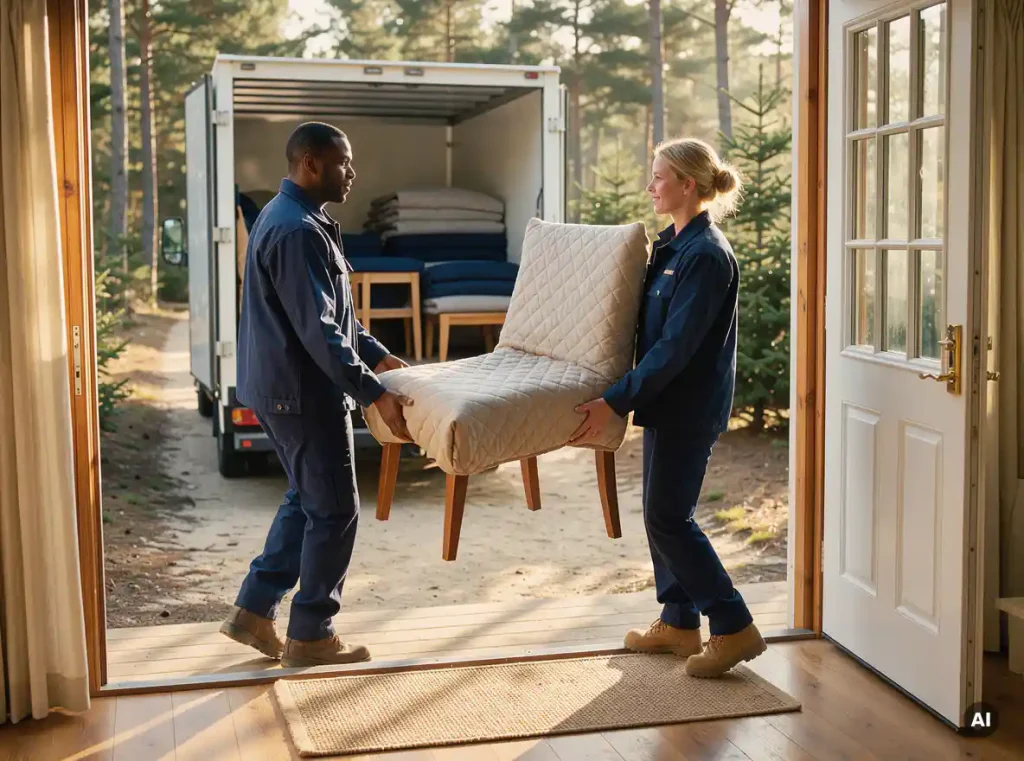
You replace holiday park furniture between guests by planning swaps around the changeover window, keeping matched spare stock on hand, and using a fixed route to deliver, assemble, and collect items in one visit. Done well, a swap adds little to normal turnaround time and the unit is guest-ready on schedule.
The key driver is preparation: parks that decide in advance what gets swapped, where spares live, and who does the work avoid most delays. Below, we answer the questions park managers ask most often about furniture changeovers, from timing and planning to costs and old furniture disposal.
How much time is there in a guest changeover?
Most holiday park changeovers leave a window of only a few hours, typically between morning check-out and afternoon check-in. Any furniture swap has to fit inside that window alongside cleaning and inspection, so the swap itself should take minutes per item, not hours.
The exact window depends on your park’s check-in policy, the size of the unit, and how many units turn over on the same day. Peak days, such as Saturdays in summer, compress the time even further because cleaning teams are already stretched.
That is why furniture replacement is rarely done during a standard changeover unless it is a single item, such as a damaged chair or a stained sofa cushion. Larger swaps are better scheduled for quieter days, low-occupancy midweek gaps, or planned maintenance blocks, when a unit can be taken out of the rental pool without lost income.
How do you plan furniture swaps across many units?
Plan furniture swaps across many units by grouping them into batches, scheduling each batch for the units with the lowest booking pressure, and sequencing deliveries by location on the park. A simple master schedule linking unit numbers, booking gaps, and furniture items prevents double handling and idle crews.
A practical planning routine looks like this:
- Audit the units. Record what each unit contains, its condition, and its age.
- Map the booking gaps. Identify units that sit empty for one to three days.
- Batch by type. Swap all identical sofas, beds, or dining sets in the same run to keep stock and handling uniform.
- Sequence by route. Order the units geographically so a delivery vehicle follows one logical loop through the park.
- Confirm access. Make sure keys, parking permissions, and pathways are cleared before the team arrives.
For larger refurbishment programmes, treating the swap as a project pays off. Our project logistics teams plan complex multi-location furnishing jobs for hotels, schools, and offices, and the same discipline of dedicated planning, clear timelines, and one point of coordination applies neatly to a holiday park.
What furniture is worth keeping in spare stock?
Keep spare stock of the items guests use most and that are hardest to replace quickly: mattresses, sofa cushions or complete sofas, dining chairs, bedside tables, and any distinctive or custom pieces. Spares of standard, high-wear items let you swap a damaged piece immediately instead of leaving a unit under-furnished.
A sensible rule is to stock in proportion to wear and lead time. Items that are damaged often, such as dining chairs and upholstered seating, deserve a larger buffer. Items with long delivery lead times, such as made-to-order furniture, justify spares even if breakage is rare.
Standardising your furniture across units makes this far easier. If a park uses one chair model and one sofa style across forty homes, a small spare pool covers all of them. A park with ten different styles needs ten different spare pools, which ties up more space and money.
Spare stock also needs somewhere to live. Dry, secure warehousing keeps spares clean and ready, and avoids storing upholstered items in damp sheds or maintenance units where they deteriorate before they are ever used.
How do you move furniture in and out efficiently?
Move furniture efficiently by working in a single outbound and inbound loop: deliver the new item, remove the old one in the same visit, and use trained staff with the right equipment. Pre-measured access routes and labelled items cut handling time and prevent damage to both furniture and unit interiors.
A few habits make a noticeable difference:
- Measure first. Check doorways, stairs, and corridors before delivery so nothing has to be turned back.
- Label everything. Mark each item with its unit number so deliveries and collections never get mixed up.
- Protect surfaces. Furniture blankets and floor protection prevent scuffs that create the next repair job.
- Assemble on arrival. Delivering flat-packed items and assembling them in place saves transport space, though it needs skilled hands to be quick.
- Use two people for bulky pieces. It is faster, safer, and protects the furniture.
Furniture handling is a specialist skill, and it shows in the details. We train our own staff in-house, with a focus on respect and care for the furniture, and our furniture transport service is built around undamaged, on-time delivery. For holiday parks, that same care applies whether you are moving one sofa or furnishing a whole row of lodges.
What happens to the old furniture afterwards?
Old furniture is typically sorted into three routes: reuse in lower-priority units or staff accommodation, refurbishment and return to stock, or responsible disposal and recycling. Choosing the route per item, rather than sending everything to the skip, recovers value and reduces waste.
A quick sorting guide helps you decide:
- Still good: Move it to another unit, an owner-occupied home, or temporary spare stock.
- Repairable: Reupholster, re-cover, or repair frames and surfaces, then return it to circulation.
- Beyond repair: Separate materials such as wood, metal, and textiles for recycling, or arrange proper bulk waste collection.
Refurbishment is worth considering more often than parks expect. Giving furniture a second life is also part of how we approach circularity, and we have refurbished more than a thousand office chairs for a large client rather than sending them to waste. The same thinking works for holiday park seating and beds with solid frames.
Whichever route you choose, remove old items in the same trip that delivers the new ones. That keeps corridors clear, prevents old pieces from piling up beside units, and avoids a second collection visit.
How can replacement costs and downtime be kept low?
Keep replacement costs and downtime low by standardising furniture, scheduling swaps into natural booking gaps, buying in batches, and combining delivery, assembly, and removal into one visit. Preventive replacement before items fail also avoids emergency swaps that interrupt bookings and cost more.
The biggest savings tend to come from a handful of decisions:
- Standardise. Fewer furniture models mean smaller spare pools and simpler training for cleaning and maintenance teams.
- Replace proactively. Track item age and condition, and swap worn pieces during quiet periods rather than waiting for complaints.
- Batch purchases and deliveries. Larger consolidated orders and single delivery runs reduce per-item transport and handling costs.
- Outsource the heavy lifting. A full-service partner that handles transport, storage, installation, and removal frees your own team to focus on guests.
- Protect what you have. Durable materials, washable covers, and regular inspection extend furniture life between swaps.
If you manage a large park or a group of parks, a single logistics partner covering the whole chain is often simpler than juggling suppliers. Our contract logistics approach combines storage, transport, and value-added services under one roof, with one contact person for coordination. If you would like to talk through a changeover or refurbishment plan for your park, you are welcome to get in touch with us.