




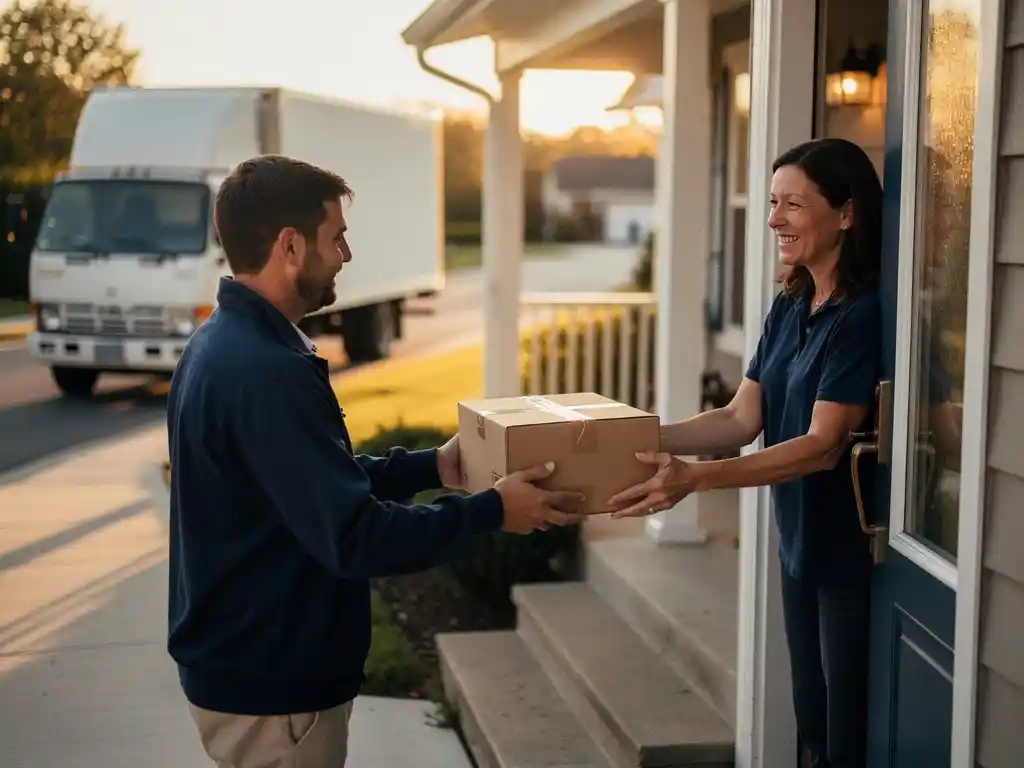
Delivery time uncertainty is one of the most common reasons customers abandon orders or cancel before the goods even arrive. When someone does not know when to expect a delivery, or receives no updates after placing an order, anxiety builds quickly and trust erodes. The good news is that most cancellations driven by delivery uncertainty are preventable with the right processes in place.
This guide walks you through six practical steps to reduce customer cancellations in logistics by tackling delivery communication, route planning, and exception handling head-on. Whether you manage furniture deliveries, general cargo, or complex project shipments, these steps give you a clear path to a better customer experience.
Identify where delivery uncertainty triggers cancellations
Before you can fix the problem, you need to understand exactly where in your delivery process customers lose confidence and decide to cancel. Delivery time uncertainty does not always strike at the same moment for every customer, so mapping the journey is essential.
- Pull your cancellation data from the last six to twelve months and tag each cancellation with a reason where possible. Look for patterns tied to specific delivery stages such as order confirmation, dispatch, or day-of-delivery.
- Survey recently cancelled customers with a short, direct question: “What would have made you stay?” Even a handful of responses will reveal whether communication gaps, long delivery windows, or lack of tracking are the primary drivers.
- Review your customer service ticket logs for phrases like “where is my order,” “I have not heard anything,” or “I cannot wait all day.” These are signals of delivery uncertainty that has not yet turned into a cancellation but is heading that way.
After completing this audit, you should have a clear picture of which touchpoints generate the most anxiety. Keep these moments in mind as you work through the steps below, because each one targets a specific point of failure in the delivery experience.
Set up real-time delivery tracking for customers
Real-time tracking is the single most effective tool for reducing cancellations caused by delivery uncertainty. When customers can see where their order is at any moment, the need to call, worry, or cancel drops significantly. The goal here is to give customers visibility without requiring them to chase information themselves.
- Choose a tracking platform that integrates with your transport management system and generates a shareable tracking link for each shipment. The link should update automatically as the delivery progresses through each stage.
- Send the tracking link at the moment of dispatch, not the day before or the day after. Timing matters because customers want confirmation that something is actually moving.
- Ensure the tracking page shows meaningful status updates such as “out for delivery,” “next stop,” or “estimated arrival in 45 minutes” rather than generic timestamps that tell the customer nothing useful.
- Test the tracking experience on both desktop and mobile before rolling it out, since most customers will check on a smartphone.
Once tracking is live, you should see a measurable drop in inbound “where is my delivery” contacts within the first few weeks. If customers are still calling frequently, the tracking updates may not be granular or timely enough and need refinement.
Narrow delivery windows with smarter route planning
Even the best tracking system cannot fully compensate for a delivery window that spans an entire day. Telling a customer their order will arrive “between 8am and 6pm” forces them to reorganise their entire schedule, and many will cancel rather than do that. Narrowing delivery windows is one of the most direct ways to improve the logistics customer experience.
Smarter route planning is the engine behind tighter windows. Start by reviewing how your routes are currently built and identify where inefficiencies inflate delivery time estimates.
- Implement dynamic route optimisation software that accounts for traffic, stop density, and vehicle capacity in real time rather than relying on static pre-planned routes.
- Group deliveries geographically so that drivers cover compact areas rather than criss-crossing large regions, which reduces unpredictability in arrival times.
- Use historical delivery data to build realistic time estimates per stop type. A large furniture installation, for example, takes significantly longer than a standard parcel drop and should be scheduled accordingly.
- Offer customers a choice of time slots at the point of booking rather than assigning a window without input. Even two or three options give customers a sense of control and reduce the likelihood of cancellation.
With optimised routing in place, aim to reduce your standard delivery window to two to four hours. Customers who receive a specific, manageable window are far more likely to stay committed to their order than those given an open-ended timeframe. Our furniture transport operations use precisely this approach, combining route optimisation with flexible time slot options to keep delivery windows tight and customers informed.
Communicate proactively at every delivery milestone
Proactive delivery communication means reaching out to the customer before they feel the need to reach out to you. Each milestone in the delivery journey is an opportunity to reinforce confidence and reduce the anxiety that leads to cancellations. This is where many logistics providers fall short by sending only an order confirmation and then going silent until the driver knocks on the door.
Map out the key milestones in your delivery process and assign a communication action to each one.
- Send an order confirmation immediately after booking, including an estimated delivery date and a brief explanation of what happens next.
- Send a dispatch notification when the shipment leaves the warehouse, including the tracking link and the confirmed delivery window.
- Send a day-before reminder that confirms the delivery window and gives the customer a direct contact number if they need to make changes.
- Send a same-day notification when the driver is a set number of stops away, typically two to three stops, so the customer can prepare to receive the delivery.
- Send a post-delivery confirmation once the order is marked as delivered, and include a short feedback prompt.
Each message should be short, clear, and written in a friendly tone. Avoid logistics jargon and focus on what the customer needs to know and do. Customers who receive consistent, timely updates are significantly less likely to cancel because they feel informed and in control throughout the process.
Handle exceptions and delays without losing the customer
Even with excellent planning, delays happen. A vehicle breakdown, a traffic incident, or a complex installation that runs long can push a delivery outside its promised window. How you handle these exceptions determines whether the customer cancels or stays loyal. Silence during a delay is the fastest way to lose trust.
- Set up automated alerts within your transport management system that flag a delivery as at risk the moment it falls behind schedule, before the customer notices.
- Notify the customer of the delay immediately, not after the original window has already passed. Be specific about the new estimated arrival time and the reason for the delay in plain language.
- Give the customer a clear option: wait for the revised time or reschedule to a time that suits them. Offering choice reduces frustration and prevents cancellation because the customer regains a sense of control.
- Assign a single point of contact for the customer to reach if they have questions during the delay. Transferring customers between departments during an already stressful situation makes things significantly worse.
After the delivery is completed, follow up with a brief acknowledgement of the delay and a thank you for the customer’s patience. This small gesture goes a long way toward preserving the relationship and reducing the risk of the customer choosing a competitor next time. Handling exceptions well is often what separates a one-time customer from a loyal one.
Measure cancellation rates and refine the delivery experience
With your communication systems, tracking, and exception handling in place, the final step is to measure what is working and continuously improve. Reducing customer cancellations in logistics is not a one-time fix but an ongoing process of monitoring, learning, and adjusting.
- Track your cancellation rate as a standalone metric, broken down by delivery stage, product type, and region. This level of detail helps you identify where problems persist even after your improvements.
- Monitor your Net Promoter Score or customer satisfaction ratings specifically for the delivery experience, not just the product or service overall.
- Review your “where is my order” contact volume monthly. A sustained drop in these contacts is a reliable indicator that your delivery transparency improvements are working.
- Run a quarterly review of your delivery window accuracy: what percentage of deliveries arrived within the promised window? Set a target and track progress toward it.
- Use the post-delivery feedback prompt you introduced in the communication step to collect qualitative insights. Look for recurring themes and address them in your next planning cycle.
Treat your cancellation rate as a live health indicator for your delivery experience. When it rises, use the audit process from the first step to identify the new friction point and address it quickly. The businesses that consistently deliver on their promises, and communicate honestly when they cannot, build the kind of customer loyalty that is very difficult for competitors to disrupt.
If you want to explore how a full-service logistics partner can support these improvements across your supply chain, take a look at our range of solutions or get in touch with our team to discuss your specific needs.