


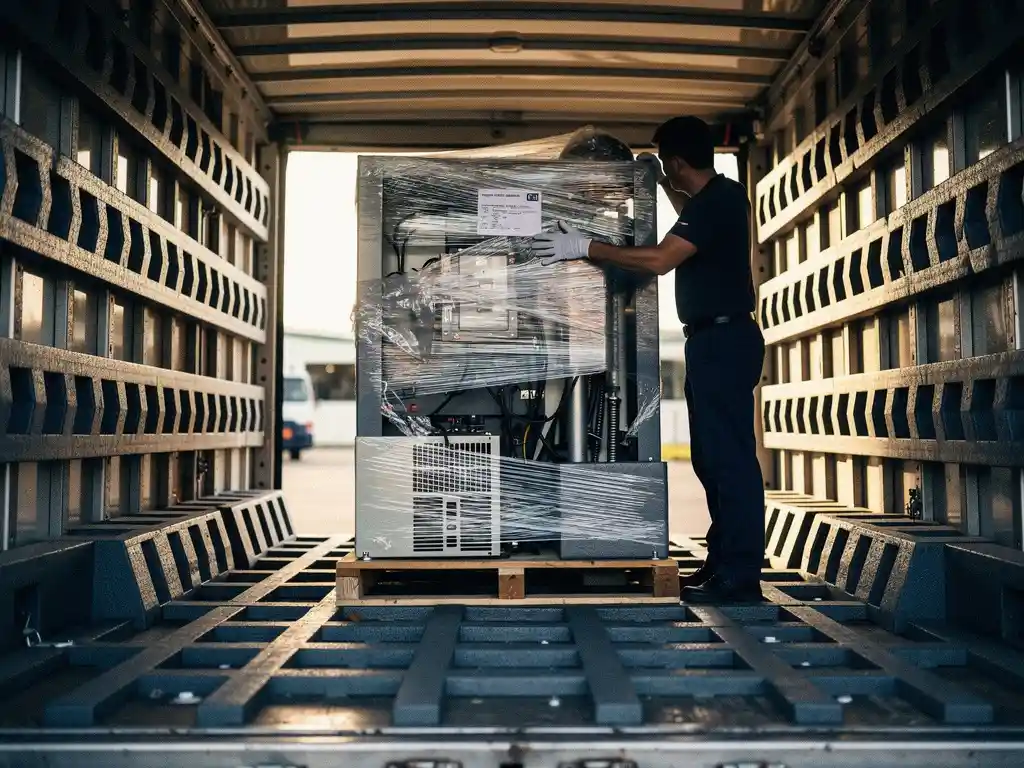
To transport sensitive equipment safely, you need purpose-built packaging, controlled transport conditions, trained handlers, and a logistics partner with specialist experience in fragile or high-value cargo. Getting any one of these elements wrong can result in damage, delays, or financial loss that far outweighs the cost of doing it properly from the start. Below, we walk through the most important questions to answer before your next sensitive equipment shipment.
What makes equipment ‘sensitive’ in a transport context?
In a transport context, sensitive equipment is any cargo that is unusually vulnerable to physical damage, environmental conditions, or mishandling during loading, transit, or delivery. This includes items that are fragile, high-value, technically complex, or that must arrive in a precise operational state. The category is broader than most shippers initially assume.
Common examples include electronic and server equipment, precision instruments, medical devices, works of art, and high-end furniture or kitchen installations. What these items share is a low tolerance for the ordinary stresses of transport: vibration, impact, temperature change, humidity, and rough handling. A standard pallet of general cargo can absorb a certain amount of punishment. Sensitive equipment cannot.
The distinction matters because it determines every subsequent decision in the logistics chain, from packaging choice and vehicle type to the qualifications required of the people doing the loading and unloading. Treating sensitive cargo as general cargo is one of the most common and costly mistakes in logistics.
What are the biggest risks when transporting sensitive equipment?
The biggest risks when transporting sensitive equipment are physical impact and vibration during transit, exposure to adverse temperatures or humidity, improper loading and securing, and mishandling by untrained personnel. Each of these risks can cause irreversible damage, and in practice they often compound one another during a single shipment.
Physical shock is the most immediate threat. Equipment that shifts inside a vehicle, tips during cornering, or is dropped during loading can suffer structural or internal damage that is not always visible from the outside. Vibration over long road journeys can loosen components or degrade sensitive electronics even without a single impact event.
Environmental exposure is equally serious for certain cargo types. Electronic equipment is vulnerable to condensation when moving between temperature zones. Wooden furniture and kitchen cabinetry can warp or crack if exposed to moisture. Medical and laboratory instruments may lose calibration if stored or transported outside defined temperature ranges.
Human error during loading and unloading remains one of the leading causes of damage claims. Without trained personnel who understand the specific vulnerabilities of the cargo they are handling, even well-packaged equipment is at risk at the point of transfer.
How does professional packaging protect sensitive equipment in transit?
Professional packaging protects sensitive equipment by absorbing shock, preventing movement within the container, shielding against environmental exposure, and distributing load forces away from vulnerable components. The right packaging is always engineered to match the specific fragility profile of the item being shipped, not selected from a generic catalogue.
For high-value electronics and server equipment, this typically means custom-cut foam inserts, anti-static materials, and sealed outer cases that prevent moisture ingress. For premium furniture and kitchen installations, purpose-built crating, corner protection, and furniture blankets provide the layered protection needed to prevent surface damage and structural stress during transit.
Beyond the materials themselves, professional packaging involves a pre-departure inspection process. Before a shipment leaves the origin point, trained specialists check that packaging is correctly applied, that items are secured without pressure points that could cause damage over a long journey, and that labelling correctly identifies the cargo as fragile and indicates the correct orientation.
We conduct this kind of pre-departure inspection as a standard step in our specialist logistics operations, particularly for kitchen and furniture deliveries where surface condition at the point of delivery is critical to end-customer satisfaction.
What transport conditions should sensitive equipment travel under?
Sensitive equipment should travel under conditions that control temperature and humidity where required, minimize vibration and impact through appropriate vehicle specification, and ensure the cargo is never mixed with incompatible freight. The specific conditions needed depend on the equipment type, but the principle is the same: the transport environment must be actively managed, not left to chance.
For electronics and server hardware, controlled temperature environments and anti-static precautions are often necessary. For high-end furniture and kitchen cabinetry, enclosed vehicles that protect against weather exposure and swap bodies fitted with a double loading floor can significantly reduce the number of handling movements, which in turn reduces the risk of damage.
Securing arrangements inside the vehicle are equally important. Sensitive cargo should be braced, strapped, or blocked to prevent any movement during transit. Drivers should be trained not only in securing techniques but also in the driving style that minimizes vibration and sharp deceleration, both of which transfer directly to the cargo.
For international shipments involving sea or air freight, the transition between modalities introduces additional risk points. Each transfer between vehicle, container, aircraft, or vessel is an opportunity for mishandling. Minimizing the number of these transitions through careful route planning is one of the most effective ways to protect sensitive cargo on long-haul journeys.
Should you use a specialist logistics provider or a general carrier?
For sensitive equipment, you should use a specialist logistics provider rather than a general carrier. A specialist has the trained personnel, purpose-built infrastructure, and sector-specific experience to handle fragile or high-value cargo in a way that a general carrier is not equipped to replicate. The cost difference is consistently outweighed by the reduction in damage, delays, and claims.
General carriers are optimized for volume and efficiency across standardized cargo. Their processes, vehicles, and staff training are built around the assumption that goods can tolerate ordinary handling. Sensitive equipment does not fit that assumption, and the result is a higher rate of damage incidents when specialist cargo moves through a general logistics network.
A specialist provider brings several concrete advantages. Their personnel are trained specifically for the cargo types they handle. Their vehicles are specified and maintained to the requirements of that cargo. Their planning accounts for the lead time pressures, delivery precision, and end-point conditions that sensitive equipment often demands.
We have built our project logistics expertise around exactly this principle, handling everything from server cabinet assembly in dust-free clean rooms to the complete furnishing of office buildings and coworking spaces across more than 150 locations worldwide. The breadth of that experience is what allows us to build a genuinely tailored solution for each client rather than fitting sensitive cargo into a process designed for something else.
When evaluating a specialist provider, look for in-house trained personnel, sector-specific references, a clear account management structure with a single point of contact, and demonstrated experience with the specific type of equipment you need to move. Our client cases give a clear picture of the range of sensitive logistics challenges we handle across industries.
What documentation and insurance do you need for sensitive equipment shipments?
For sensitive equipment shipments, you need accurate cargo documentation including a detailed packing list and commercial invoice, appropriate transport documents for the modality used, customs paperwork for cross-border movements, and cargo insurance that specifically covers the value and risk profile of the equipment being shipped. Standard carrier liability is almost never sufficient for sensitive or high-value cargo.
Carrier liability under standard transport law is calculated on the weight of the cargo, not its value. For sensitive equipment, where a small and lightweight component can represent significant financial or operational value, this creates a serious protection gap. Dedicated cargo insurance fills that gap by covering the actual replacement or repair cost of the equipment in the event of loss or damage.
For international shipments, customs documentation requires particular attention. Errors or omissions in customs paperwork can result in delays at border crossings that expose sensitive equipment to uncontrolled storage conditions or missed installation deadlines. Working with a logistics provider that handles the complete administrative process on your behalf removes this risk and ensures that documentation is correct before the shipment moves.
We manage the full administrative process for our clients as a standard part of our service, including contract logistics arrangements where we take on ongoing responsibility for documentation, customs clearance, and compliance. For complex international projects, our project managers apply just-in-time principles to coordinate routes, lead times, and delivery schedules so that sensitive equipment arrives at the right place, at the right time, with all paperwork in order.
If you are unsure about the insurance or documentation requirements for a specific shipment, the safest approach is to raise this with your logistics provider before the goods move. Getting this right at the planning stage is far less costly than resolving a claim or a customs hold after the fact.