




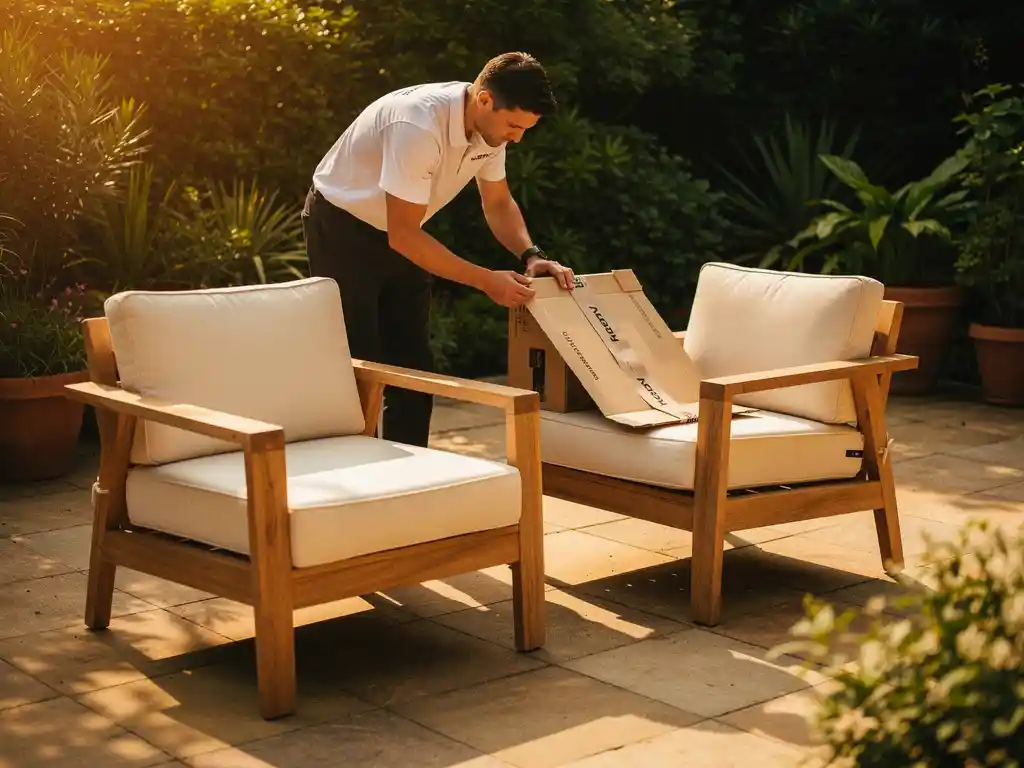
Pallet delivery gets the product to the door. But for outdoor furniture brands competing in 2026, getting it to the door is no longer enough. Customers expect more: a smooth, premium experience that begins the moment they receive a shipping notification and ends when their new garden sofa is exactly where they want it. That shift from basic pallet delivery to a polished outdoor furniture unboxing experience does not happen by accident. It requires deliberate planning across packaging, logistics, communication, and quality control.
This guide walks you through every step of that upgrade, from the groundwork you need to lay first to the validation process that ensures your new service runs smoothly at scale. Whether you are a furniture retailer, manufacturer, or brand looking to elevate your last-mile delivery, these steps will help you build a service your customers will remember and recommend.
What you need before upgrading your delivery service
Before redesigning your delivery process, take stock of what you currently have and where the gaps are. Jumping straight into premium packaging or white glove delivery without a clear baseline leads to inconsistency and cost overruns. A structured assessment saves time and money later.
Start by mapping your existing furniture logistics chain from the warehouse to the end customer. Identify every handoff point: who handles the product, when, and under what conditions. Then gather honest feedback from recent customers about where their experience fell short. Common pain points include damaged packaging on arrival, unclear delivery windows, and no help with placement or assembly.
Confirm you have the following in place before moving forward:
- A clear product catalogue with dimensions and weight data for each outdoor furniture item
- Carrier or logistics partner agreements that allow for service upgrades such as room placement and assembly
- A customer communication platform capable of sending automated updates via SMS or email
- Internal capacity to handle returns and damage claims under a premium service model
- Budget allocated for upgraded packaging materials and additional delivery labour
Once you have confirmed these foundations, you are ready to start building the upgraded experience. Skipping this audit is the most common reason premium delivery rollouts stall or cost far more than anticipated.
Repackage outdoor furniture for a premium unboxing moment
Packaging is the first physical touchpoint of your new service, and it sets the tone for everything that follows. Standard pallet wrap and brown cardboard communicate utility. A considered unboxing experience communicates care. For outdoor furniture, which is often bulky, heavy, and prone to surface damage, the packaging upgrade needs to balance aesthetics with serious protective function.
Redesign your packaging with these steps:
- Audit your current damage rates by product category to identify which items need the most protective improvement.
- Switch from generic brown cardboard to branded outer boxes or custom-printed corrugated packaging that reflects your brand identity.
- Add internal cushioning layers using moulded foam inserts, corner guards, or honeycomb paper wrap for legs, frames, and glass surfaces.
- Include a branded welcome card or assembly guide inside the box, printed clearly and positioned so it is the first thing the customer sees when opening.
- Seal boxes with branded tape and add a visible “Inspected and packed by” label to reinforce quality assurance.
After repackaging a sample run, check that every item arrives without surface marks, that internal components have not shifted, and that the branded elements are intact and undamaged. A simple drop test and vibration simulation can confirm your packaging holds up before committing to full production volumes.
Set up last-mile delivery with room placement and assembly
The physical delivery itself is where the premium experience is won or lost. Moving from a kerbside drop to a full white glove delivery service means your delivery team carries items inside, places them in the room the customer specifies, removes packaging waste, and in many cases assembles the product on site. This requires a different kind of logistics partner and a different kind of delivery crew.
Our furniture transport service is built specifically for this level of care, covering everything from in-home placement to on-site assembly across Europe. If you are configuring this with an existing carrier, here is how to set it up correctly:
- Define your service tiers clearly: kerbside, threshold, room of choice, and full assembly. Assign each a price point and communicate the difference to customers at checkout.
- Brief your delivery teams on handling standards for outdoor furniture, including how to carry items without dragging, how to protect flooring and doorframes, and how to position pieces according to customer instructions.
- Equip delivery crews with basic assembly tools, a checklist for each product type, and a protocol for what to do if a part is missing or damaged on arrival.
- Arrange for packaging removal and disposal as part of the service, since customers upgrading to a premium tier expect the cardboard and foam to leave with the crew.
Verify this step by running a small pilot with five to ten real deliveries before scaling. Debrief the delivery crew after each run and collect customer feedback within 24 hours. You should see a clear improvement in satisfaction scores compared to your previous pallet delivery baseline. If crews are consistently struggling with a particular product type or assembly step, address it in training before the full rollout.
Coordinate customer communication at every delivery stage
Even a flawless physical delivery can feel disappointing if the customer had no idea when to expect it or what to prepare. Communication is the invisible layer of the unboxing experience, and it needs to be as carefully designed as the packaging itself. Proactive, clear updates reduce customer anxiety, cut inbound support queries, and build the kind of trust that leads to repeat purchases.
Map out every communication trigger across the delivery journey and configure your messaging accordingly:
- Send an order confirmation immediately after purchase, including an estimated delivery window and a brief explanation of what the premium delivery service includes.
- Notify the customer when their order leaves the warehouse, with a more precise delivery date and a link to track their shipment.
- Send a day-before reminder with a confirmed two-hour delivery window and any preparation instructions, such as clearing the room or ensuring access to the garden.
- Trigger an on-the-way notification when the delivery crew is 30 to 60 minutes away, using real-time tracking if your logistics partner supports it.
- Follow up within 24 to 48 hours post-delivery with a short satisfaction survey and an invitation to share a photo or review.
With your communication triggers configured, review the full sequence as if you were the customer. Check that the tone is consistent, that each message adds genuine information rather than repeating what was already said, and that every message is mobile-optimised. A well-timed, well-written message sequence can turn a straightforward outdoor furniture delivery into something that genuinely feels premium.
Validate the unboxing experience before full rollout
Before rolling out your upgraded service to all customers, run a structured validation phase. This is your opportunity to catch gaps in packaging, delivery execution, or communication before they affect your full customer base. Treat it as a quality gate, not an optional extra.
Structure your validation phase as follows:
- Select a representative sample of orders across different product types, delivery distances, and service tiers.
- Assign a team member to follow each order through the full journey, from warehouse pick to post-delivery feedback.
- Collect structured feedback from customers using a short survey that covers packaging condition, delivery crew professionalism, communication quality, and overall satisfaction.
- Review damage reports, delivery exceptions, and any complaints that arise during the pilot period.
- Hold a debrief with your logistics partner and internal team to identify the top three issues and agree on fixes before scaling.
A successful validation phase looks like this: packaging arrives intact in the majority of deliveries, customers report that the crew was helpful and professional, communication messages were received and found useful, and your net promoter score or satisfaction rating shows a measurable uplift over your previous pallet delivery baseline. If you are not seeing improvement across all three areas, revisit the relevant step in this guide before expanding the service.
Upgrading from pallet delivery to a full outdoor furniture installation and unboxing experience is entirely achievable with the right preparation. Each step builds on the last, and the result is a service that differentiates your brand, reduces returns, and gives customers a reason to come back. If you want to explore how a specialist logistics partner can support this transition, get in touch with our team to discuss what a tailored solution looks like for your business.