




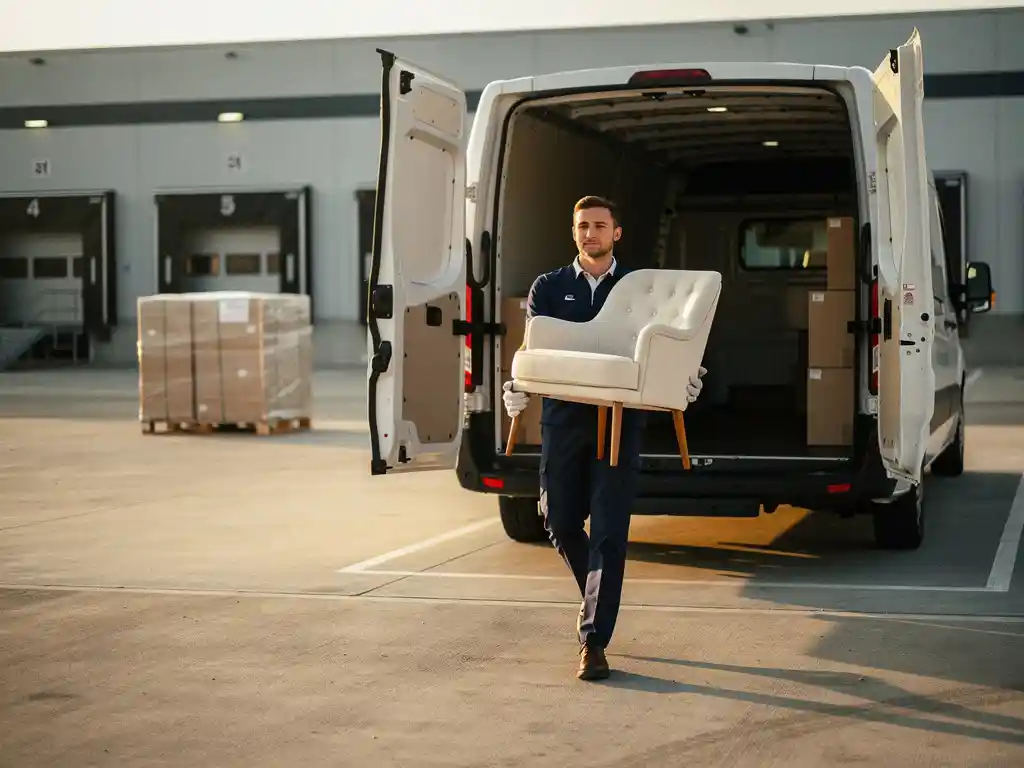
Not all logistics providers are built the same, and when it comes to moving furniture, that difference matters enormously. A sofa is not a pallet of industrial parts. A dining table is not a stack of boxed goods. Furniture is bulky, fragile, and often high in value, which means the logistics behind it require a completely different level of skill, equipment, and care than standard freight operations can reliably offer.
This guide walks you through exactly how to evaluate a furniture carrier versus a general freight company, so you can make a confident, informed decision about who handles your goods. Whether you are a retailer, interior designer, property developer, or manufacturer, following these steps will help you match the right logistics provider to your specific needs.
Key differences to look for in a furniture carrier
Start by understanding what fundamentally separates a specialist furniture logistics provider from a general freight company. A general freight company is designed to move high volumes of standardised, typically palletised goods efficiently from point A to point B. Their systems, vehicles, and staff are optimised for speed and throughput, not for handling delicate, oversized, or high-value items with care.
A dedicated furniture carrier, by contrast, builds its entire operation around the specific demands of furniture transport. Look for these distinguishing characteristics when you begin your search:
- Vehicles equipped with protective padding, load bars, and specialist securing systems
- Trained two-person delivery teams capable of navigating stairs, tight spaces, and complex installations
- Experience with both residential and commercial furniture deliveries
- Membership in specialist furniture logistics networks, such as MACH-3000, which connects verified furniture carriers across Europe
- Documented processes for handling high-value, fragile, and custom-made pieces
Once you have confirmed these fundamentals are in place, you can move deeper into evaluating specific capabilities. A carrier that ticks these boxes is operating as a genuine specialist, not a general haulier taking on furniture as an afterthought.
Assess the right level of handling expertise
Evaluate the carrier’s hands-on expertise before committing to any agreement. Furniture handling is a physical skill that develops over time, and the difference between an experienced team and an untrained one often shows up as damage, delays, or failed deliveries.
- Ask the carrier how their delivery staff are trained and how long team members typically stay with the company.
- Confirm whether they offer assembly services, including flat-pack assembly, installation of office chairs, or on-site setup for large commercial projects.
- Request information on how they handle specialist items such as glass-fronted cabinets, marble surfaces, or modular sofa systems.
- Find out whether they carry out pre-delivery quality checks and how items are inspected before dispatch.
After this conversation, you should have a clear picture of whether the carrier treats furniture handling as a core competency or a secondary capability. A specialist provider will answer these questions with confidence and detail. If the answers feel vague or generic, that is a reliable signal to look elsewhere.
Check warehousing and storage compatibility
With handling expertise confirmed, the next step is to examine the carrier’s warehousing infrastructure. Furniture often requires temporary storage between production, transit, and final delivery, and not all warehouse environments are suitable for it.
General freight warehouses are typically designed for palletised stock and high-throughput operations. Furniture needs dedicated racking, protective wrapping, controlled environments, and careful stock management to prevent damage during storage. Confirm the following before proceeding:
- Total warehouse capacity and whether furniture-specific storage areas are available
- Whether the facility offers cross-docking or consolidation services for multi-origin shipments
- The level of inventory visibility and tracking available to you as a client
- Whether value-added services such as quality control, repackaging, or labelling are carried out on-site
A carrier with purpose-built furniture warehousing reduces the risk of damage during storage and gives you greater flexibility in coordinating delivery timing with your customers or project schedules.
Evaluate last-mile and room-of-choice delivery options
Last-mile delivery is where furniture logistics becomes genuinely complex, and where the gap between a specialist and a general carrier is most visible. A general freight company will typically deliver to the door or loading bay. A specialist furniture delivery service goes further, literally.
Room-of-choice delivery means the team carries the item to the specific room requested, unpacks it, places it correctly, and removes all packaging waste. For residential deliveries, this is often an expectation rather than a premium add-on. For commercial and project deliveries, it can involve full installation across multiple floors of a building.
- Confirm whether the carrier offers kerb-side, threshold, room-of-choice, or full installation delivery tiers.
- Ask how they handle access challenges such as narrow staircases, lifts, or restricted delivery windows in city centres.
- Check whether they provide pre-delivery communication to end customers, including time slot notifications and tracking links.
- Verify whether their teams carry appropriate tools for basic assembly and installation on arrival.
After completing this step, you should know exactly what the carrier can and cannot deliver, both physically and in terms of customer experience. For project logistics across multiple locations, look for carriers with proven capability in coordinating large-scale rollouts, as this requires a fundamentally different level of planning than standard residential delivery.
Verify returns and damage management processes
Even the best logistics operations encounter damage or failed deliveries occasionally. What separates a strong specialist furniture transport provider from a weak one is how systematically they manage these situations when they arise.
A general freight company may have a standard claims process, but it is rarely designed with the complexity of furniture in mind. Furniture claims often involve high values, custom items, or damage that only becomes apparent after unpacking. Ask the following questions directly:
- What is the process for recording and photographing damage at the point of delivery?
- How are returns collected, and what happens to the item once it is back in the warehouse?
- What is the average resolution time for a damage claim?
- Does the carrier offer any refurbishment or re-packaging capability before a replacement delivery?
A carrier with a well-defined returns and damage management process demonstrates operational maturity. It also protects your brand reputation, since the end customer’s experience of a return or replacement is just as important as the original delivery. If the carrier cannot clearly explain their process, the risk to your operation is significant.
Match carrier capabilities to your supply chain needs
With all the previous steps completed, you are now in a position to make a structured comparison between your supply chain requirements and what each carrier can actually deliver. This final step is about alignment, not just capability in isolation.
Consider the full scope of your logistics needs across the year. Do you have seasonal peaks? Do you ship internationally as well as domestically? Do your customers expect white-glove delivery, or is a reliable room-of-choice service sufficient? Map these requirements against what the carrier has demonstrated they can provide:
- List your top five logistics requirements in order of priority, such as delivery speed, geographic coverage, installation capability, or returns management.
- Score each candidate carrier against these requirements based on the information gathered in the previous steps.
- Request references or review documented case studies from clients with similar supply chain profiles.
- Arrange a site visit to the carrier’s warehouse and operations centre if possible, to see their processes first-hand.
The right logistics provider for furniture is one whose capabilities genuinely match your operational reality, not just your ideal scenario. We at Jan Krediet have spent over a century building a furniture logistics operation that covers transport, warehousing, assembly, installation, and international distribution through our membership of the MACH-3000 network. If you would like to understand how our capabilities align with your supply chain, get in touch with our team to start the conversation.