




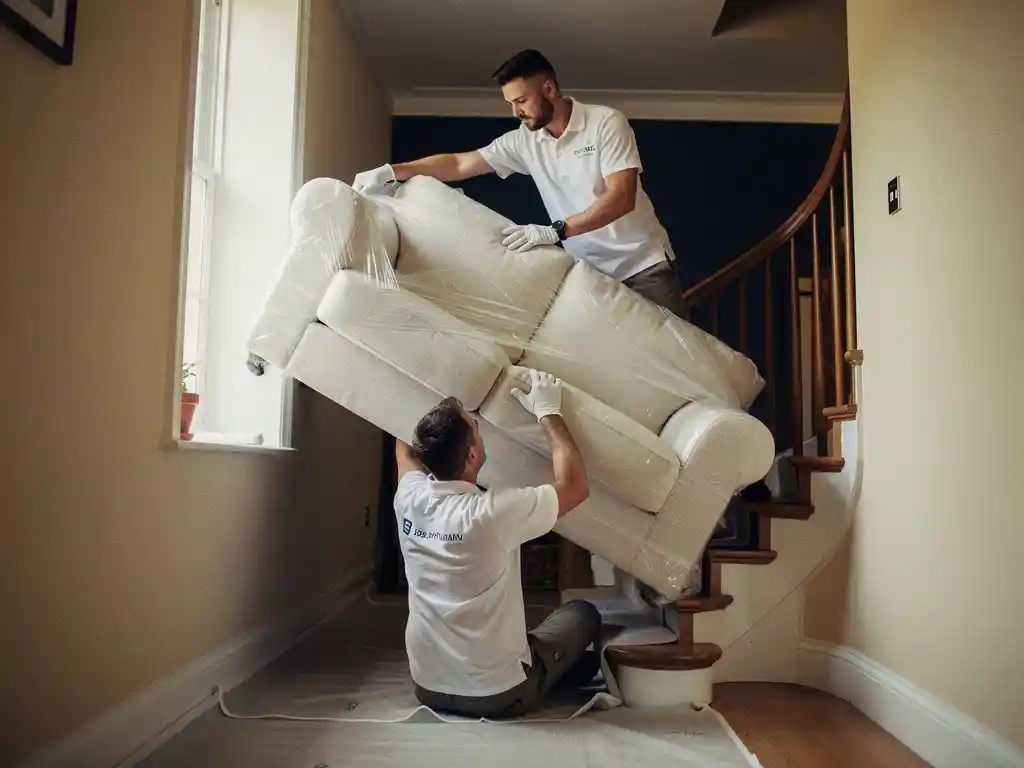
Getting a large sofa through a narrow hallway or carrying a heavy wardrobe up three flights of stairs is not something most delivery teams are equipped to handle. That is exactly where white glove delivery sets itself apart. A professional white glove team brings the skills, equipment, and planning needed to overcome the physical challenges that standard couriers simply cannot manage.
Whether you are expecting a furniture delivery to a city apartment, a heritage property with tight corridors, or a home at the end of a restricted lane, this guide walks you through exactly how a white glove service handles the most common access obstacles. Follow these steps to prepare effectively and ensure your delivery goes smoothly from the moment the truck arrives.
Assess the access route before delivery day
The most important thing you can do ahead of any white glove delivery is to assess the full access route before the team arrives. Identifying obstacles in advance means the crew can arrive prepared with the right equipment, the right number of people, and a clear plan of action.
- Walk the complete route from the street to the final placement location, noting every potential obstacle, including steps at the entrance, door widths, corridor lengths, ceiling heights, and any tight corners.
- Measure doorways, hallways, and stairwells using a tape measure. Record the narrowest point of each passage and compare it against the dimensions of the items being delivered.
- Check whether any furniture will need to be tilted, disassembled, or rotated to pass through a specific point. Identify those points clearly.
- Note the floor surface type throughout the route, including tiles, hardwood, carpet, and stone, as each requires different protective measures.
- Photograph any particularly challenging sections and share them with the delivery team during the booking or pre-delivery communication stage.
After completing this assessment, you should have a clear written or photographic record of the route. A well-prepared white glove team will use this information to plan the delivery in detail before arriving, reducing the risk of delays or damage on the day.
Navigate stairs safely with heavy or bulky items
Stairs represent one of the most common and most demanding challenges in furniture delivery. A professional white glove service approaches stair navigation with a structured method that prioritises both the safety of the crew and the protection of the item being moved.
Prepare the staircase before lifting
Before any item is lifted, the team will clear the staircase completely. Remove any rugs, loose mats, or objects from the steps that could cause slipping. If the staircase has a handrail on one side, the team will factor this into which direction the item is carried to maximise available space.
Use the correct lifting and carrying technique
Experienced white glove crews use specialist equipment for stairs delivery, including stair-climbing trolleys and furniture straps that distribute weight evenly between team members. For very heavy items such as solid wood cabinets or large appliances, a motorised stair climber may be used.
- Position the item at the base of the stairs and agree on the carry direction and communication signals between team members before lifting.
- Use furniture straps or a stair-climbing trolley to reduce manual strain and maintain control throughout the ascent or descent.
- Move one step at a time, pausing at each landing to reposition grips and check balance before continuing.
- Keep the item tilted at an angle that clears the ceiling at the top of the staircase, which is one of the most frequently overlooked obstacles in stair navigation.
Once the item reaches the correct floor, set it down on a protective blanket or furniture pad before continuing to the final room. This prevents scratching floors during repositioning and gives the team a moment to recover before the next lift.
Handle narrow driveways and restricted access points
A narrow driveway delivery introduces logistical challenges before the item even reaches the front door. When a large vehicle cannot reach the property directly, the white glove team adapts the approach rather than abandoning the delivery.
- Identify the closest safe parking point for the delivery vehicle, ideally within a short carry distance of the entrance.
- If the driveway is too narrow for the truck, the team will use a smaller transit vehicle or a sack truck to shuttle items from the main vehicle to the property entrance.
- For properties with gates, barriers, or height restrictions, communicate these details to the logistics team in advance so they can arrange an appropriately sized vehicle or request temporary access permissions from the relevant authority.
- Check whether neighbouring properties or local authorities need to be informed if the delivery vehicle will temporarily block a shared lane or road.
With the vehicle positioned correctly and the route from vehicle to entrance confirmed, the team can begin the carry. Knowing the exact distance and surface type between the truck and the front door allows the crew to select the right equipment and allocate enough time for each trip.
Protect floors, walls, and furniture during tight manoeuvres
In confined spaces, the risk of accidental damage increases significantly. A professional white glove service treats protection as a non-negotiable part of the process, not an optional extra. Preparation here directly determines whether your floors, paintwork, and furniture arrive in perfect condition.
- Lay floor protection across the entire route before any items are brought inside. Heavy-duty cardboard, rubber mats, or specialist floor film are all commonly used depending on the surface type.
- Apply corner guards or foam padding to door frames, wall edges, and bannisters at any point where the item will pass within close proximity.
- Wrap furniture in moving blankets or protective covers before it enters the property and keep the wrapping on until the item reaches its final position.
- When rotating or tilting an item around a corner, designate one team member to watch the trailing edge of the item and call out clearance distances to the rest of the crew.
Once every item is in place, remove all protective materials carefully and inspect the route for any marks or scuffs. A thorough white glove team will complete this final check as a standard part of the delivery, giving you confidence that the space is left exactly as it was found.
Communicate access challenges to the White Glove team
The single most effective thing you can do to ensure a smooth last mile delivery is to communicate access challenges clearly and early. White glove teams are experienced problem-solvers, but they can only plan for challenges they know about in advance.
- Contact the delivery team as soon as you have completed your access route assessment and share your measurements, photographs, and any specific concerns.
- Confirm whether the property has a lift and, if so, provide its internal dimensions. Many apartment lifts are too small for large furniture, making stair access the only option.
- Mention any time restrictions such as building management rules about delivery hours, noise restrictions, or lift booking requirements in shared buildings.
- Ask the team directly what information they need. An experienced crew will often prompt you with specific questions about ceiling heights, step counts, and door widths that you may not have thought to measure.
Good communication transforms a potentially stressful delivery into a coordinated, efficient process. Our team at Jan Krediet approaches every delivery with detailed pre-planning as standard, which is why we are able to handle complex access scenarios across a wide range of property types. If you are planning a delivery and want to discuss the specifics of your access situation, get in touch with us and we will work through the details together before delivery day arrives.
With your access challenges identified, communicated, and planned for, a white glove delivery can proceed with confidence regardless of how demanding the route turns out to be. The combination of specialist equipment, trained crew, and thorough preparation is what makes white glove service the right choice for valuable, heavy, or oversized items that deserve careful handling every step of the way.