




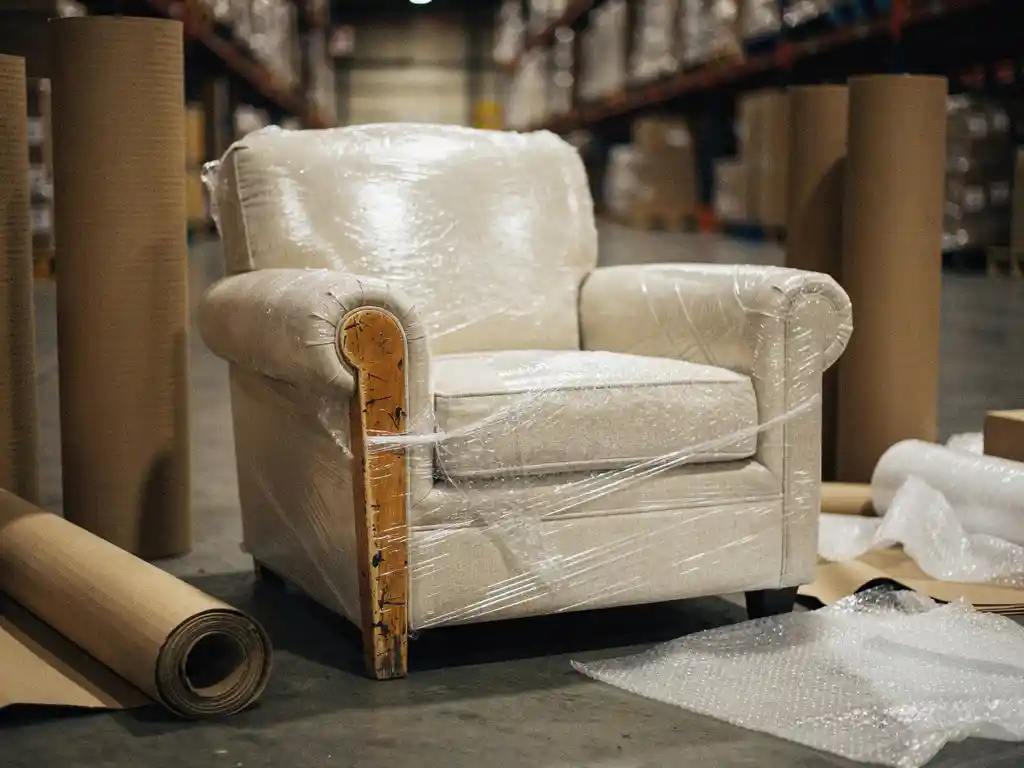
Packaging quality is one of the most direct factors influencing whether furniture arrives at its destination intact or damaged. Yet it is often treated as an afterthought rather than a deliberate part of the logistics process. Whether you are shipping a single sofa or coordinating a large-scale project delivery, the decisions you make about materials, application, and preparation before handover will determine the outcome at the other end.
This guide walks you through a practical, step-by-step process to reduce furniture transport damage through better packaging. Follow each step in order to build a consistent approach that protects your products, reduces claims, and builds confidence with your customers.
Assess your current packaging against transport risks
Before making any changes, you need to understand where your current packaging is falling short. Transport damage rarely happens at random. It follows predictable patterns tied to specific risks: vibration during transit, compression from stacking, moisture exposure in warehouses, and impact from handling at loading docks. Identifying which of these risks is causing damage in your operation is the essential first step.
- Review your damage claims from the past six to twelve months and categorise them by damage type: scratches, dents, structural breaks, moisture damage, or surface compression marks.
- Map each damage type to a likely cause. Scratches often point to insufficient surface protection or shifting during transit. Structural breaks suggest inadequate corner and edge reinforcement. Moisture damage points to storage or transit conditions rather than packaging materials.
- Photograph examples of damaged packaging alongside the damaged product to create a visual reference for the gaps in your current approach.
After this audit, you should have a clear picture of which furniture types are most vulnerable and which packaging failures are recurring. This evidence base will guide every decision in the steps that follow. If you find that damage is concentrated in specific product categories, prioritise those in your packaging review.
Choose the right materials for each furniture type
Not all furniture requires the same packaging approach, and using the wrong materials is a common reason packaging quality fails even when effort has been made. A solid oak dining table has different vulnerabilities than an upholstered armchair or a flat-pack cabinet. Matching materials to the specific risks of each product type is what separates effective packaging from generic wrapping.
Consider the following material options based on furniture characteristics:
- Bubble wrap and foam sheeting: Ideal for protecting polished or lacquered surfaces from scratches and minor impacts. Use high-density foam for heavier items where compression is a risk.
- Corrugated cardboard sheets and corner protectors: Essential for edges and corners on hard furniture such as tables, cabinets, and bed frames. Corners absorb the majority of impact force during handling.
- Stretch film: Effective for binding components together and preventing shifting, but should not be applied directly to fabric or leather upholstery as it can leave marks or trap moisture.
- Textile blankets and moving pads: The preferred choice for upholstered pieces, antiques, and any item with a delicate finish that cannot tolerate plastic contact.
- Moisture-barrier materials: Relevant for international shipments or storage transitions where humidity fluctuations are likely.
With your materials selected, you are ready to move into the application phase. The quality of materials only translates into protection when they are applied correctly and consistently.
Apply packaging correctly for maximum protection
Correct application is where many packaging processes break down. Staff may use the right materials but apply them inconsistently, leaving gaps that create points of vulnerability during transit. Standardising your application method ensures that every item leaving your facility is protected to the same level.
- Start from the most vulnerable points: corners, legs, protruding handles, and glass components. Apply corner protectors and foam padding to these areas before wrapping the broader surface.
- Wrap surfaces in a single direction, overlapping each layer by at least a third to avoid gaps. For bubble wrap, position the bubble side facing the product surface to maximise cushioning.
- Secure all wrapping with tape applied to the packaging material itself, never directly to the furniture surface. For stretch film, ensure tension is even to avoid pressure points on upholstered items.
- For items with removable components such as legs, shelves, or glass panels, remove and package these separately with individual labelling to ensure reassembly is straightforward at the destination.
- Place packaged items in appropriately sized outer cartons or crates where required. Avoid oversized boxes where movement inside the packaging is possible.
Once applied, press gently on all sides of the packaged item to check for any movement or soft spots in the protection layer. There should be no shifting of the furniture within its packaging and no unprotected hard edges detectable from the outside.
Label and prepare packages for handling conditions
Labelling is not just an administrative task. It is an active tool for reducing transport damage by communicating handling requirements to everyone who touches the shipment. Packages that carry clear orientation, fragility, and stacking instructions are handled differently, and that difference shows in damage rates.
- Apply orientation labels such as “This Side Up” arrows to all sides of the package where orientation matters. Use large, high-contrast labels that remain visible even when packages are partially obscured in a loaded vehicle.
- Mark fragile items clearly on at least three sides of the package. While “Fragile” labelling alone does not guarantee careful handling, it creates accountability and is often required for damage claims.
- Indicate maximum stacking weight on the top surface of packages that cannot bear load. This prevents heavier items from being placed on top during transit or warehouse storage.
- Include a delivery reference, destination address, and contact number on a weatherproof label. For international shipments, ensure compliance with any customs documentation requirements.
With labelling complete, confirm that no labels are obscuring each other and that all markings are legible after the packaging process. A label applied over bubble wrap that then peels away in transit provides no protection at all.
Verify packaging integrity before handover to the carrier
The moment before handover to a carrier is your last opportunity to catch packaging failures before they become damage claims. A structured pre-handover check takes only a few minutes per item but can prevent costly returns, replacements, and customer complaints.
Run through the following verification checklist for each item or pallet before it leaves your facility:
- All corners and edges are covered and secured
- No tape is applied directly to furniture surfaces
- Outer packaging shows no tears, open seams, or compression damage
- All labels are legible and correctly positioned
- Removable components are separately packaged and referenced on the main label
- Palletised items are strapped and stretch-wrapped to prevent movement during transit
Document this check with a sign-off process, whether digital or paper-based. If a shipment later arrives damaged, this record confirms that the packaging met your standards at the point of handover, which is important for both internal accountability and carrier liability discussions. At Jan Krediet, our furniture transport process includes structured handling protocols that complement this kind of pre-handover preparation.
Reduce recurring damage with a packaging review process
Even a well-designed packaging approach will need adjustment over time as your product range evolves, shipping routes change, and new damage patterns emerge. Building a regular review process into your operations turns packaging quality from a one-time fix into an ongoing competitive advantage.
- Set a quarterly review cadence where damage claims are analysed against packaging records. Look for any new patterns that have emerged since your last review.
- Involve your warehouse and logistics teams in the review. The people applying packaging daily will often identify practical issues that are not visible in damage data alone.
- Test packaging changes on a small batch before rolling them out across your full operation. This limits risk and gives you a controlled comparison.
- Update your packaging specifications document after each review to reflect approved materials, application methods, and labelling requirements. Treat this as a living standard rather than a static rulebook.
A consistent review process also creates a feedback loop with your logistics partners. Sharing damage data and packaging updates with your carrier opens a conversation about handling practices on their side, which can reveal further opportunities to reduce transport damage beyond what packaging alone can address. If you are managing complex or high-volume furniture shipments, working with a specialist partner who understands the specific demands of furniture warehousing and distribution can significantly strengthen your overall approach.
Packaging quality and furniture transport damage are directly linked, and the steps above give you a practical framework to address that link systematically. Start with your audit, build your material standards, apply them consistently, and review regularly. Each step reinforces the next, and the cumulative result is fewer damaged items, fewer claims, and stronger trust with the customers receiving your products.