




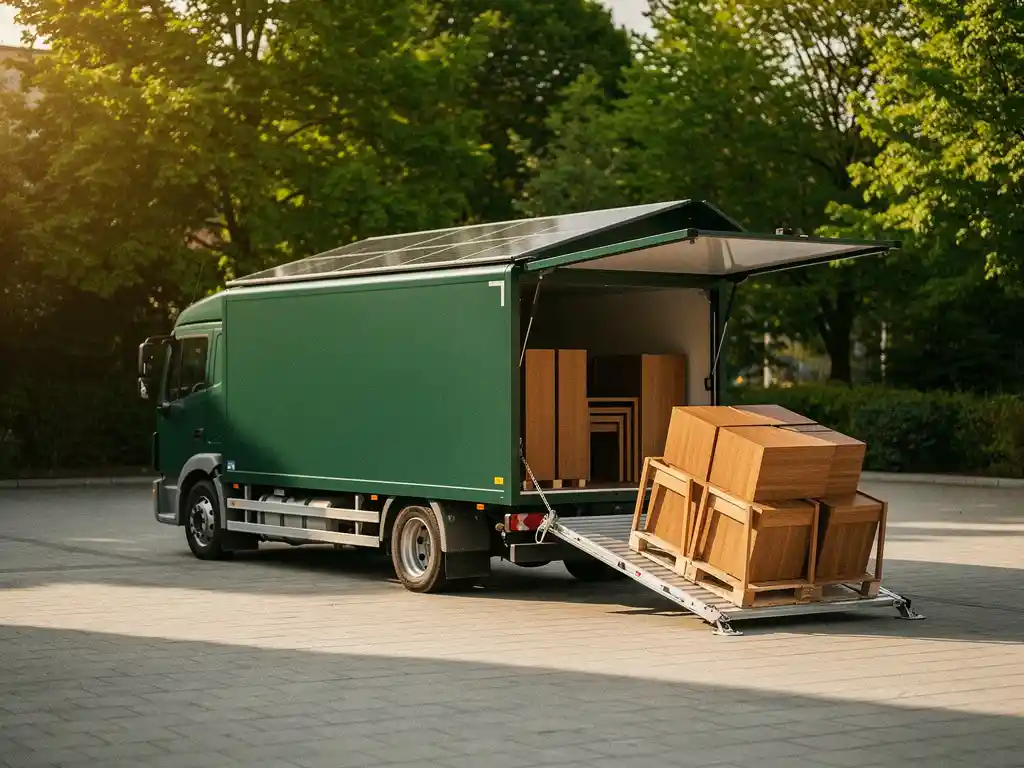
The furniture industry faces increasing pressure to adopt environmentally responsible practices as consumers become more conscious of their environmental impact. Sustainable furniture transport is a critical component of the green supply chain, combining eco-friendly logistics strategies with efficient delivery methods to minimize the carbon footprint of furniture distribution.
From reducing emissions through advanced route planning to implementing innovative packaging solutions, sustainable furniture logistics is transforming how companies approach transportation while maintaining the high standards required to protect valuable furniture items during transit.
What is sustainable furniture transport, and why does it matter?
Sustainable furniture transport refers to logistics practices that minimize environmental impact while delivering furniture efficiently and safely. This approach combines carbon-neutral transport methods, eco-friendly packaging materials, and optimized delivery routes to reduce the overall environmental footprint of furniture distribution.
The importance of sustainable furniture logistics extends beyond environmental benefits. Companies that implement green shipping practices often reduce operational costs through improved fuel efficiency and optimized resource utilization. Additionally, environmentally conscious consumers increasingly prefer businesses that demonstrate a commitment to sustainability, making eco-friendly logistics a competitive advantage in the furniture market.
Modern sustainable transport systems integrate multiple environmental considerations, including vehicle emissions, packaging waste, fuel consumption, and delivery efficiency. These comprehensive approaches ensure that environmental responsibility does not compromise service quality or delivery reliability.
How do logistics companies reduce carbon emissions in furniture delivery?
Logistics companies reduce carbon emissions through fleet modernization, alternative fuel adoption, and load optimization strategies. Electric and hybrid vehicles are increasingly used for local deliveries, while long-distance transport relies on newer, more fuel-efficient trucks that meet strict emissions standards.
Vehicle technology plays a crucial role in emissions reduction. Many companies invest in Euro 6-compliant trucks, which produce significantly lower nitrogen oxide and particulate matter emissions than older models. Some forward-thinking logistics providers are also experimenting with hydrogen fuel cell vehicles and biodiesel alternatives for their transportation fleets.
Load consolidation is another effective emissions-reduction strategy. By combining multiple deliveries into single routes and maximizing trailer capacity utilization, companies can significantly reduce the number of trips required. This approach not only cuts emissions but also improves operational efficiency and reduces transportation costs.
What sustainable packaging methods are used for furniture transport?
Sustainable packaging for furniture transport includes recyclable cardboard wrapping, biodegradable protective materials, and reusable blankets and straps. These materials replace traditional plastic wrap and foam padding with environmentally friendly alternatives that provide equal or superior protection during transit.
Innovative packaging solutions focus on material reduction without compromising protection quality. Corrugated cardboard edge protectors, recycled paper padding, and cornstarch-based bubble wrap alternatives offer effective cushioning while maintaining environmental responsibility. Many companies also use custom-fitted packaging that minimizes material waste by precisely matching protection needs.
Reusable packaging systems are gaining popularity in furniture logistics, where specialized moving blankets, adjustable strapping systems, and modular protective components can be used repeatedly across multiple shipments. This approach significantly reduces packaging waste while often providing superior protection compared to single-use alternatives.
How does route optimization contribute to sustainable furniture logistics?
Route optimization reduces fuel consumption and emissions by calculating the most efficient delivery routes, minimizing travel distances, and reducing delivery times. Advanced logistics software analyzes traffic patterns, delivery windows, and vehicle capacity to create optimal routes that serve multiple customers efficiently.
Modern route planning systems incorporate real-time data, including traffic conditions, weather patterns, and delivery constraints, to continuously adjust routes for maximum efficiency. These systems can reduce total mileage by 15-25% compared to traditional route planning methods, resulting in proportional reductions in fuel consumption and emissions.
Geographic clustering of deliveries further enhances sustainability by grouping nearby destinations into single delivery runs. This strategy is particularly effective in urban areas, where multiple furniture deliveries can be completed within concentrated geographic zones, minimizing unnecessary travel between distant locations.
Hoe Jan Krediet helpt met duurzaam meubeltransport
At Jan Krediet, we implement comprehensive sustainable furniture transport solutions that combine environmental responsibility with reliable delivery service. Our approach to eco-friendly logistics includes several key components:
- Modern fleet management with fuel-efficient vehicles and emissions-reduction technologies
- Advanced route optimization systems that minimize travel distances and fuel consumption
- Sustainable packaging materials, including reusable protective equipment and recyclable wrapping
- Load consolidation strategies that maximize vehicle capacity utilization
- International network coordination through MACH-3000 to optimize cross-border furniture logistics
Our sustainable supply chain approach extends from our warehousing facilities in Steenwijk and Venlo to final delivery destinations worldwide. By integrating environmental considerations into every aspect of our furniture transport operations, we help clients achieve their sustainability goals while maintaining the high-quality service standards required for valuable furniture items.
Ready to implement sustainable furniture transport solutions for your business? Contact us to discuss how our eco-friendly logistics services can optimize your furniture supply chain while reducing environmental impact.