


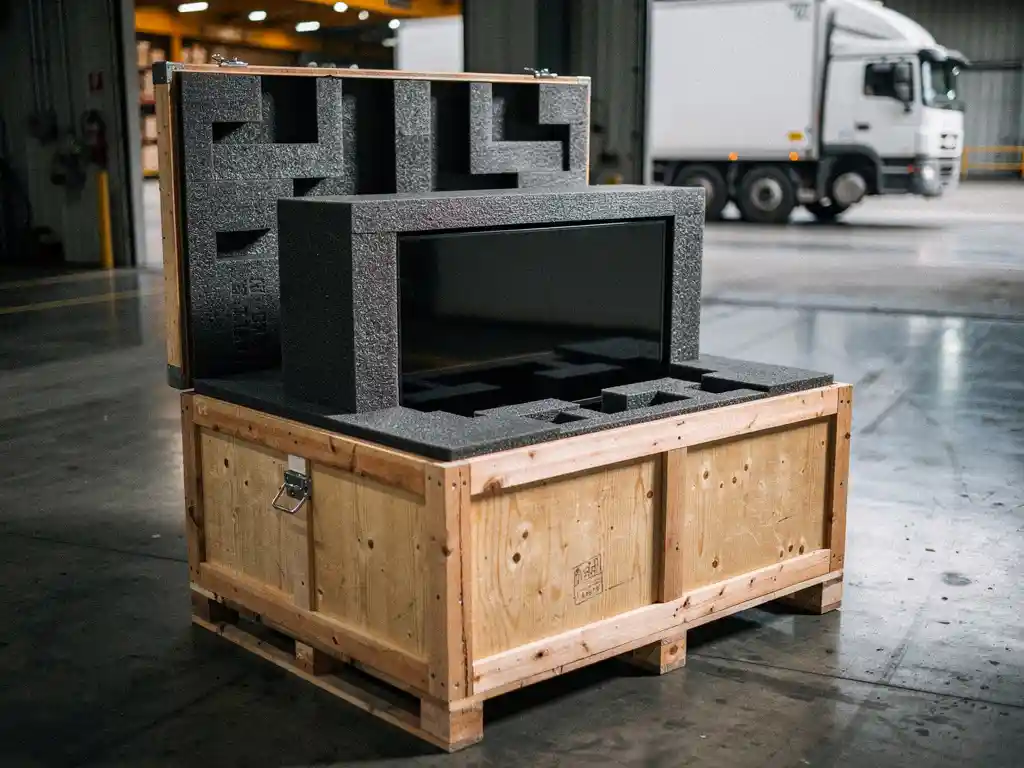
Shock protection during electronics transport is ensured through a combination of purpose-built packaging, vibration-dampening materials, controlled handling procedures, and environmental monitoring throughout the supply chain. The goal is to isolate sensitive components from the mechanical stresses that occur during loading, transit, and unloading. The sections below break down each layer of that protection in practical detail.
What types of damage can electronics suffer during transport?
Electronics can suffer several distinct types of damage during transport: physical impact damage from drops or collisions, vibration-induced fatigue in solder joints and circuit boards, electrostatic discharge (ESD) that corrupts or destroys microcomponents, and environmental damage caused by moisture, condensation, or temperature extremes. Understanding each failure mode is the starting point for designing effective shock protection.
Impact damage is the most visible category. A single drop event can crack screens, fracture casings, and dislodge internal connectors. Less obvious is cumulative vibration damage, which builds up over long road journeys and gradually weakens the microscopic solder connections that hold components to circuit boards. This type of damage may not appear immediately but can cause field failures weeks after delivery.
Electrostatic discharge is a hidden risk that many shippers underestimate. A static charge that a person would barely notice can permanently damage a microprocessor or memory chip. Moisture is equally dangerous: condensation forming on cold components when they enter a warm environment can cause short circuits and corrosion that are difficult to trace back to the transport phase.
What packaging materials are used to protect electronics in transit?
The packaging materials most commonly used to protect electronics in transit include anti-static bags and foam, expanded polyethylene (EPE) or polyurethane foam inserts, air cushion systems, corrugated double-wall cardboard, and rigid outer cases. Each material addresses a specific damage risk, and effective electronics packaging typically layers several of these together.
Anti-static bags form the first line of defense for bare circuit boards, drives, and other ESD-sensitive components. These metallized or pink polyethylene bags dissipate static charges before they can reach the component. Inside the outer carton, custom-cut foam inserts cradle the device and absorb impact energy by deforming on impact rather than transmitting the force to the product.
Air cushion packaging and bubble wrap provide lightweight protection for less fragile items, while honeycomb cardboard inserts offer a more sustainable alternative to foam for mid-range applications. For high-value or particularly fragile electronics, rigid Pelican-style cases with pre-cut foam interiors are the standard choice, providing both impact resistance and a degree of environmental sealing against dust and moisture.
How does vibration damping work in electronics logistics?
Vibration damping in electronics logistics works by placing energy-absorbing materials between the product and the outer packaging so that road vibrations, engine oscillations, and handling impacts are converted into heat rather than transmitted to sensitive components. Foam, gel pads, and suspension packaging systems are the primary tools used to achieve this isolation.
The physics behind vibration damping relies on a material’s ability to deform under cyclic stress and return to its original shape while dissipating energy in the process. Polyurethane foam is widely used because its cell structure compresses and rebounds repeatedly without degrading quickly. For the most sensitive electronics, suspension packaging, where the product is held in the center of the box by stretched film or foam corners, keeps the item physically separated from all six walls of the carton, providing maximum isolation.
At the vehicle level, air-ride suspension systems on modern trucks significantly reduce the vibration frequencies transmitted to cargo. Route planning also plays a role: avoiding roads with poor surfaces and reducing the number of handling events during a journey directly reduces cumulative vibration exposure. Combining vehicle-level and packaging-level damping gives the best overall result.
What role does temperature and humidity control play in electronics shipping?
Temperature and humidity control play a critical role in electronics shipping because extreme heat can damage batteries and warp circuit boards, cold can make plastics brittle and cause condensation when products warm up, and high humidity accelerates corrosion on metal contacts and connectors. Maintaining stable environmental conditions throughout transit is as important as physical shock protection.
The most common temperature-related risk for consumer electronics is battery degradation. Lithium-ion batteries lose capacity permanently when exposed to high heat during storage or transit, and they can swell or fail when frozen. For this reason, climate-controlled vehicles and warehouses are the appropriate choice for premium electronics, particularly during summer transport across southern Europe or winter shipments in northern climates.
Humidity control is managed through desiccant sachets placed inside sealed packaging to absorb moisture, and through vapor barrier bags that prevent ambient humidity from reaching the product. When electronics move between very different climate zones, allowing packages to acclimatize gradually before opening, rather than immediately unpacking cold items in a warm room, is a simple but effective way to prevent condensation damage.
What are the industry standards for electronics transport packaging?
The main industry standards for electronics transport packaging include ISTA (International Safe Transit Association) test protocols, ASTM D4169, and IEC standards for ESD protection such as IEC 61340. These standards define the test conditions that packaging must survive, including drop tests, vibration cycles, and compression loads, giving shippers a measurable benchmark for packaging performance.
ISTA protocols are the most widely referenced in global electronics logistics. ISTA 2A and 3A, for example, simulate the complete distribution environment a parcel will encounter from manufacturer to end consumer, including multiple drop heights, random vibration profiles, and atmospheric conditioning. Packaging that passes these tests has been validated against real-world shipping conditions rather than theoretical assumptions.
ESD standards are governed separately. IEC 61340 specifies the requirements for packaging materials and handling environments to prevent electrostatic discharge. Compliance typically requires using certified anti-static materials, grounding procedures during packing and unpacking, and ESD-safe workstations in warehousing facilities. For companies handling electronics at scale, working within a certified warehousing environment that meets these standards is an important part of maintaining product integrity from receipt to final delivery.
How should high-value electronics be handled differently during logistics?
High-value electronics should be handled differently during logistics through stricter access controls, dedicated handling by trained specialists, enhanced tracking throughout the supply chain, and packaging that exceeds standard commercial specifications. The higher the value, the more each individual handling event needs to be planned, documented, and executed by personnel who understand the specific risks involved.
From a physical handling perspective, high-value items benefit from two-person delivery teams, a practice we apply in our own specialist logistics operations for premium products, because it reduces the risk of drops and allows one person to manage the item while the other manages the environment. Pre-departure inspections, where the condition of packaging is verified before the vehicle leaves the warehouse, catch potential problems before they become damage claims.
Tracking technology adds another layer of assurance. GPS monitoring at the shipment level, combined with shock and tilt sensors attached to the packaging, creates a data record of every significant movement event during transit. If a claim arises, this data identifies exactly when and where an impact occurred. For the most sensitive or irreplaceable electronics, such as server infrastructure or medical diagnostic equipment, our project logistics approach treats each shipment as a unique operation with its own planning, dedicated resources, and end-to-end accountability rather than routing it through standard freight channels.
Insurance coverage should also reflect the value of the goods. Standard freight liability limits are rarely sufficient for high-value electronics, and arranging declared-value coverage or all-risk cargo insurance ensures that financial protection matches the actual replacement cost of the equipment being shipped.