


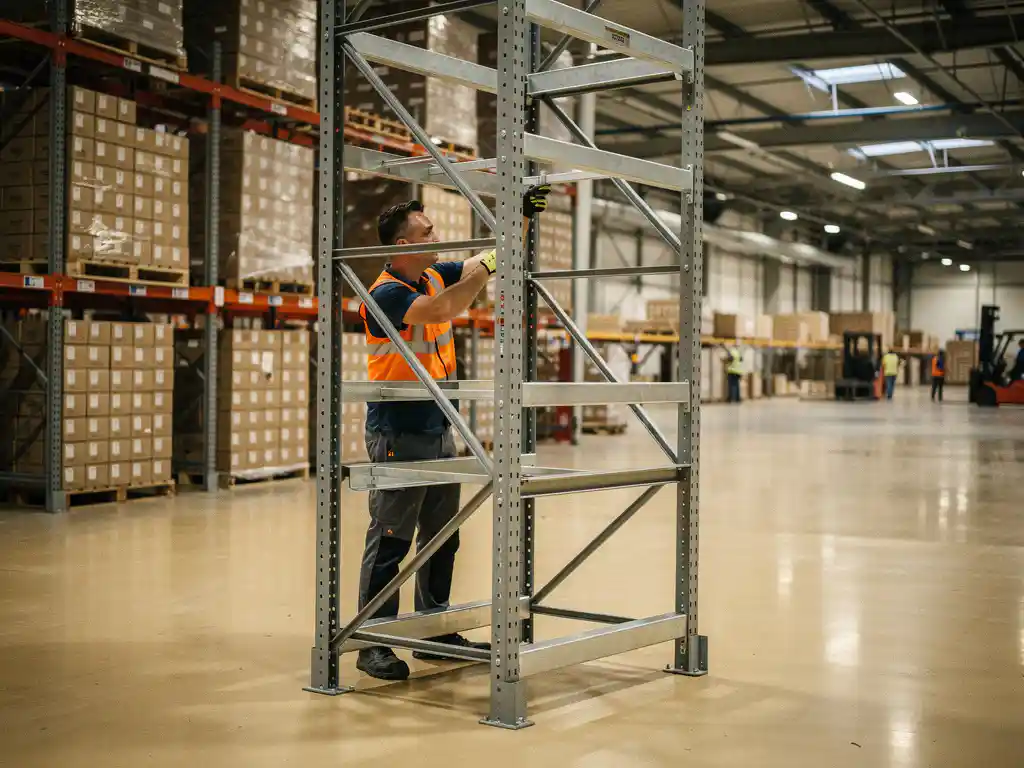
Avoiding disruption during a rack replacement comes down to one thing: planning the transition before a single bolt is loosened. The most successful replacements treat the project as a live logistics operation, not a construction job, keeping inventory moving, staff informed, and timelines locked in from day one. The questions below break down exactly how to do that.
What causes the most disruption during a rack replacement?
The biggest sources of disruption during a rack replacement are unplanned downtime, poor sequencing of rack removal, and insufficient temporary storage. When zones go offline without a clear plan for where stock moves next, the entire pick-and-pack operation stalls. Add in unreliable contractor timelines and inadequate staff communication, and a manageable project quickly becomes an operational crisis.
Most disruption is not caused by the physical work itself but by the gap between what was planned and what actually happens on the floor. Common triggers include:
- Removing rack sections before replacement units are confirmed on-site
- Failing to relocate fast-moving SKUs before the affected zone goes offline
- Underestimating the knock-on effect on adjacent warehouse zones
- Poor coordination between the installation crew and warehouse staff working simultaneously
- No contingency buffer for delayed deliveries of the new racking system
Each of these issues is avoidable with the right preparation. The key is treating rack replacement as a logistics project that requires the same discipline as any other complex operation, with clear handover points, defined responsibilities, and a realistic schedule built around your busiest operational periods.
How long does a rack replacement typically take?
A rack replacement in an active warehouse typically takes anywhere from a few days to several weeks, depending on the size of the installation, the complexity of the system being replaced, and whether the warehouse remains operational throughout. A single-zone replacement in a small facility can be completed over a weekend, while a full-scale racking overhaul across a large distribution centre may run for months in phased stages.
Several factors directly affect the timeline:
- Scale of the project: The number of bays, aisles, and rack types being replaced is the primary driver of duration
- Operational continuity requirements: Running the warehouse during the replacement extends the timeline but protects daily throughput
- Lead time for new racking: Custom or high-specification systems may require longer procurement windows
- Dismantling and disposal of old racking: Removal logistics add time that is often underestimated in initial planning
- Safety inspections and sign-off: New racking must be certified before it is loaded, which adds a mandatory step at the end of each phase
Building a realistic timeline from the outset, with buffer time at each phase, is far more effective than compressing the schedule and risking costly overruns.
Should you keep the warehouse running during a rack replacement?
In most cases, yes, keeping the warehouse running during a rack replacement is the right decision. A full shutdown is rarely commercially viable, particularly for operations with regular inbound and outbound flows. The more practical approach is a phased replacement that takes individual zones offline in sequence while the rest of the facility continues to operate at reduced but functional capacity.
That said, the decision depends on a clear-eyed assessment of your operation. A full shutdown might make sense if the facility is small, the replacement is urgent for safety reasons, or you can schedule the work during a planned low-volume period. For most warehouses, however, the financial cost of a complete halt, combined with the difficulty of catching up on deferred orders, outweighs the logistical complexity of running a live operation alongside a construction crew.
If you choose to keep the warehouse running, a few principles become non-negotiable:
- Establish clear physical separation between the active work zone and live picking areas
- Brief warehouse staff daily on which zones are affected and what the safe routes are
- Adjust picking paths and replenishment routes before the zone goes offline, not after
- Ensure the installation crew and warehouse team operate on coordinated shift patterns to avoid conflict
How do you plan a rack replacement without halting operations?
Planning a rack replacement without halting operations requires dividing the project into sequential phases, each with its own zone, timeline, and stock relocation plan. Start by mapping your warehouse layout and identifying which areas can be isolated without cutting off critical pick paths or blocking inbound docking. Then sequence the phases so that each zone is cleared, replaced, and signed off before the next one begins.
The planning process should cover the following in order:
- Audit current stock positions: Identify which SKUs are stored in the zones affected by each phase and plan where they will be relocated during the work
- Prioritise by velocity: Move fast-moving stock out of affected zones first to maintain fulfilment speed throughout the project
- Confirm temporary storage capacity: Whether internal or external, temporary storage must be confirmed before work begins, not sourced reactively
- Lock in contractor timelines: Agree on daily start and finish times, noise and dust management protocols, and escalation procedures for delays
- Communicate internally: Warehouse managers, shift supervisors, and picking teams all need clear briefings before each phase begins
- Build in review points: Schedule a brief operational review at the end of each phase before signing off the zone as active
The most common planning mistake is treating rack replacement as a facilities project rather than a supply chain project. Every phase decision has an inventory implication, and those implications need to be worked through in advance.
What role does temporary warehousing play in a rack replacement?
Temporary warehousing is often the single most important enabler of a disruption-free rack replacement. It provides the buffer space needed to relocate stock from offline zones, maintain inventory availability, and keep outbound flows running while the physical infrastructure is rebuilt. Without confirmed temporary capacity, even a well-sequenced replacement plan will stall the moment a zone goes offline.
Temporary warehousing can take several forms depending on your situation:
- Internal reallocation: Using spare capacity in unaffected zones within the same facility, which is the lowest-cost option but often limited in scale
- External short-term storage: Renting capacity from a third-party logistics provider for the duration of the project, which offers flexibility without long-term commitment
- Mobile storage solutions: Temporary racking or container-based storage positioned close to the facility to reduce transport time during the transition
When evaluating temporary warehousing options, consider not just the physical space but also the accessibility for your transport fleet, the handling equipment available on-site, and how stock accuracy will be maintained across two locations simultaneously. Our warehousing solutions are designed to support exactly this kind of short-term, project-driven requirement, with flexible capacity and full inventory visibility throughout.
Who should manage a rack replacement project in a logistics environment?
A rack replacement project in a logistics environment should be managed by a dedicated project manager with authority over both the operational and the construction workstreams. This person must be able to make decisions that affect warehouse operations, contractor scheduling, and stock positioning simultaneously. Splitting responsibility between a facilities manager and a warehouse manager without a single point of accountability is one of the most reliable ways to create confusion and delays.
The ideal project manager for a rack replacement brings together three areas of competence:
- Logistics operations knowledge: Understanding of how the warehouse functions day to day, including pick paths, replenishment cycles, and throughput peaks
- Project management discipline: The ability to build and maintain a phased schedule, manage contractor relationships, and escalate issues quickly
- Stakeholder communication: The capacity to keep warehouse staff, senior management, and external contractors aligned throughout the project
For organisations that do not have this combination of skills in-house, working with an experienced project logistics partner is a practical alternative. We have managed complex, multi-phase logistics projects across Europe and internationally, and we apply the same structured methodology to warehouse transition projects as we do to large-scale installation and furnishing assignments. The principle is the same: every detail managed, every phase signed off, no surprises at handover.