


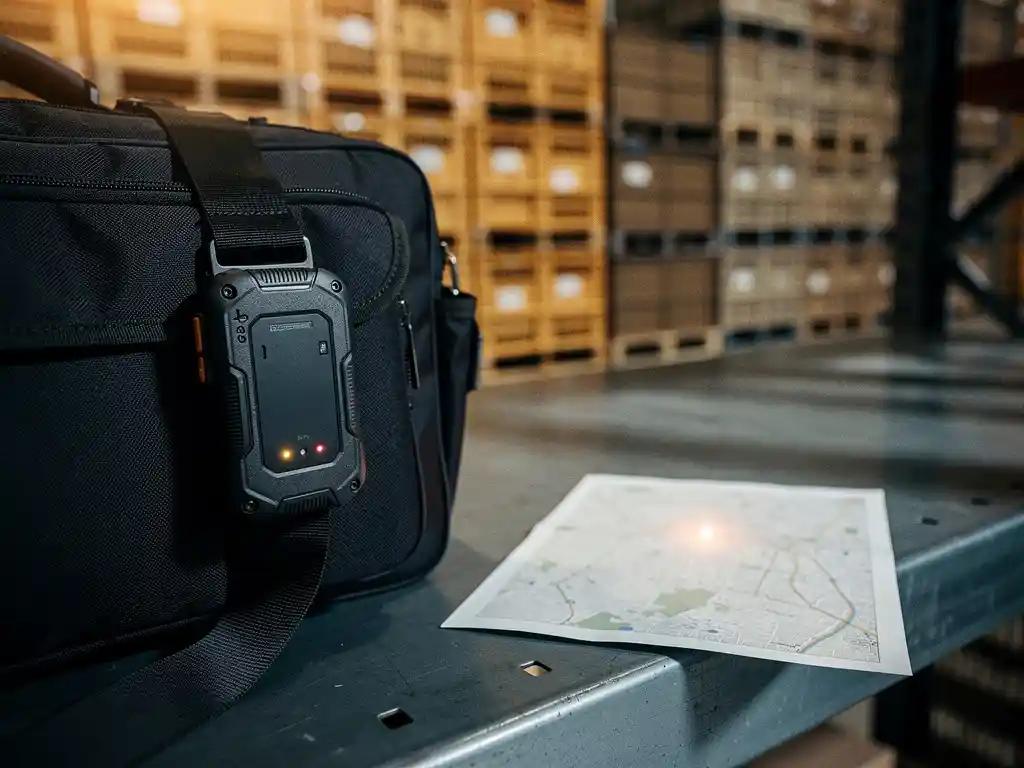
Yes, there are several reliable ways to track where your IT equipment is located, whether it is sitting in a warehouse, moving between offices, or deployed across multiple sites. The right approach depends on whether the equipment is stationary or in transit, and how much real-time visibility you need. This article walks through the key technologies, tools, and decisions involved in keeping track of your IT assets.
What technologies are used to track IT equipment locations?
IT equipment location tracking relies on a combination of hardware tags, wireless communication protocols, and software platforms. The most widely used technologies include GPS, RFID (Radio Frequency Identification), Bluetooth Low Energy (BLE) beacons, and barcode or QR code scanning. Each serves a different purpose depending on whether you need real-time tracking, proximity detection, or periodic inventory checks.
GPS is best suited for equipment that moves across large distances, such as servers or laptops being transported between facilities. RFID tags allow warehouse teams to scan multiple assets simultaneously without line-of-sight, making them highly efficient for bulk inventory. BLE beacons work well in indoor environments like office buildings or data centers, where GPS signals are unreliable, by broadcasting location signals to nearby receivers. Barcode and QR code scanning are the most affordable options and work well when manual check-in and check-out processes are acceptable.
The choice of technology often comes down to the scale of your operation, your budget, and how frequently assets move. Many organizations use a combination, for example GPS for assets in transit and RFID or BLE once equipment arrives at a fixed location.
What is the difference between active and passive IT asset tracking?
Active tracking means the tag or device continuously broadcasts its location in real time using its own power source, while passive tracking means the tag only responds when scanned by an external reader. Active tracking gives you live visibility into where your IT equipment is located at any given moment, whereas passive tracking provides a snapshot at the point of scanning.
Active tracking
Active tags contain a battery and transmit signals continuously or at set intervals. GPS trackers and BLE beacons are common examples. Because they operate independently, active tags are ideal for high-value assets, equipment in transit, or situations where you need to know the location of a device without physically inspecting it. The trade-off is higher cost and the need to manage battery life.
Passive tracking
Passive tags, such as standard RFID labels, have no internal power source. They are activated by the electromagnetic field of a reader device. This makes them far cheaper to deploy at scale, and they require virtually no maintenance. The limitation is that you only know where an asset was at the moment it was last scanned. For environments with regular, structured scanning routines, such as warehouse check-ins or dispatch points, passive tracking is often sufficient and cost-effective.
How does GPS tracking work for IT equipment in transit?
GPS tracking for IT equipment in transit works by attaching a GPS-enabled device to the shipment or vehicle carrying the equipment. That device communicates with satellites to calculate its geographic position and then transmits that position via a cellular or satellite network to a central platform, where you can view the location in real time.
In practice, this means a logistics team can monitor exactly where a server rack, a batch of laptops, or a set of network switches is at any point during transport. If a shipment is delayed, diverted, or stopped unexpectedly, the platform flags the anomaly. Some systems also allow geofencing, where an alert is triggered automatically if the equipment leaves or enters a defined geographic zone.
For IT equipment specifically, GPS tracking is particularly valuable when shipments are high-value, time-sensitive, or crossing international borders. Combining GPS data with shipment documentation gives operations teams a complete picture of custody and location throughout the journey. When a professional cargo transport service is involved, GPS visibility is often integrated into the logistics provider’s tracking platform, giving clients access through a portal or live feed.
What software tools are used to manage IT asset locations?
IT asset location management is handled through IT Asset Management (ITAM) platforms, which consolidate data from tracking hardware into a single interface. Popular categories of tools include dedicated ITAM software, IT Service Management (ITSM) platforms with asset modules, and Warehouse Management Systems (WMS) when assets are stored in a logistics facility.
ITAM platforms such as ServiceNow, Lansweeper, or ManageEngine AssetExplorer allow organizations to record where each asset is deployed, who is responsible for it, and when it was last seen. These tools integrate with barcode scanners, RFID readers, and network discovery agents to keep location data current. When an asset is checked out to a user, moved to a new office, or sent for repair, the system logs the change.
For assets held in a warehouse or distribution environment, a warehouse management system provides bin-level location accuracy, tracking exactly which shelf or bay an item occupies. This level of detail is especially relevant for IT equipment awaiting deployment, refurbishment, or return processing.
The most effective setups connect logistics tracking data with internal ITAM records so that the moment equipment leaves a warehouse, is loaded onto a vehicle, and arrives at its destination, the asset record updates automatically. This removes manual data entry and reduces the risk of location gaps in your records.
When should you use a third-party logistics provider to track IT equipment?
You should consider a third-party logistics provider for IT equipment tracking when your shipments are international, high-value, or complex enough that internal resources cannot provide the visibility and control you need. A specialist logistics partner brings dedicated tracking infrastructure, experienced handling procedures, and integrated reporting that most in-house teams cannot replicate cost-effectively.
There are several situations where outsourcing logistics and tracking makes clear sense. If you are deploying IT equipment across multiple countries, managing customs clearance, and coordinating delivery timelines simultaneously, the administrative and operational load quickly exceeds what an internal team can handle efficiently. A logistics partner with established systems can provide end-to-end visibility from the moment goods leave a warehouse to the moment they are installed on-site.
We at Jan Krediet handle exactly these kinds of complex, multi-location IT logistics projects. Our project logistics team has experience assembling server cabinets in dust-free clean-room environments, managing worldwide distribution of IT hardware, and providing warehousing and refurbishment services for major technology clients. Clients receive online tracking throughout the process, so they always know where their equipment is located without having to manage the logistics themselves.
A third-party provider also adds value when equipment requires special handling, such as dust-sensitive components or fragile hardware, where standard courier services are not appropriate. The combination of specialist infrastructure, trained personnel, and integrated tracking platforms makes a professional logistics partner the most reliable answer to the question of where your IT equipment is located at every stage of its journey.
If you want to learn more about how we approach high-tech logistics or explore what a tailored solution might look like for your organization, feel free to get in touch with our team.