




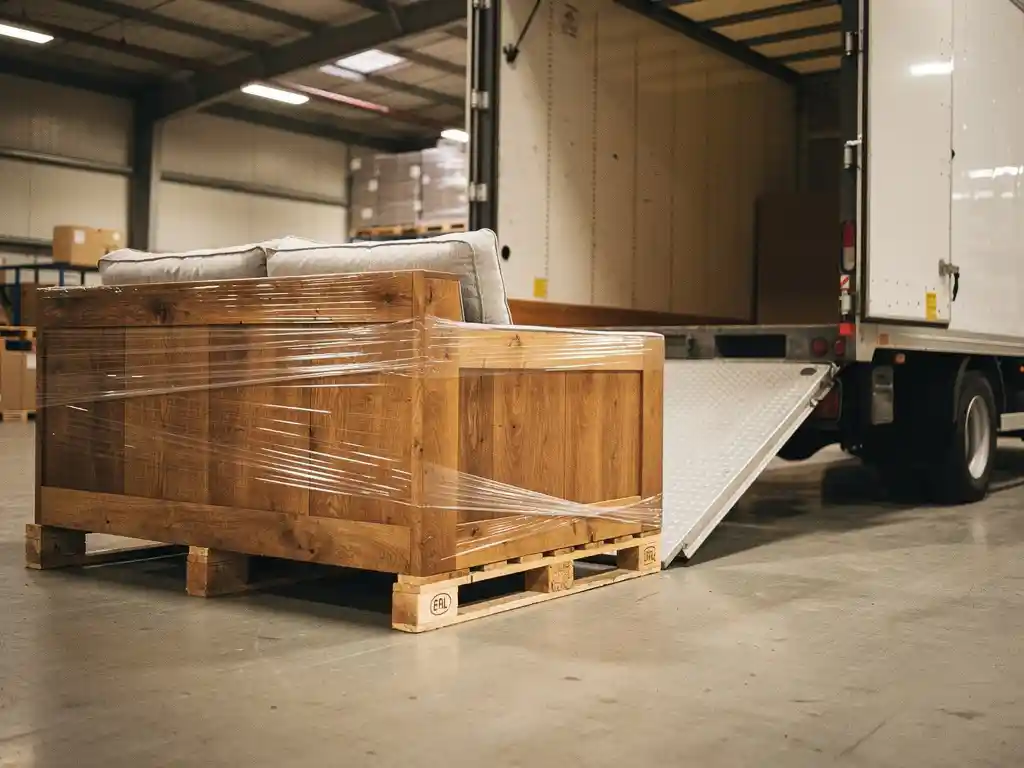
Whether to transport large furniture on pallets or without them depends on the size, weight, and fragility of the items involved. For heavy, bulky pieces like wardrobes, sofas, or dining tables, pallet transport generally offers better protection and handling efficiency. Lighter or custom-shaped items may ship more effectively without pallets. The sections below break down the key factors that should guide your decision.
What are the main risks of transporting large furniture without pallets?
Transporting large furniture without pallets exposes pieces to a higher risk of surface damage, structural stress, and unstable stacking during transit. Without a firm base, heavy items shift more easily inside the vehicle, and direct floor contact increases the chance of scratches, dents, and moisture damage. For fragile or high-value furniture, these risks are significant.
When furniture travels loose, handlers must lift and position each piece manually at every transfer point. This raises the likelihood of accidental drops or collisions with other cargo. Upholstered items are particularly vulnerable to dirt and abrasion without protective staging, while wooden surfaces can warp or splinter if they absorb moisture from a vehicle floor. The more transit points a shipment passes through, the greater the cumulative risk.
For international or long-distance large furniture logistics, where items change hands multiple times, the absence of a pallet also makes it harder to use mechanical handling equipment like forklifts or pallet trucks. This slows down loading and unloading and increases the physical demand on warehouse staff, which in turn raises the chance of human error during handling.
How does pallet transport protect large furniture during shipping?
Pallet transport protects large furniture by creating a stable, elevated base that supports the item’s weight evenly, prevents floor contact, and allows safe mechanical handling throughout the supply chain. When combined with stretch wrap, edge protectors, and securing straps, palletised furniture arrives with significantly less risk of movement-related damage.
The structural benefit of a pallet goes beyond simple elevation. By distributing weight across a rigid platform, pallets prevent pressure points that can crack joints, warp panels, or compress foam in upholstered pieces. Furniture secured to a pallet also stays fixed relative to other cargo in the vehicle, reducing the impact of road vibrations and sudden braking.
From a logistics operations standpoint, pallets make the entire chain more efficient. Forklifts and pallet jacks can move loaded pallets quickly and safely, reducing dwell time in warehouses and loading docks. This matters especially for high-volume shipments or project-based deliveries where dozens of pieces need to be processed in sequence. Our warehousing solutions are built around this kind of structured, pallet-compatible flow to keep furniture moving through the chain without unnecessary handling delays.
Which furniture types are best suited for pallet transport?
Furniture types best suited for pallet transport are those that are heavy, flat-packed, or structurally rigid, such as wardrobes, bed frames, dining tables, office desks, and flat-pack cabinet units. These items have predictable dimensions, can be stacked or secured firmly, and benefit most from the stability and mechanical handling that pallets provide.
Flat-pack furniture is a natural fit for pallets because the rectangular boxes stack cleanly and distribute weight evenly. A full pallet of flat-pack units can be wrapped, labelled, and moved as a single unit, which dramatically reduces handling time and the chance of individual boxes being misplaced or damaged.
Assembled wooden furniture with hard, flat surfaces also palletises well when properly padded. A dining table placed face-down on a padded pallet with corner protectors and stretch wrap arrives in far better condition than the same table transported loose. Similarly, heavy stone or glass-topped furniture pieces benefit from the controlled, level surface a pallet provides during loading and unloading.
Items that are awkwardly shaped, extremely fragile, or require custom crating, such as antique chairs, sculptural pieces, or large mirrors, may need specialist handling beyond standard palletisation. In those cases, a combination of custom packaging and pallet basing is often the most effective approach.
When is transporting furniture without pallets the better option?
Transporting furniture without pallets is the better option when items are too large or irregularly shaped to fit a standard pallet, when the delivery environment requires direct placement by hand, or when the shipment involves a small number of carefully wrapped individual pieces handled by a dedicated crew throughout the entire journey.
White-glove furniture delivery services, for example, often bypass pallets entirely. A two-person team collects a sofa, wraps it in transit blankets, loads it directly into a padded vehicle, and carries it into the customer’s home. In this scenario, the controlled handling chain replaces the protective function of a pallet. The same logic applies to high-end interior fit-out projects where furniture is delivered room by room and installed on-site.
Very large items, such as oversized sectional sofas or custom-built cabinetry, may simply not conform to standard pallet dimensions. Forcing them onto a pallet can actually create instability rather than reduce it. For these pieces, purpose-built vehicle racking, furniture blankets, and experienced handlers offer better protection than a pallet would.
The key factor is continuity of care. Pallet-free transport works when the same team handles the item from collection to delivery. Once a shipment enters a multi-leg freight network with multiple handover points, pallet protection becomes far more valuable.
How does the choice between pallets and no pallets affect shipping costs?
The choice between pallet and non-pallet furniture shipping affects costs through three main factors: handling time, freight space, and damage risk. Palletised shipments typically cost less per unit to handle in high-volume freight networks, while non-palletised white-glove services carry a premium due to the dedicated labour and care involved.
In standard freight, pallets reduce loading and unloading labour costs because mechanical equipment does the heavy lifting. Faster turnaround at warehouses and loading docks translates directly into lower operational costs, and those savings are often reflected in competitive rates for palletised furniture transport.
However, pallets add weight and occupy space. A standard euro pallet weighs around 20 to 25 kilograms and adds height to a shipment. For air freight or premium express services where every kilogram counts, this overhead can offset the handling savings. Shippers need to weigh the cost of the pallet itself against the cost of potential damage claims from unpalletised transport.
Non-palletised white-glove delivery costs more upfront but reduces the risk of damage-related returns, replacements, and customer complaints. For high-value furniture, the cost of a single damage claim can easily exceed the premium paid for careful, pallet-free handling. The right choice depends on the value of the items, the length and complexity of the route, and the service level the end customer expects.
What should you consider when choosing a furniture logistics partner?
When choosing a furniture logistics partner, the most important factors are specialist experience with fragile goods, the ability to handle both palletised and non-palletised shipments, warehouse infrastructure, and coverage of your required routes. A partner that understands the specific demands of furniture transport will make better decisions at every stage of the supply chain.
Experience matters more in furniture logistics than in general cargo. Furniture is heavy, often fragile, and valuable, and the consequences of poor handling are immediately visible to the end customer. A logistics partner with a dedicated furniture operation understands how to package, store, and deliver these items without the damage rates that come with generalist freight handling.
Consider the following when evaluating a potential partner:
- Specialist infrastructure: Does the partner have furniture-specific warehouse facilities, including racking, padding, and climate control where needed?
- Service range: Can they handle the full journey, from collection and warehousing through to final-mile delivery and installation?
- Network reach: Do they cover the routes you need, including international destinations?
- Handling flexibility: Are they equipped for both palletised bulk shipments and white-glove individual deliveries?
- Track record: Do they have demonstrable experience with clients in your sector?
We have been active in furniture logistics since 1924, operating across Europe and beyond as part of the MACH-3000 network of specialist furniture carriers. Our team combines decades of handling expertise with modern warehousing and transport infrastructure, giving clients a single partner for the entire logistics chain. Whether your shipment involves flat-pack pallets, assembled pieces, or complex project installations, we have the capability to manage it end to end. If you would like to discuss your specific requirements, get in touch with our team directly.