


Five steps keep packaging waste from delaying installations: plan packaging before delivery, label and sequence loads by room, stage and unpack on site in a fixed order, assign clear ownership for removal and recycling, and align delivery and installation crews on one shared plan. Packaging only slows a job when nobody owns it.
Most delays trace back to a lack of planning, not to the packaging itself. In this article, we walk through the questions our project teams hear most often, so your next installation runs smoothly from the truck to the final finishing touch.
Where Does Packaging Waste Slow Installations Most?
Packaging waste slows installations most at three points: when crews cannot reach the items they need first, when unpacked material piles up in work areas, and when disposal is unplanned and blocks corridors, lifts, or loading bays. Each of these steals installer time that should go into assembly.
The biggest culprit is usually poor sequencing. If a pallet of mixed boxes arrives without a clear order, installers open several packages just to find one component. The empty cartons, foam, and film then spread across the floor and get in the way of the next task.
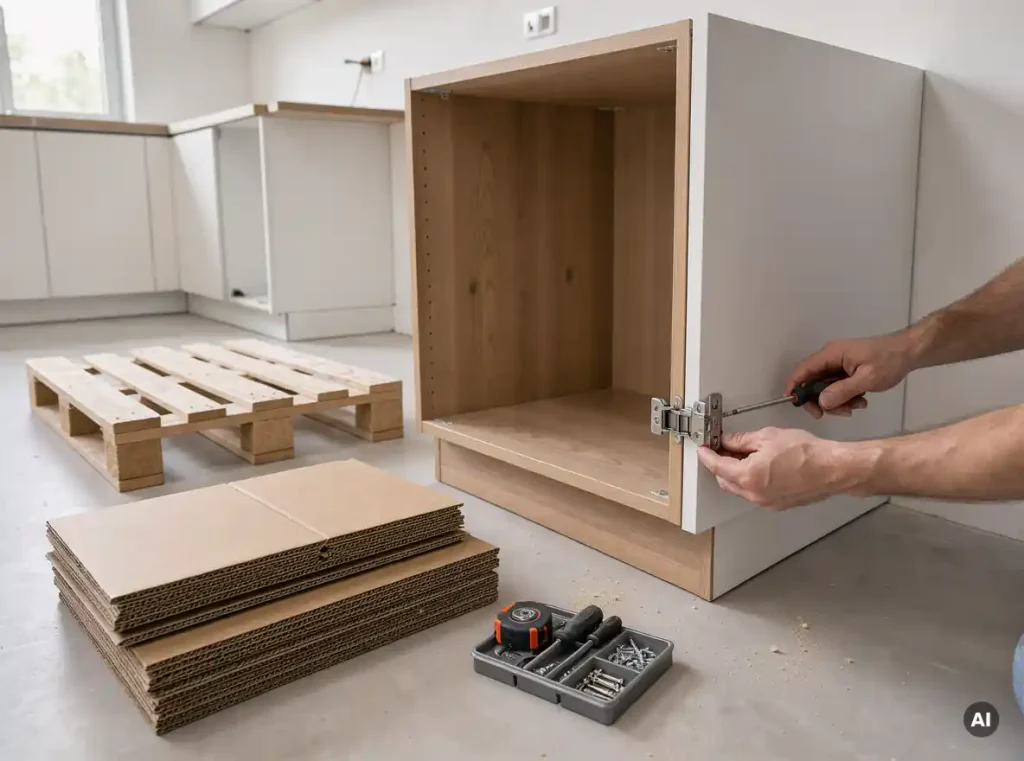
Tight sites make this worse. In high-rise offices, hotels, and schools, lift capacity and corridor space are limited, so a single overflowing waste pile can halt a whole floor. In kitchens, fragile worktops and cabinets need clear floor space around them, which makes loose packaging a safety risk as well as a delay.
How Can Packaging Be Planned Before Delivery?
Packaging can be planned before delivery by deciding, per project, which materials are used, how loads are labeled and sequenced, and how waste will leave the site. Doing this during project planning, not at the loading dock, prevents most on-site clutter and rework.
A practical pre-delivery checklist looks like this:
- Label by room and installation step so crews can pick the right item first.
- Load in reverse installation order so the first needed items come off the truck first.
- Reduce single-use packaging where products allow it, for example by using furniture blankets instead of disposable wrapping.
- Agree on the packaging volume the site can handle per day, based on access and storage space.
This is where good project logistics pays off. When one team plans the whole chain, from warehouse to final placement, packaging decisions fit the installation schedule instead of fighting it.
Another smart move is to postpone assembly. Goods can be assembled later in the warehouse or at the final destination, which raises load factors and reduces the amount of bulky packaging that arrives on site at once.
What Is the Best Way to Stage and Unpack On Site?
The best way to stage and unpack on site is to set up a dedicated staging zone, unpack only what the next installation step needs, and move empty packaging straight to a designated collection point. This keeps work areas clear and installers focused on fitting, not searching.
Start by walking the site before the first delivery. Identify a staging area close to the entrance or lift, but away from the actual work zones. Keep walkways open and protect finished floors and walls.
Then work in small, controlled batches:
- Move goods to the staging zone in installation order.
- Unpack one room or one unit at a time.
- Check each item against the delivery list as it comes out of its packaging.
- Sort materials immediately into cardboard, film, foam, and wood.
- Carry sorted waste to the collection point before starting the next batch.
Fragile products such as kitchens call for extra care. Our kitchen deliveries are carried out by two trained professionals who inspect the goods before departure, which means damage is caught early and unpacking on site stays predictable. You can read more about our approach to kitchen transport if you handle high-end projects.
Who Should Remove and Recycle Packaging Waste?
The party that delivers and installs should remove and recycle packaging waste, and this responsibility should be agreed in writing before the project starts. Clear ownership prevents waste from being left behind, blocking the site, or becoming an unplanned cost and delay.
In practice, three models work well. The installation partner takes everything away at the end of each day. The logistics partner collects packaging on the next delivery run. Or the client arranges a waste container that the crew fills according to a sorting plan. What matters is that one party is named and the model is written into the project scope.
We prefer to handle this as part of the full service. We minimize, return, and recycle packaging wherever possible, and we transport goods loosely packed in furniture blankets instead of single-use wrapping when the product allows it. This approach reduces waste volume and fits with our ISO 14001 environmental management framework. It also supports our values around sustainable operations.
Returnable and reusable packaging is worth considering for repeat flows, such as regular deliveries of office chairs or standard furniture lines. Packaging that goes back into the loop never becomes waste on the customer’s site.
How Do You Keep Delivery and Installation Crews Aligned?
You keep delivery and installation crews aligned by giving both teams the same plan, the same contact person, and the same delivery sequence, and by confirming site access, timing, and waste handling before every drop. Shared information removes the guesswork that causes delays.
Alignment comes down to a few simple habits:
- One shared schedule that shows delivery windows, room order, and installation steps.
- One dedicated contact person who answers questions for both crews and the client.
- A short briefing at the start of each day covering access, lift times, and where packaging goes.
- Live updates when something changes, such as a delayed truck or a blocked access route.
When delivery and installation sit under one roof, crews work from the same information and the handover is seamless. That is the idea behind our full-service model, where transport, warehousing, assembly, and installation are coordinated by the same project team. If you want to see how this looks in practice, take a look at our project cases.
Ready to plan a smoother installation? Our team is happy to think along, so feel free to get in touch with your project details.