




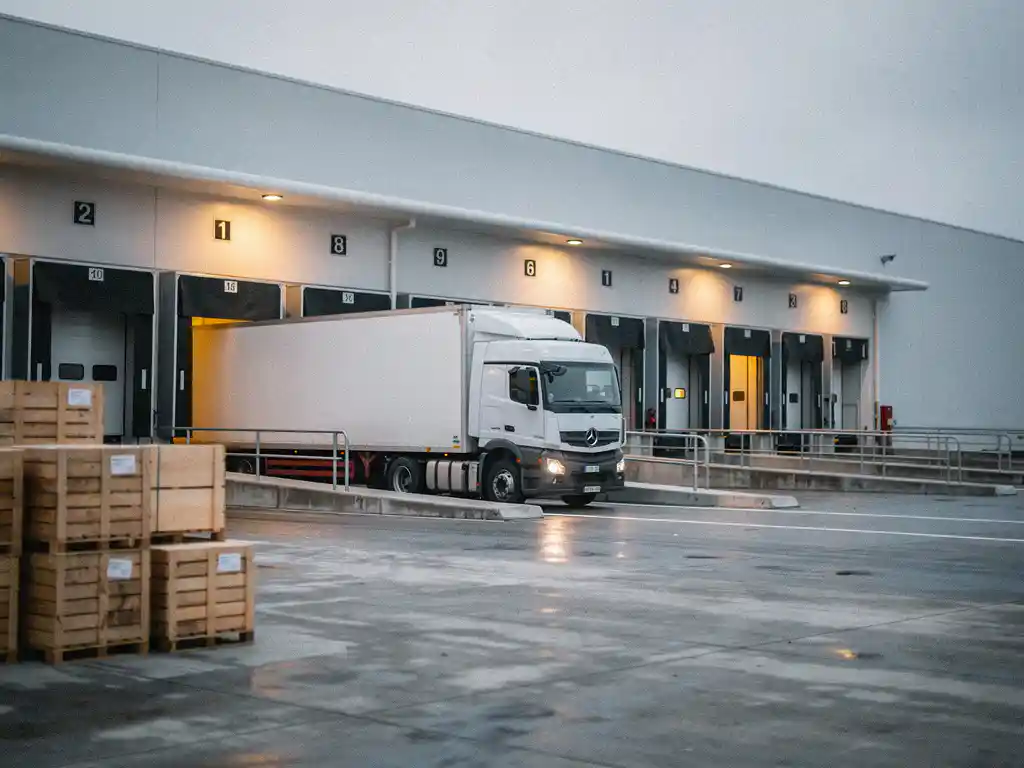
Working with one logistics partner for your project delivers faster coordination, lower costs, and fewer errors compared to splitting responsibilities across multiple providers. When a single partner manages every stage of your supply chain, from transport and warehousing to installation and customs clearance, accountability stays in one place and nothing falls through the gaps. The sections below unpack the specific advantages, risks, and service requirements that define successful project logistics.
How does a single logistics partner simplify project coordination?
A single logistics partner simplifies project coordination by replacing multiple points of contact with one. Instead of aligning separate transport, warehousing, and installation companies, your team communicates with one dedicated partner who owns the entire process. This reduces handover errors, shortens decision cycles, and keeps all stakeholders working from the same plan.
When a project spans multiple locations or tight timelines, the coordination burden multiplies quickly. A fragmented setup forces you to manage dependencies between providers who have no direct relationship with each other. One partner eliminates that friction. They map all processes in advance, align schedules across every phase, and act as the single source of truth throughout the project.
For complex projects such as fitting out a hospital, a hotel, or a multi-floor office building, this matters enormously. Our project logistics team works from detailed floor plans and data before a single item leaves the warehouse, ensuring that every delivery, assembly step, and installation sequence is aligned before work begins on site.
What cost advantages come with using one logistics partner?
Using one logistics partner for your project reduces costs by eliminating duplication, minimising idle time, and removing the administrative overhead of managing multiple supplier contracts. Consolidated planning means fewer empty runs, better load efficiency, and shared warehouse capacity, all of which reduce the total cost of your logistics operation.
When you split logistics across several providers, each one optimises for their own segment. That produces gaps: a delivery arrives before the installation team is ready, or goods sit in a temporary facility because the next provider cannot receive them yet. These gaps cost money. A single partner plans the full chain as one continuous flow, removing the costly pauses between stages.
There is also a procurement advantage. Negotiating one contract with a full-service partner is more efficient than managing separate agreements with a transporter, a warehouse operator, an assembly crew, and a customs agent. You gain clearer pricing, fewer invoices, and a partner who has a financial incentive to make the whole chain perform.
How does end-to-end logistics visibility improve project outcomes?
End-to-end visibility improves project outcomes by giving decision-makers accurate, real-time information about every stage of the supply chain. When one partner manages the full flow, they can flag delays early, adjust sequencing on the fly, and give your project team reliable status updates without having to chase multiple suppliers for information.
Visibility is not just about tracking a shipment. It means knowing where every item is in the warehouse, when it is scheduled to leave, whether customs clearance is on track, and whether the installation crew will arrive at the right time. When that information lives across five different systems operated by five different companies, it is nearly impossible to get a complete picture quickly.
A single partner owns that complete picture. Problems that would otherwise surface only at the point of failure, such as a delayed container affecting an installation schedule, can be identified and resolved days in advance. That proactive management is what turns a well-planned project into a successfully delivered one.
What risks does a fragmented logistics setup introduce to a project?
A fragmented logistics setup introduces risks including unclear accountability, communication failures between providers, increased error rates at handover points, and longer recovery times when something goes wrong. The more parties involved in a project’s supply chain, the more opportunities there are for misalignment, delays, and cost overruns.
The most common risk is the accountability gap. When a delivery arrives damaged or late, each provider in a fragmented chain can point to the previous one. Resolving the issue takes time your project schedule does not have. With a single partner, responsibility is unambiguous and resolution is faster.
Handover points between providers are also where errors concentrate. Goods can be mislabelled, misdirected, or left waiting because the receiving party was not informed in time. Each additional handover is an additional risk. Eliminating unnecessary handovers by working with one partner directly reduces the probability of these errors occurring.
There is also a resilience risk. When unexpected events occur, whether a border delay, a damaged consignment, or a site access problem, a fragmented setup requires you to coordinate a response across multiple parties simultaneously. A single partner with broad capabilities can reroute, reschedule, and solve problems internally without pulling you into the middle of it.
Which types of projects benefit most from a single logistics partner?
Projects that benefit most from a single logistics partner are those with tight timelines, multiple delivery locations, complex assembly or installation requirements, or cross-border supply chains. These characteristics create coordination demands that a fragmented logistics setup cannot handle efficiently.
Large-scale interior fit-outs are a strong example. Furnishing an office tower, a school, or a healthcare facility involves coordinating dozens of product lines, strict sequencing by floor or zone, and precise timing with construction teams. The same applies to trade fair and exhibition builds, where an entire stand must be assembled and ready within a fixed window, often measured in hours rather than days.
Projects with an international dimension benefit significantly as well. When goods move across borders, customs clearance, local regulations, and last-mile delivery in unfamiliar markets add layers of complexity. A partner with an established international network, such as our membership in the Mach 3000 furniture logistics network and our reach across more than 150 locations worldwide, can manage that complexity without requiring you to source local providers in every market.
Retail rollouts, hotel openings, and government building projects share similar characteristics: high stakes, fixed deadlines, and a need for everything to come together at once. These are exactly the scenarios where a single, experienced logistics partner delivers the most value.
What services should a full-service logistics partner offer for projects?
A full-service logistics partner for projects should offer transport, warehousing, customs clearance, assembly, installation, and on-site coordination as integrated services. The ability to manage all of these under one roof is what distinguishes a genuine project logistics partner from a standard carrier or freight forwarder.
Transport and distribution form the foundation, but project logistics demands much more. Goods often need to be received, inspected, and stored before the project site is ready. That requires flexible warehousing capacity with the ability to stage, pick, and sequence items for delivery in the correct order.
Assembly and installation services are equally important for projects involving furniture, kitchen units, or fitted interiors. Delivering flat-pack items to a site without the capability to assemble them creates a dependency that adds time and cost. A partner who can handle both delivery and installation removes that dependency entirely.
For international projects, customs handling is non-negotiable. Documentation errors, incorrect tariff classifications, or missed compliance requirements can hold an entire project at the border. A partner with in-house customs expertise prevents those delays before they happen.
Finally, the right partner brings proactive project management: detailed advance planning, data-driven scheduling, and a team that travels to your location when needed. We have delivered project logistics solutions in cities across Europe and beyond, and in every case, the quality of upfront planning determines the quality of the outcome. If you want to understand how we approach projects of this kind, you are welcome to get in touch with our team to discuss your requirements.