




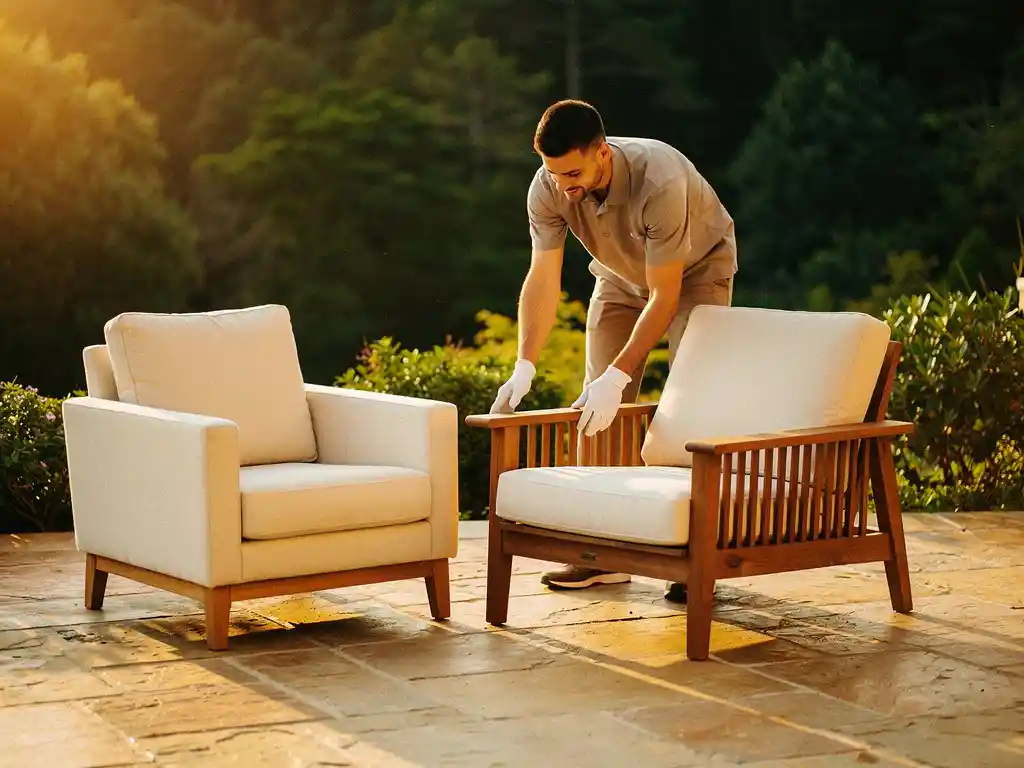
White Glove service for indoor furniture and outdoor furniture shares the same core commitment to careful handling, but the practical steps differ in meaningful ways. Outdoor items introduce additional challenges around weight, materials, weather exposure, and placement logistics that require a different approach on the ground. The sections below break down exactly where those differences show up across assembly, placement, packaging, and project planning.
What extra steps does White Glove service include for outdoor furniture?
White Glove delivery for outdoor furniture includes additional steps that go beyond standard indoor delivery: site assessment for terrain and access conditions, protective handling for weather-resistant materials such as teak, aluminium, and powder-coated steel, and placement that accounts for outdoor surfaces like decking, paving, or grass. These extra steps exist because outdoor furniture is often heavier, bulkier, and more exposed to environmental variables than indoor pieces.
Indoor White Glove service focuses primarily on protecting floors, walls, and finished surfaces inside a building. Outdoor delivery shifts that focus outward. Crews need to navigate garden paths, steps, gates, and uneven ground that a standard indoor delivery would never encounter. Furniture designed for patios, terraces, or poolside areas often arrives flat-packed or in large modular sections, requiring careful coordination to move through access points without damaging the property or the product.
Weight is another factor. Outdoor dining sets, garden sofas, and sun loungers built from solid hardwood or heavy-gauge metal can be significantly heavier than comparable indoor pieces. A well-prepared furniture transport team accounts for this by deploying the right equipment and the right number of crew members from the outset, rather than improvising on arrival.
How does room-of-choice placement differ for indoor versus outdoor items?
Room-of-choice placement for indoor furniture means delivering items to a specific room inside the building, positioning them precisely, and protecting interior surfaces throughout. For outdoor furniture, placement-of-choice means positioning items on a specific terrace, garden zone, or outdoor area, which introduces variables like uneven ground, drainage considerations, and exposure to weather during the delivery window.
Indoor placement is largely predictable. Rooms have defined dimensions, level floors, and consistent surfaces. A delivery team can plan the route from the entrance to the destination room and anticipate most obstacles in advance. Outdoor placement is less controlled. A garden terrace may have sloped paving, a poolside area may have wet tiles, and a rooftop terrace may require items to be transported through a building and out through a different exit entirely.
Positioning also carries more consequence outdoors. Outdoor furniture placed incorrectly on uneven ground can become unstable, which is a safety concern. Placement teams working under a White Glove standard will check that items are level, stable, and correctly oriented before completing the delivery, rather than simply leaving them where they land.
Does White Glove assembly work the same way for outdoor furniture?
White Glove assembly for outdoor furniture follows the same principle as indoor assembly, meaning trained crew members assemble items on-site, but the process differs in practice. Outdoor furniture often uses different fasteners, requires weatherproofing checks, and may involve larger modular systems such as sectional garden sofas or pergola-mounted pieces that demand more time and technical attention than typical indoor items.
Indoor furniture assembly under a White Glove standard typically involves items like bed frames, wardrobes, or dining tables. These are designed for stable indoor conditions and standard joinery. Outdoor pieces are engineered to withstand rain, UV exposure, and temperature changes, which means they often use stainless steel fixings, specific torque requirements, and protective caps or covers that must be correctly fitted during assembly to maintain the product’s warranty and longevity.
Assembly complexity also scales with project size. A single outdoor lounge set is straightforward. A hospitality terrace fitted with multiple seating zones, shade structures, and coordinated accessories is a project in its own right. In those cases, White Glove assembly becomes part of a broader installation process, which is closer to what we handle under our project logistics services for large-scale furnishing assignments.
What packaging removal and debris handling differences exist between indoor and outdoor deliveries?
Packaging removal after indoor White Glove delivery happens inside a controlled environment, where all materials are collected and removed through the same access route used for entry. Outdoor deliveries generate the same packaging waste but in an open environment, which means debris handling must account for wind, larger item volumes, and the practical challenge of moving bulky packaging back through the property without disrupting the newly placed furniture.
Outdoor furniture packaging tends to be more substantial. Heavy-duty cardboard, foam corner protectors, polystyrene inserts, and plastic wrapping are common for items built to survive transport and storage. When multiple outdoor pieces are delivered at once, the volume of packaging material can be considerable. A White Glove team is expected to remove all of it cleanly, leaving the outdoor space ready to use rather than requiring the client to manage disposal themselves.
One practical difference is timing. Indoor packaging removal can happen room by room as items are placed. Outdoor removal often happens at the end of the full placement process, particularly when furniture is being arranged across a large terrace or garden. Teams need to stage the packaging carefully during delivery so it does not obstruct their own work or the client’s outdoor space before the final clear-up takes place.
When should a business choose White Glove service for outdoor furniture projects?
A business should choose White Glove service for outdoor furniture projects when the items are high-value, the installation site has complex access conditions, the client expects a fully finished result without involvement in the process, or the volume of furniture requires coordinated placement across multiple zones. Hospitality businesses, property developers, and luxury retail clients are the clearest examples where standard delivery falls short.
The value of White Glove delivery for outdoor projects is clearest when the stakes are high. A hotel terrace fitted with premium outdoor furniture needs to be ready for guests, not for a follow-up visit to finish the job. A residential developer handing over a high-end property with a landscaped garden cannot leave packaging on the lawn for the new owner to deal with. In both cases, the White Glove standard ensures the outdoor space is presented exactly as intended from the moment delivery is complete.
Businesses managing recurring outdoor furniture programmes, such as seasonal hospitality fit-outs or annual terrace refreshes, also benefit from working with a logistics partner who understands the specific demands of outdoor delivery. Consistency across multiple sites, reliable crew coordination, and experience with a wide range of outdoor furniture types all reduce risk and protect the client relationship over time. We have built that expertise through decades of specialist furniture logistics, and it applies as much outdoors as it does inside.