




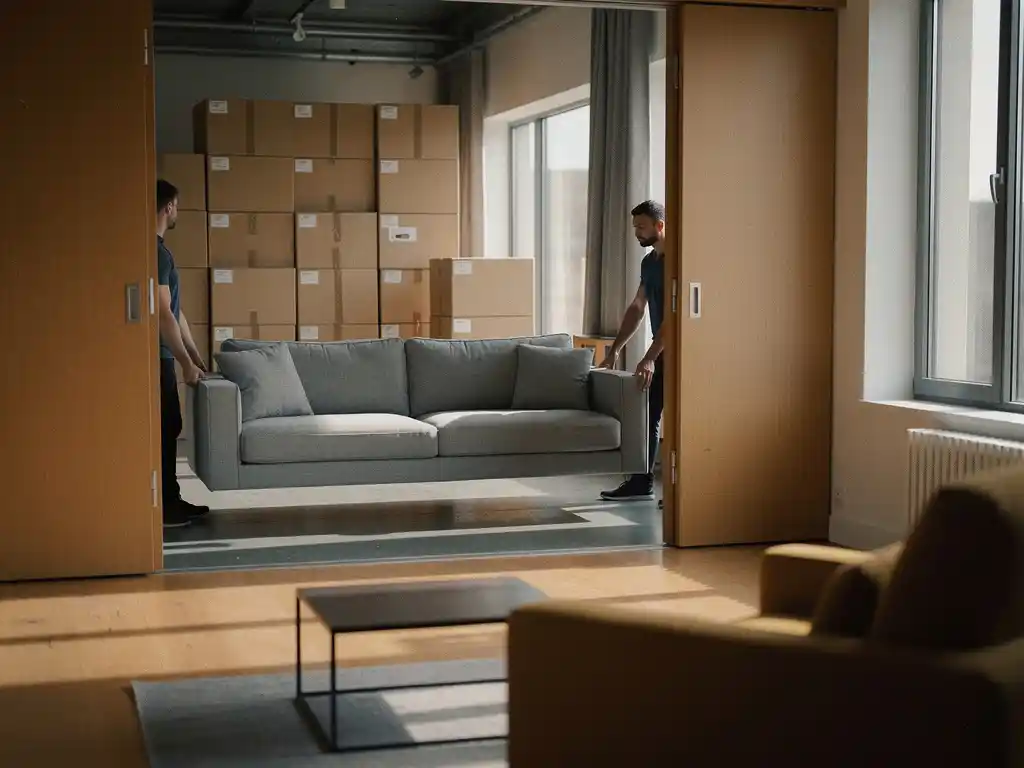
Phased delivery for furniture projects has real advantages and real drawbacks. The core benefit is flexibility: goods arrive in stages that align with a project’s construction or fit-out timeline, reducing on-site congestion and storage pressure. The main risk is coordination complexity, where delays in one phase can cascade through the entire project schedule. Whether phased delivery is the right choice depends on project scale, site conditions, and how well your logistics partner manages sequencing.
How does phased delivery work for furniture projects?
Phased delivery splits a furniture project into multiple planned delivery windows rather than a single shipment. Each phase delivers a specific category, floor, or zone of furniture at a predetermined time, coordinated with the broader project schedule. This staged approach ensures that furniture arrives exactly when the receiving area is ready to accept and install it.
In practice, a phased delivery plan begins long before the first truck arrives. The logistics team maps the project floor plan, identifies installation sequences, and builds a delivery calendar that mirrors the construction or renovation timeline. For example, a hotel fit-out might receive lobby furniture in phase one, guest room furniture floor by floor in phases two through five, and restaurant furniture in the final phase once kitchen installation is complete.
Each delivery phase typically includes its own inventory manifest, delivery crew, and installation coordination. Goods are often held in a dedicated warehousing facility between production and delivery, allowing the logistics team to release items on demand rather than holding them on-site. This warehousing buffer is one of the key enablers of a well-executed phased delivery strategy.
What are the main advantages of phased furniture delivery?
The biggest advantages of phased delivery are reduced on-site storage pressure, better alignment with construction timelines, and a lower risk of damage to furniture delivered too early. Staged delivery keeps the right items arriving at the right moment, which improves installation efficiency and reduces the chaos that comes with receiving everything at once.
Here are the primary benefits in more detail:
- Site readiness alignment: Furniture arrives only when the receiving area is finished, painted, and ready. This prevents goods from sitting in dusty or incomplete spaces where they can be damaged.
- Reduced on-site clutter: Large projects with hundreds of pieces cannot realistically store everything at once. Phased delivery keeps circulation routes clear and working spaces functional during installation.
- Lower damage risk: Items that arrive closer to their installation date spend less time exposed to site conditions, reducing scratches, moisture damage, and handling incidents.
- Easier quality control: Smaller, focused deliveries are easier to inspect and sign off on than a single overwhelming shipment.
- Flexibility for change: If specifications change for a later phase, there is still time to adjust orders before those items are dispatched.
For large-scale project logistics involving offices, hotels, schools, or healthcare facilities, these advantages can make the difference between a smooth handover and a chaotic final week of installation.
What are the biggest risks of phased delivery for furniture projects?
The biggest risks of phased delivery are scheduling complexity, dependency on other trades, and the cumulative cost of multiple logistics operations. When one phase slips, every subsequent phase is affected, and the logistics team must adapt quickly to avoid costly delays or idle installation crews.
Specific risks to plan for include:
- Construction delays: If a floor or zone is not ready on time, the planned delivery phase must be postponed or rerouted, which affects warehouse holding costs and crew scheduling.
- Supplier lead time mismatches: Not all furniture items are produced on the same timeline. If a supplier delivers late, it can disrupt the entire phasing sequence.
- Higher total logistics cost: Multiple deliveries mean multiple transport runs, more crew hours, and extended warehousing periods. The per-unit cost of phased delivery is typically higher than a single consolidated shipment.
- Communication gaps: Phased delivery requires tight coordination between the project manager, contractor, furniture supplier, and logistics provider. A missed update can send a truck to a site that is not ready.
- Inventory tracking complexity: Keeping accurate records of what has been delivered, what is in the warehouse, and what is still in production requires robust systems and clear accountability.
These risks are manageable, but they require proactive planning and a logistics partner with strong project management capabilities rather than a purely transactional approach to delivery.
When does phased delivery make sense versus a single delivery?
Phased delivery makes sense when a project is large, complex, or tied to a rolling construction schedule where different areas are completed at different times. A single delivery is more appropriate for smaller projects with a clear, fixed handover date and sufficient on-site storage capacity to receive everything at once.
Consider phased delivery when:
- The project involves multiple floors, wings, or zones that complete on different dates
- On-site storage space is limited or shared with active construction
- The furniture includes fragile, high-value, or complex items that benefit from just-in-time delivery
- Installation crews are working in sequence rather than all at once
- The total volume of furniture exceeds what can be received, inspected, and installed in a single window
A single consolidated delivery works better when:
- The project is small in scope, such as a single office floor or a compact retail space
- The site has a firm, reliable handover date and adequate secure storage
- Budget constraints make multiple transport runs impractical
- The installation team can complete the entire fit-out in a short, continuous window
In 2026, many large-scale fit-out projects, particularly in hospitality and healthcare, default to phased delivery because building programmes rarely hand over entire structures in one go. The question is not always whether to phase, but how tightly to plan each phase.
How can logistics partners reduce phased delivery complexity?
A strong logistics partner reduces phased delivery complexity through detailed pre-project planning, integrated warehousing, real-time communication, and the ability to adapt quickly when site conditions change. The difference between a smooth phased project and a stressful one usually comes down to how thoroughly the logistics team prepares before phase one begins.
Key ways a capable logistics partner adds value include:
- Pre-project site surveys: Visiting the location before delivery begins to understand access routes, elevator dimensions, loading dock constraints, and floor protection requirements.
- Phased inventory management: Holding all project furniture in a single warehouse and releasing items phase by phase, with full inventory visibility for the project team.
- Dedicated project coordination: Assigning a project manager who acts as a single point of contact between the client, contractor, and delivery teams.
- Flexible scheduling: Building contingency into the delivery calendar so that a one-week construction delay does not immediately cascade into a logistics crisis.
- On-site assembly and installation: Combining delivery with assembly services so that furniture is not just dropped off but placed, built, and ready for use.
We work with clients across offices, hotels, schools, hospitals, and government buildings in more than 150 locations worldwide. Our approach to furniture transport and project logistics is built around exactly this kind of end-to-end coordination, from the first planning conversation to the final installation sign-off. If you are weighing up your options for an upcoming fit-out, get in touch with our team to discuss how phased delivery could work for your project.