




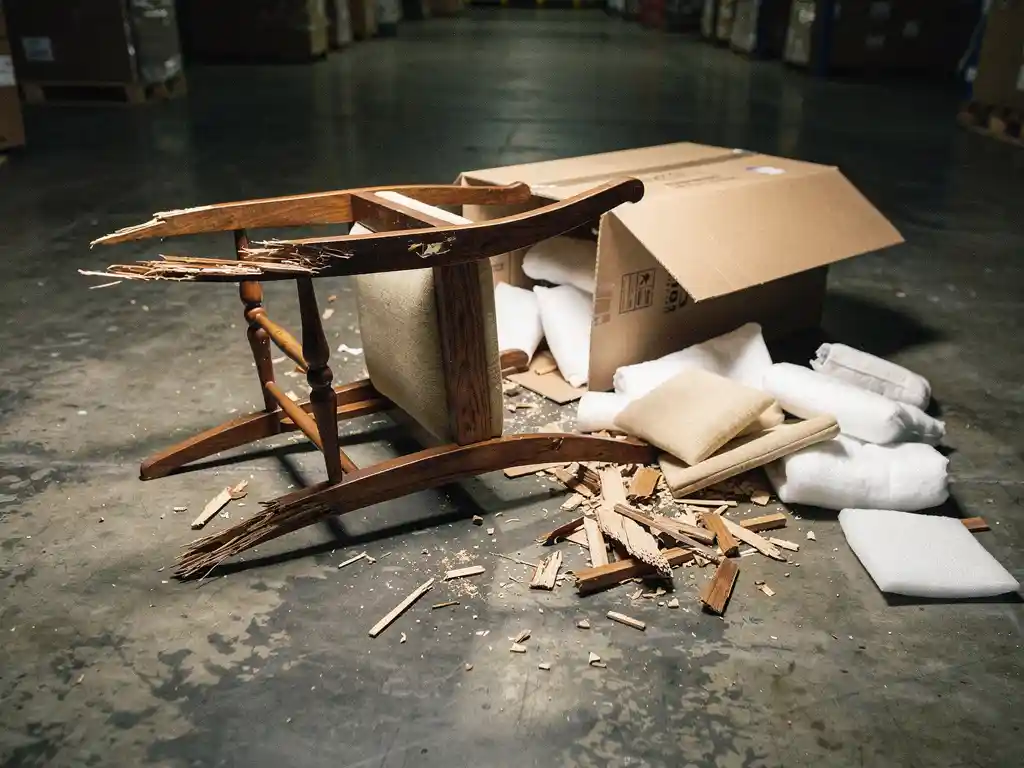
Furniture transport involves significant risks that can lead to costly damage, delays, and safety hazards. From delicate antiques to large commercial installations, improper handling during transport can result in thousands of euros in losses and potentially dangerous situations for workers. Understanding these furniture transport risks is essential for businesses and individuals who need to move valuable items safely and efficiently.
Whether you’re relocating an office, delivering new furniture to customers, or managing large-scale installations, the consequences of inadequate planning and execution can be severe. By identifying common transport hazards and implementing effective prevention strategies, you can protect your investment and ensure successful deliveries every time.
What damage can occur during improper furniture transport?
Improper furniture transport can cause extensive damage, including scratches, dents, broken joints, cracked surfaces, and complete structural failure. The most common types of damage occur when furniture shifts during transit, impacts other items, or experiences excessive vibration on rough roads.
Wooden furniture is particularly vulnerable to surface damage from inadequate padding or securing methods. Scratches and gouges can occur when pieces rub against truck walls or other cargo. Glass components face the highest risk, with even minor impacts potentially causing shattering that renders the furniture unusable.
Upholstered furniture presents unique challenges, as fabric can tear, stain, or become permanently compressed when subjected to improper handling. Metal components may bend or break under excessive pressure, while delicate mechanisms in adjustable chairs or tables can malfunction after rough transport. Water damage from exposure to moisture during loading or unloading can cause warping, mold growth, and permanent discoloration.
Why do furniture transport delays happen, and what are the consequences?
Furniture transport delays typically result from inadequate route planning, vehicle breakdowns, weather conditions, traffic congestion, and insufficient time allocated for loading. Poor coordination between multiple delivery locations and unexpected access restrictions at delivery sites also contribute to significant schedule disruptions.
The consequences of delays extend far beyond inconvenience. For businesses, delayed furniture deliveries can halt office relocations, postpone store openings, or disrupt project logistics timelines. These disruptions often trigger costly chain reactions, including overtime labor costs, extended equipment rentals, and potential penalty fees for missing contractual deadlines.
Customer satisfaction suffers dramatically when furniture deliveries are delayed. Residential customers may need to extend temporary accommodations or miss important events, while commercial clients face productivity losses from incomplete workspaces. Repeated delays can damage business relationships and result in lost future contracts, making on-time delivery essential for maintaining a competitive advantage.
How much does furniture transport damage actually cost businesses?
Furniture transport damage costs businesses significantly more than the replacement value of damaged items, encompassing repair expenses, replacement costs, labor time, customer compensation, and potential legal liabilities. The total financial impact often reaches three to five times the original furniture value when accounting for all associated costs.
Direct costs include immediate repairs or complete replacement of damaged furniture pieces. However, indirect costs frequently exceed these obvious expenses. Businesses must factor in additional delivery attempts, storage fees for undamaged items, administrative time for insurance claims, and potential expedited shipping costs for replacement items.
Customer relationships suffer when transport damage occurs, leading to long-term revenue losses that are difficult to quantify. Damaged goods require extensive documentation, photography, and coordination with insurance providers. Professional installations may need to be rescheduled, resulting in additional labor costs and project delays that cascade throughout the entire logistics chain.
What safety risks exist for workers during furniture transport?
Workers face serious safety risks during furniture transport, including back injuries from improper lifting techniques, cuts from broken glass or sharp edges, crushing injuries from falling items, and slip hazards on loading docks. Heavy furniture pieces can cause severe musculoskeletal injuries when moved without proper equipment or techniques.
Loading and unloading operations present the highest-risk scenarios. Workers may attempt to lift items that exceed safe weight limits or navigate awkward shapes through tight spaces without adequate assistance. Inadequate personal protective equipment increases vulnerability to cuts, bruises, and puncture wounds from furniture components or packaging materials.
Vehicle-related hazards include workers being struck by moving equipment, falling from truck beds, or being caught between vehicles and loading docks. Poor communication during team lifts can result in dropped items that cause foot or leg injuries. Fatigue from demanding schedules increases the likelihood of accidents, making proper rest periods and rotation essential for maintaining safe working conditions.
How can proper packaging prevent furniture transport damage?
Proper packaging prevents furniture transport damage by using protective materials like bubble wrap, furniture blankets, corner guards, and custom crating to cushion items against impacts and vibrations. Effective packaging creates barriers between furniture surfaces and potential sources of damage while securing loose components that could shift during transit.
Strategic wrapping techniques protect different furniture types according to their specific vulnerabilities. Wooden surfaces require thick padding to prevent scratches, while glass components need rigid protection to absorb impacts. Upholstered items benefit from plastic sheeting to prevent moisture damage, combined with padding to maintain shape and prevent compression damage.
Professional packaging systems include specialized materials designed for furniture transport. Corrugated cardboard sheets protect flat surfaces, while foam padding conforms to irregular shapes. Stretch wrap secures protective materials in place and prevents shifting during transport. Custom crating provides maximum protection for high-value or extremely fragile pieces, creating a controlled environment that minimizes movement and impact risks.
How Jan Krediet helps with furniture transport risks
At Jan Krediet, we understand the critical importance of risk-free furniture transport and have developed comprehensive solutions to eliminate common transport hazards. Our specialized approach combines advanced packaging techniques, professional handling procedures, and expert logistics planning to ensure your furniture arrives in perfect condition.
Our furniture transport risk prevention services include:
- Custom packaging solutions tailored to specific furniture types and transport distances
- Trained professionals who understand proper lifting and securing techniques
- Climate-controlled vehicles to prevent moisture and temperature-related damage
- Real-time tracking systems for complete shipment visibility
- Comprehensive insurance coverage for complete peace of mind
- Professional installation services to minimize handling risks at the destination
With over 200 logistics professionals and extensive experience in furniture transport across Europe and beyond, we have the expertise to handle everything from delicate antiques to large commercial installations. Our project logistics team coordinates complex deliveries to ensure precise timing and flawless execution.
Don’t let furniture transport risks threaten your valuable investments. Contact us today to discuss how our comprehensive furniture logistics solutions can protect your shipments and ensure successful deliveries every time.