




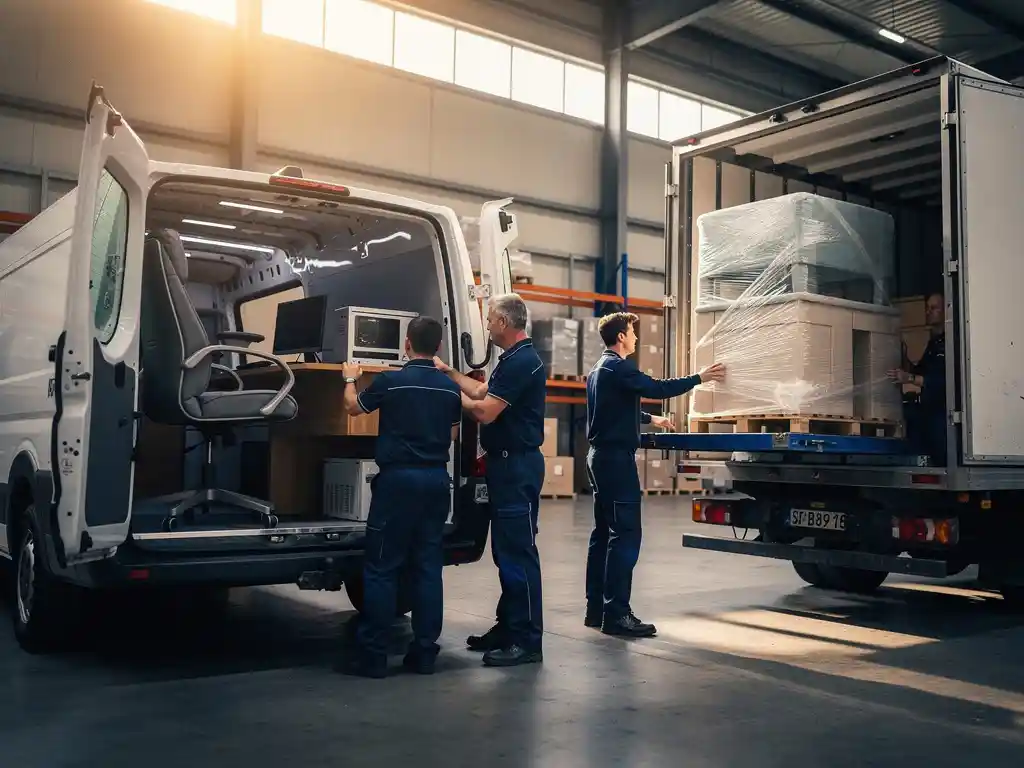
The furniture transport industry serves two distinct markets with fundamentally different needs, expectations, and operational requirements. Understanding these differences is crucial for logistics providers and clients alike, as B2B furniture transport and private furniture transport each demand specialized approaches to pricing, handling, and delivery.
While both sectors involve moving furniture from one location to another, the similarities end there. Business clients require large-scale coordination, flexible scheduling, and specialized services, while residential customers prioritize convenience, care, and personal attention. These contrasting needs shape every aspect of the transport process.
What is the difference between B2B and private furniture transport?
B2B furniture transport involves moving furniture between businesses, such as office relocations, hotel furnishing projects, or retail store setups, while private furniture transport focuses on residential moves and individual customer deliveries. The key distinction lies in volume, complexity, and service requirements.
Business-to-business furniture transport typically involves large quantities of standardized items, with specific delivery windows and installation requirements. Companies may need entire office floors furnished simultaneously, or hotel chains may require identical setups across multiple locations. This demands specialized equipment, coordinated logistics teams, and the ability to manage complex project timelines.
Private furniture transport, conversely, deals with individual households or small-scale deliveries. These moves involve personal belongings with sentimental value, requiring careful handling and personalized service. The focus shifts from efficiency and scale to care and customer experience, with delivery teams trained to work in residential environments and handle delicate personal items.
How do delivery requirements differ for business versus residential furniture?
Business furniture deliveries require precise scheduling, specialized equipment, and coordination with multiple stakeholders, while residential deliveries prioritize flexibility, personal attention, and careful handling of individual items. Commercial projects often involve strict timelines and installation services.
Commercial deliveries frequently occur outside standard business hours to minimize disruption to ongoing operations. Weekend and evening deliveries are common, requiring specialized teams and equipment such as hydraulic lifts, dollies, and protective materials for navigating office buildings. Businesses also demand detailed inventory tracking, proof-of-delivery documentation, and coordination with facility managers, IT departments, and security personnel.
Residential deliveries focus on convenience and care, with customers expecting flexible time windows, white-glove service, and protection for their existing belongings. Delivery teams must navigate narrow hallways, stairs, and doorways while ensuring no damage to walls, floors, or existing furniture. The personal nature of residential moves also requires excellent communication skills and the ability to address individual customer concerns.
What are the main challenges in B2B furniture logistics?
B2B furniture logistics faces challenges including complex project coordination, tight deadlines, specialized handling requirements, and the need for scalable operations across multiple locations. Managing inventory, assembly services, and stakeholder communication adds significant complexity.
Project coordination represents the biggest challenge in commercial furniture logistics. Large-scale office moves or hotel furnishing projects involve hundreds of items delivered to specific floors, rooms, or departments according to detailed floor plans. This requires sophisticated planning software, experienced project managers, and the ability to adapt quickly when plans change or delays occur.
Assembly and installation services add another layer of complexity. Many businesses require furniture to be assembled on-site, with teams capable of handling everything from office chairs to complex modular systems. This demands skilled technicians, specialized tools, and the ability to work efficiently in active business environments without disrupting operations.
International coordination presents additional challenges for global companies. Managing customs documentation, varying regulations, and cultural differences across multiple countries requires extensive expertise and local partnerships to ensure smooth delivery execution.
Why do B2B and private furniture transport require different pricing models?
B2B and private furniture transport use different pricing models because commercial clients prioritize volume discounts and predictable costs for large-scale projects, while residential customers focus on transparent, service-inclusive pricing for individual deliveries. Risk factors and service levels also vary significantly between sectors.
Commercial pricing typically follows volume-based models with negotiated rates for large contracts. Businesses moving entire offices or furnishing multiple locations benefit from economies of scale, receiving lower per-unit costs in exchange for guaranteed volumes. These contracts often include additional services such as warehousing, assembly, and project management as bundled offerings.
Project complexity also influences B2B pricing. Multi-phase rollouts, international coordination, and specialized handling requirements command premium rates. However, the predictable nature of business relationships allows for long-term contracts with fixed pricing, providing cost certainty for both parties.
Private transport pricing focuses on transparency and service inclusion. Residential customers typically pay flat rates that include all services, from packing materials to assembly and cleanup. This all-inclusive approach eliminates surprise costs but results in higher per-item rates compared to commercial volume pricing. Insurance coverage and liability considerations also differ, with residential moves requiring more comprehensive protection due to the personal value of the items being transported.
How Jan Krediet helps with B2B and private furniture transport
We specialize in both B2B and private furniture logistics, offering tailored solutions that address the unique requirements of each sector. Our comprehensive approach ensures optimal service delivery regardless of project scale or complexity.
Our B2B furniture transport services include:
- Large-scale project coordination and management
- International logistics through our MACH-3000 network partnerships
- On-site assembly and installation services
- Flexible scheduling, including weekend and evening deliveries
- Specialized equipment and trained teams for commercial environments
For private customers, we provide white-glove residential furniture delivery with careful handling, flexible scheduling, and personalized service that treats your belongings with the respect they deserve.
Whether you need to furnish a new office, relocate an entire business, or deliver furniture to your home, our experienced team has the expertise and resources to handle your specific requirements efficiently and professionally. Contact us today to discuss how we can optimize your furniture transport needs.