




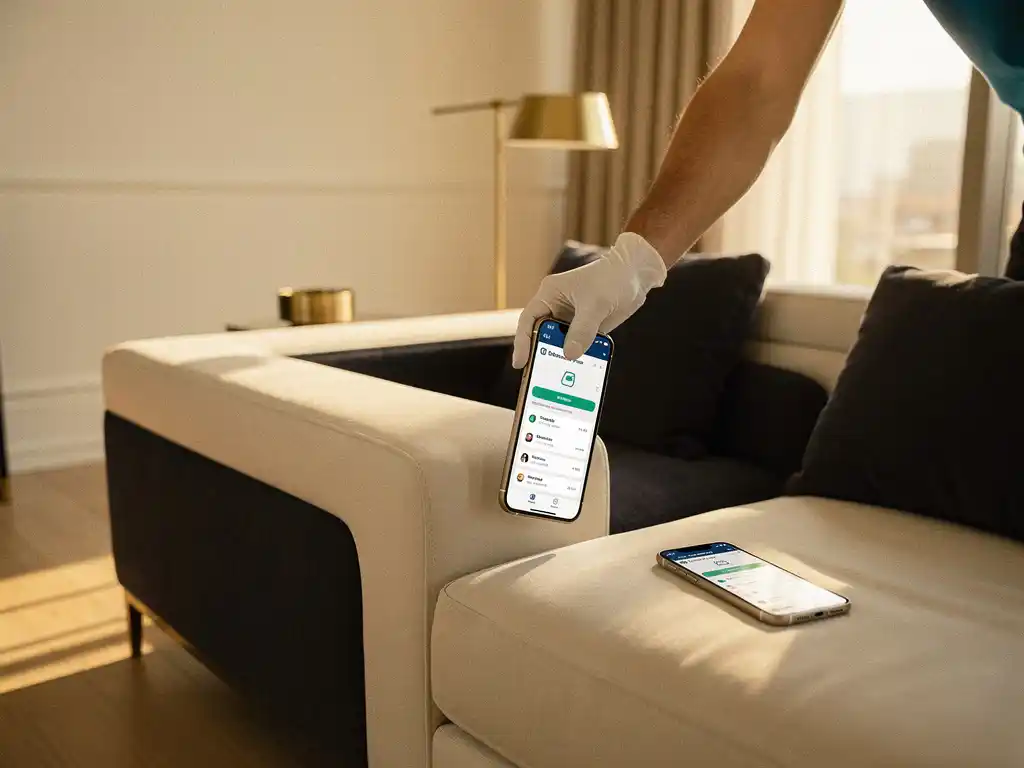
Premium furniture customers want real-time delivery updates that go beyond a simple tracking link. They expect precise delivery windows, proactive communication at every stage, and clear information about who is delivering and what to expect on arrival. This is especially true in 2026, when consumers have been conditioned by e-commerce giants to treat transparency as a baseline, not a luxury. The questions below unpack exactly what those expectations look like in practice and why they matter so much for premium furniture brands.
Why do premium furniture customers expect more from delivery updates?
Premium furniture customers expect more from delivery updates because their purchase carries significant financial and emotional weight. A high-value sofa or custom dining table is not an impulse buy. Customers have often waited weeks or months, planned around a delivery date, and prepared their home accordingly. When that level of investment is involved, uncertainty feels unacceptable.
The expectation gap is also shaped by experience. Customers who routinely track parcels in real time through retail apps naturally carry those expectations into furniture delivery. If a small package can be traced to the exact street, why should a large, expensive item offer less visibility? Premium positioning makes this contrast even sharper. A brand that charges a premium price signals a premium experience, and that promise extends all the way to the front door.
There is also a practical dimension. Furniture deliveries often require someone to be home, furniture to be moved, and sometimes installation to be arranged. Without reliable, real-time delivery updates, customers cannot plan their day effectively. The inconvenience of a missed or vague delivery window is not just frustrating. It erodes confidence in the brand itself.
What specific information do customers want in delivery notifications?
Customers want delivery notifications to include a confirmed delivery window, the name or team handling the delivery, live tracking access, and clear instructions for what happens on arrival. For premium furniture delivery, they also want to know whether assembly or installation is included, and who to contact if something changes.
The most valued information falls into three categories:
- Timing precision: A two-hour delivery window is far more useful than an all-day slot. Customers want this confirmed the evening before and updated on the morning of delivery.
- Delivery team details: Knowing the name of the driver or crew, and ideally a contact number, reduces anxiety and builds a human connection before anyone knocks on the door.
- On-arrival expectations: Will the team carry items to a specific room? Is unpacking included? Will packaging be removed? These details matter enormously for premium furniture and should be communicated clearly in advance.
Customers also appreciate confirmation messages at key stages: when the order leaves the warehouse, when it is loaded for delivery, and when the driver is nearby. Each touchpoint reduces uncertainty and reinforces that the delivery is on track.
Which communication channels do furniture delivery customers prefer?
Furniture delivery customers most commonly prefer SMS for time-sensitive updates and email for detailed delivery information. Many customers also value in-app tracking when a branded portal is available, particularly for high-value orders where they want to follow progress actively rather than wait for notifications to arrive.
The channel preference often depends on the moment in the delivery journey. Email works well for the initial confirmation, order updates, and scheduling details because customers can refer back to it. SMS is better suited for day-of updates, such as a two-hour window confirmation or a live driver location alert, because it reaches people quickly and does not require them to open an app.
What matters most is consistency across channels. Customers become frustrated when they receive conflicting information through different platforms, or when one channel goes silent while another continues updating. A coordinated communication approach, where all messages align and escalate naturally through the delivery process, is what separates a premium experience from a standard one.
For logistics providers operating at scale, like us at Jan Krediet with our specialist furniture transport operations, this means investing in systems that push accurate, timely updates across whichever channels a customer prefers, without creating manual overhead for the delivery team.
How does delivery tracking affect trust in premium furniture brands?
Delivery tracking directly affects trust in premium furniture brands because the delivery experience is often the last and most memorable touchpoint in the customer journey. A flawless product can be undermined by a stressful delivery, while a smooth, well-communicated delivery can reinforce every positive feeling a customer has about their purchase.
Trust is built through predictability. When customers receive accurate, real-time delivery updates that match what actually happens, they feel that the brand respects their time and values their experience. That feeling extends beyond the delivery itself. Customers who trust the delivery process are more likely to leave positive reviews, recommend the brand, and return for future purchases.
The reverse is equally true. A single poor delivery experience, especially one involving a missed window, a damaged item, or a lack of communication, can undo months of brand-building. For premium furniture brands, where word-of-mouth and reputation carry significant commercial weight, the stakes are particularly high.
Furniture delivery tracking also signals operational confidence. When a brand can offer live updates and precise information, it demonstrates that its logistics are well-managed and that it stands behind the end-to-end experience, not just the product itself.
What happens when real-time furniture delivery updates fall short?
When real-time furniture delivery updates fall short, customers experience frustration, loss of trust, and in many cases, direct financial and logistical disruption. A missed delivery window or a lack of communication forces customers to rearrange their schedules, potentially take additional time off work, and wait without knowing when to expect resolution.
The consequences for brands are measurable. Customers who feel let down at the delivery stage are significantly more likely to share negative experiences publicly, whether through review platforms, social media, or direct complaints. For premium furniture brands, where a single purchase can represent a substantial investment, these public expressions of dissatisfaction carry real reputational risk.
There are also operational costs when last-mile furniture logistics break down. Failed deliveries require rescheduling, additional transport, and customer service resources. These inefficiencies add up quickly, particularly when they become a pattern rather than an exception.
The gap between customer expectations and delivery reality is often not a product problem. It is a communication problem. Customers can accept delays when they are informed promptly and given a clear path forward. What they cannot accept is silence. Investing in robust, real-time delivery update systems is not a nice-to-have for premium furniture logistics. It is a core part of delivering on the brand promise.
If you want to understand how we approach last-mile delivery communication and customer expectations, you are welcome to get in touch with our team directly.