




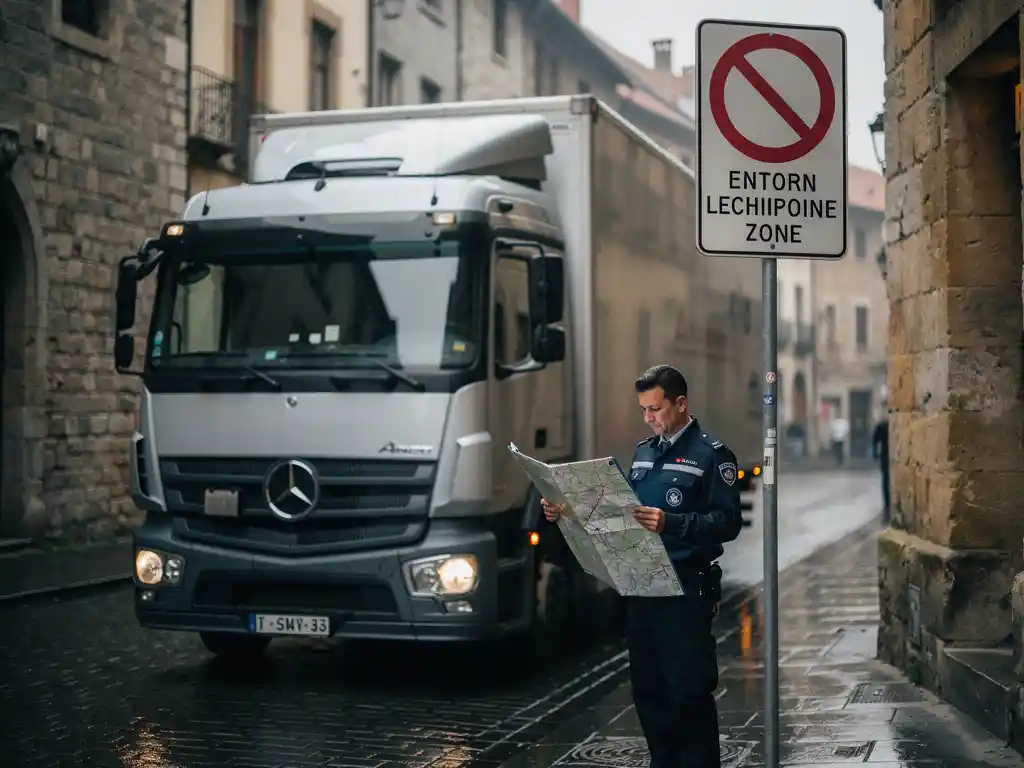
City centre delivery bans are legal restrictions that prohibit or limit certain vehicles from making deliveries in urban areas, typically during set hours or permanently. These regulations are expanding rapidly across European cities in 2026, driven by air quality targets, congestion reduction goals, and climate commitments. Understanding which rules apply where, and how to stay compliant, is essential for any business that relies on urban deliveries.
Which cities currently have delivery bans or restrictions in place?
Dozens of European cities have introduced delivery bans or urban delivery restrictions, with the list growing every year. London, Paris, Amsterdam, Brussels, Madrid, Milan, and Stockholm are among the most prominent, each operating its own version of access restrictions, time windows, or emission-based entry requirements. Outside Europe, cities like New York and Singapore have introduced comparable frameworks.
The scope and structure of these restrictions vary considerably. London operates the Ultra Low Emission Zone (ULEZ) alongside its older Low Emission Zone (LEZ), which applies daily charges to non-compliant vehicles. Amsterdam has committed to a fully zero-emission city centre by 2030, with progressively tighter restrictions already in force. Paris has implemented its own Zones à Faibles Émissions (ZFE), restricting older diesel and petrol vehicles from entering during weekday hours. Milan enforces Area C, a congestion charge zone with additional restrictions on the most polluting vehicles.
Many smaller cities across Germany, Belgium, and Scandinavia are also introducing local delivery restrictions, meaning logistics operators cannot rely on a single rulebook. Staying current with local regulations in every city you serve is no longer optional.
What types of vehicles are affected by urban delivery restrictions?
Urban delivery restrictions primarily affect older diesel and petrol vehicles that do not meet current emission standards, particularly those classified below Euro 6 for diesel or Euro 6d for petrol. Heavy goods vehicles, light commercial vans, and even passenger cars can all fall under these restrictions depending on the city and the specific zone in question.
The Euro emission standard of a vehicle is the most common determining factor. A diesel van registered before 2015 is likely to fall below the Euro 6 threshold required in many city zones, making it subject to charges or outright bans. Older Euro 3 or Euro 4 trucks face the most severe restrictions and are often completely prohibited from entering certain urban areas during operating hours.
Electric vehicles and hydrogen-powered vehicles are generally exempt from these restrictions and are increasingly the only viable option for regular inner-city delivery work. Some cities also offer temporary exemptions or grace periods for hybrid vehicles, though these provisions are being phased out as zero-emission alternatives become more widely available.
How do zero emission zones differ from low emission zones?
A zero emission zone (ZEZ) only permits vehicles that produce absolutely no tailpipe emissions, meaning battery electric or hydrogen fuel cell vehicles exclusively. A low emission zone (LEZ) is broader and allows vehicles that meet a defined emission standard, typically Euro 6, which still includes some cleaner combustion engine vehicles. The key distinction is that a ZEZ draws a hard line at zero, while an LEZ sets a performance threshold.
Low emission zones were the dominant model throughout the 2010s, giving logistics operators a pathway to compliance by upgrading to newer, cleaner diesel or petrol vehicles. Zero emission zones represent a more fundamental shift, requiring operators to invest in entirely different vehicle technology rather than simply upgrading within the same fuel type.
In practice, many cities are running both types simultaneously. A city might operate an outer LEZ covering the broader urban area and an inner ZEZ covering the historic centre or pedestrian zones. Oxford in the UK, for example, launched one of the first full zero emission zones in its city centre. Amsterdam and Utrecht are moving towards ZEZ models for freight by the end of the decade. Logistics operators serving multiple urban markets need to understand which type of zone applies at each delivery point.
What are the penalties for violating city centre delivery bans?
Penalties for violating city centre delivery bans range from automatic daily charges to fixed penalty notices and, in some cases, vehicle impoundment. The severity depends on the city, the type of zone, and whether the violation is a first offence or a repeat one. In London, non-compliant vehicles entering the ULEZ face a daily charge of £12.50 for vans and £100 for heavier vehicles, with additional penalty charges if unpaid.
In continental Europe, penalty structures differ by jurisdiction. French ZFE violations can result in fines starting at around €68 for light vehicles, rising significantly for heavier commercial vehicles. German cities operating Umweltzonen issue fines and can add points to a driver’s licence. Some Dutch cities have moved to camera-based enforcement that automatically identifies and charges non-compliant vehicles without requiring a physical stop.
Beyond direct financial penalties, repeated violations can damage a company’s operating licence, affect relationships with clients, and create reputational risk. For logistics providers managing high-frequency city deliveries, the cumulative cost of non-compliance can quickly outweigh the investment in compliant vehicles or alternative delivery solutions.
How can logistics providers adapt their operations to meet urban restrictions?
Logistics providers can adapt to urban delivery restrictions through a combination of fleet electrification, operational redesign, and smarter route and time management. No single solution works for every situation, but the most resilient operators combine multiple approaches to maintain service levels while staying fully compliant across all the cities they serve.
Fleet electrification and vehicle upgrades
The most direct response to zero emission zones is transitioning to electric vehicles for last mile logistics. Electric vans and light trucks are now commercially viable for most urban delivery profiles, and the charging infrastructure in major European cities is expanding. For heavier loads or longer routes, hydrogen vehicles are an emerging option, though the refuelling network remains limited in many markets.
Urban consolidation and micro-hubs
Many operators are establishing urban consolidation centres or micro-hubs on the edge of restricted zones. Goods arrive by conventional transport at the hub, then transfer to compliant electric vehicles for the final delivery leg. This model reduces the number of vehicles entering restricted zones, lowers emissions, and often improves delivery density and efficiency. Our project logistics operations already apply this kind of coordinated, multi-stage planning to complex urban deliveries across more than 150 locations worldwide.
Time window management
Some cities offer extended or unrestricted access during off-peak hours, such as early morning or evening slots. Restructuring delivery schedules to take advantage of these windows can allow operators to use a wider range of vehicles while remaining compliant. This requires close coordination with clients and receivers to ensure someone is available to accept deliveries outside standard business hours.
What should shippers look for in a logistics partner for city deliveries?
Shippers should look for a logistics partner with a compliant urban fleet, proven knowledge of local delivery regulations across their target cities, and the operational flexibility to adapt as rules change. City logistics compliance is not a one-time checklist but an ongoing capability that requires investment, monitoring, and proactive adjustment.
When evaluating a partner, consider the following criteria:
- Fleet compliance: Does the provider operate electric or low-emission vehicles suitable for the cities you need to reach?
- Regulatory awareness: Can they demonstrate current knowledge of zone restrictions, time windows, and permit requirements in each relevant city?
- Network reach: Do they have established relationships with local partners in cities where they do not operate directly?
- Flexibility: Can they handle both regular scheduled deliveries and complex or time-sensitive project deliveries in urban environments?
- Transparency: Will they proactively flag compliance risks and changes in local regulations that affect your supply chain?
A partner with deep experience across European urban markets brings significant value here. We have been navigating complex delivery environments since 1924, and our contract logistics services are built around exactly this kind of end-to-end compliance and adaptability. Whether you need regular city deliveries or a one-off project in a restricted zone, the right logistics partner will treat regulatory compliance as a core part of the service, not an afterthought. You can learn more about our approach and track record on our about us page.