




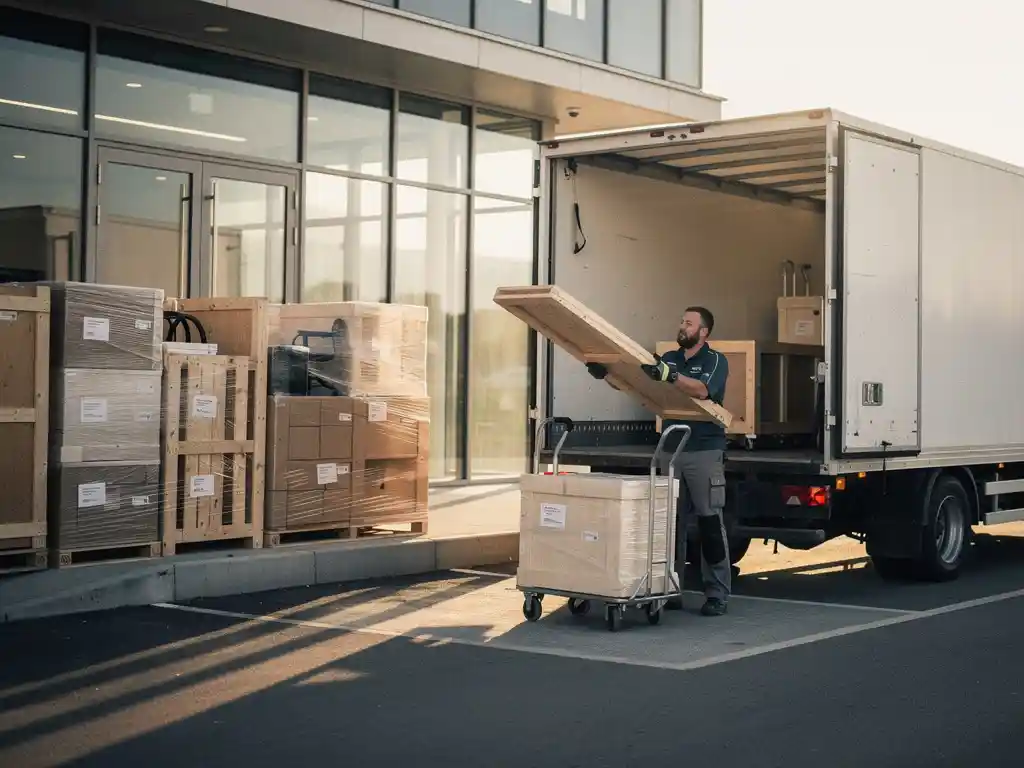
A complete logistics approach for a fit-out covers every movement, storage, and coordination step between the moment goods leave a supplier and the moment they are installed in a finished space. It goes well beyond standard freight because fit-out projects involve multiple product types, multiple suppliers, tight site access windows, and a fixed completion date that cannot move. The sections below walk through each layer of that process, from planning to contingency.
What makes fit-out logistics different from standard freight?
Fit-out logistics differs from standard freight because it requires precise sequencing, multi-supplier coordination, and on-site delivery conditions that general cargo services are not built to handle. Where standard freight moves goods from A to B, fit-out supply chain management must align deliveries with installation schedules, building access restrictions, and the work of contractors on the floor at the same time.
In a typical fit-out project, furniture, flooring, lighting, kitchen units, and technical equipment arrive from different countries and manufacturers. Each item has its own lead time, packaging requirement, and fragility level. A delay or damage to one shipment can stall an entire installation crew. Standard freight operators treat each consignment independently. Project logistics for fit-outs treats the full scope as a single coordinated programme, where every delivery is timed to support what happens on site the next day.
Site conditions add another layer of complexity. Many fit-out projects take place in occupied buildings, high-rise offices, hospitals, or hotels where goods lifts have limited capacity, noise restrictions apply, and deliveries must happen outside working hours. That level of operational detail requires a logistics partner with direct project experience, not a general haulier.
What does a complete fit-out logistics plan include?
A complete fit-out logistics plan includes supplier coordination, consolidated transport, interim warehousing, sequenced delivery to site, installation support, and a contingency protocol. Every element is mapped against the project timeline before a single shipment moves, using floor plans and data to ensure that the right goods arrive in the right order at the right moment.
The planning phase starts with a full inventory of all goods: what is coming, from where, in what volumes, and on what dates. From that inventory, a logistics coordinator builds a delivery matrix that sequences arrivals to match the installation programme. Goods that are needed on day one of the fit-out must arrive first. Goods needed in week three are held in a staging warehouse until the site is ready.
The plan also defines how goods will enter the building, which routes vehicles will use, how items will be moved from the loading bay to the installation floor, and who is responsible at each handover point. A well-built logistics approach for a fit-out leaves nothing to chance at the site boundary.
How does warehousing support a fit-out project?
Warehousing supports a fit-out project by acting as a buffer between supplier lead times and site readiness. Goods from multiple suppliers rarely arrive at the same time, and construction sites are rarely ready to receive full deliveries from day one. A dedicated warehousing solution holds, inspects, consolidates, and releases goods according to the installation schedule.
In practice, this means that items arriving weeks before they are needed are received into a managed warehouse, checked for damage, and stored in a way that makes them easy to retrieve on demand. When the site is ready for a particular phase of installation, the logistics team picks and packs the relevant goods, loads them in the correct sequence, and delivers them just in time.
Warehousing also provides a quality control checkpoint. Damaged or incorrect items are identified before they reach the site, which avoids costly delays caused by discovering problems during installation. For large fit-out projects spanning multiple floors or phases, this buffer function is not optional. It is what keeps the installation programme on track when supplier timelines shift.
Who coordinates the different parties in a fit-out logistics chain?
A dedicated project logistics coordinator manages the different parties in a fit-out logistics chain. This person or team acts as the single point of contact between suppliers, transporters, warehouse operators, customs agents, and the installation crew on site. Without that central coordination role, communication gaps between parties are the most common cause of delays.
We assign a project team to each fit-out engagement that maps all stakeholders before the project begins. That team tracks shipment progress, communicates changes to site access or schedule, and makes real-time decisions when something shifts. On a project involving goods from multiple countries, this coordination role also covers customs documentation and import clearance, ensuring that cross-border shipments do not stall at the border when the installation team is waiting on site.
Local partners play an important role too. On international fit-out projects, a logistics provider with an established network can deploy trusted local teams who understand regional regulations, building access norms, and language requirements. We operate across more than 150 locations worldwide, which means local coordination is built into the service rather than improvised on arrival.
What happens when fit-out deliveries are delayed or damaged?
When fit-out deliveries are delayed or damaged, the logistics partner must act immediately to assess the impact, communicate with all affected parties, and implement a recovery plan. In project logistics for fit-outs, response speed matters as much as the original plan, because installation crews and site access windows cannot wait indefinitely for a replacement shipment.
A strong contingency protocol covers three scenarios: supplier delays before dispatch, transport damage in transit, and site refusal due to incorrect or incomplete delivery. For each scenario, the logistics team needs pre-agreed escalation contacts, alternative sourcing options where possible, and the authority to reroute or expedite without waiting for lengthy approval chains.
Damage prevention starts well before transit. Proper packaging specification, correct loading sequences, and vehicle types matched to the fragility of the goods all reduce the likelihood of damage reaching the site. When damage does occur, a thorough pre-delivery inspection at the warehouse stage means problems are caught early, giving the team more time to find a solution before the installation window closes.
When should a fit-out project engage a logistics partner?
A fit-out project should engage a logistics partner at the planning stage, before suppliers are confirmed and purchase orders are placed. Bringing logistics expertise in early allows the partner to influence supplier selection, packaging requirements, lead time commitments, and delivery schedules in ways that make the entire project more manageable and less expensive.
Engaging a partner late, typically after goods are already in transit, limits the options available and increases the risk of costly last-minute interventions. By contrast, early involvement means the logistics plan is built alongside the project plan rather than retrofitted to it. Warehouse space is reserved, transport routes are confirmed, and site access is agreed before any goods move.
For complex fit-out projects spanning multiple locations or countries, early engagement is even more critical. Customs requirements, import documentation, and local delivery regulations all take time to resolve. A logistics partner who joins the project in the procurement phase can prepare all of that groundwork in advance, so that when goods are ready to move, there are no administrative bottlenecks holding them back.
If you are planning a fit-out project and want to understand how a full-service logistics approach can support your timeline, get in touch with our team to discuss your requirements.