




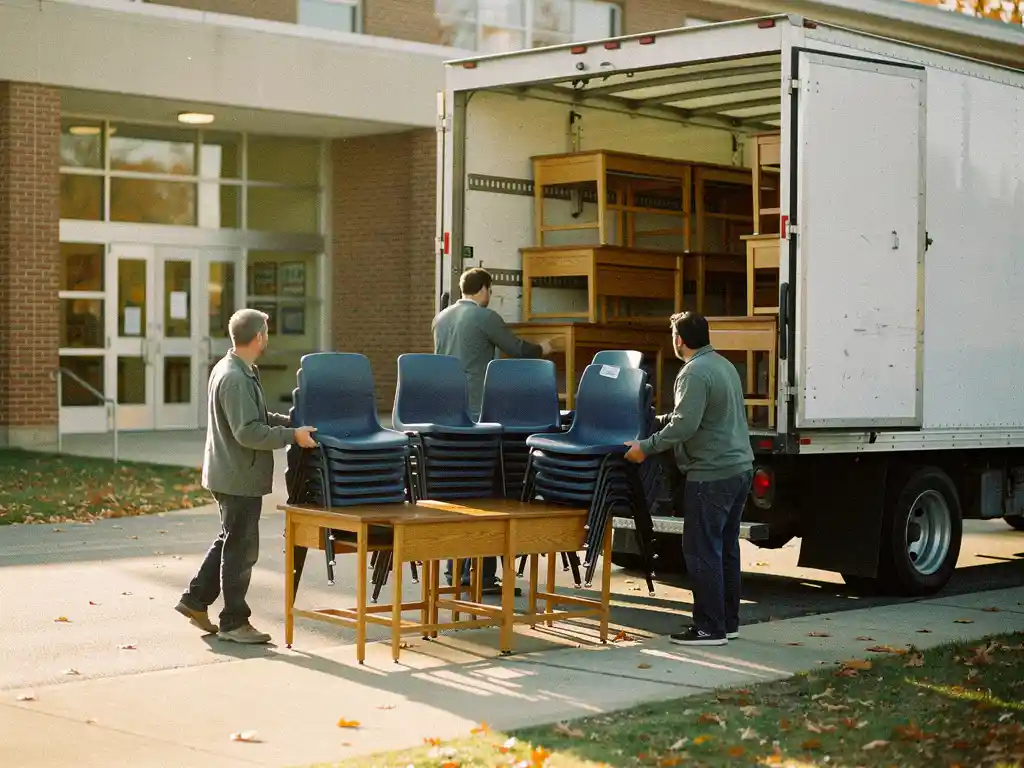
The best approach for annual furniture delivery to schools combines careful timing, thorough pre-delivery planning, and a logistics partner experienced in large-scale institutional projects. Schools benefit most from scheduling deliveries during holiday periods, coordinating closely with facility managers, and choosing a provider that handles everything from transport to on-site installation. The sections below break down each aspect of school furniture logistics in detail.
How do schools typically manage large furniture deliveries?
Schools typically manage large furniture deliveries by coordinating with a dedicated project manager or facilities coordinator who oversees scheduling, access arrangements, and room-by-room delivery sequences. Most institutions work with a single logistics provider responsible for the entire chain, from warehouse storage through final placement, to reduce the complexity of managing multiple contractors on site.
In practice, the process usually starts months before the physical delivery. Procurement teams confirm furniture specifications, floor plans are shared with the logistics provider, and delivery windows are aligned with the school calendar. On delivery day, a clear room labeling system and a pre-agreed unloading sequence allow crews to work efficiently without disrupting each other or blocking corridors.
Larger institutions, such as university campuses or multi-building school complexes, often stage deliveries across several days or even weeks. In these cases, temporary warehousing plays a key role, allowing furniture to be held and released in batches that match the construction or renovation schedule for each building phase.
What are the biggest challenges in school furniture logistics?
The biggest challenges in school furniture logistics are tight delivery windows, restricted site access, the need to protect existing infrastructure, and the coordination of assembly and installation within a live or partially occupied building. Each of these factors can cause delays and cost overruns if not anticipated well in advance.
Access is often the first obstacle. School corridors are narrow, staircases are numerous, and loading docks are rarely designed for high-volume deliveries. Logistics teams need detailed floor plans and advance site visits to plan equipment requirements, whether that means specialist lifting gear, stair climbers, or smaller vehicles capable of navigating urban school sites.
Protecting the building is equally important. Newly refurbished schools are particularly vulnerable to damage during delivery, so experienced crews use floor protection, corner guards, and careful handling protocols throughout. Beyond the physical challenges, coordinating assembly crews alongside delivery teams in the same space requires precise scheduling to avoid bottlenecks and ensure each room is completed before the next is started.
When is the best time to schedule annual furniture deliveries to schools?
The best time to schedule annual furniture deliveries to schools is during school holiday periods, particularly the summer break, autumn half-term, or Easter holiday. These windows give logistics teams unobstructed access to the building, eliminate the risk of disrupting lessons, and allow assembly crews to work at full pace without safety concerns around students.
The summer break is the most popular window because it offers the longest uninterrupted period, typically six to eight weeks in most European countries. This makes it the preferred choice for large refurbishments or full classroom fit-outs. However, demand for logistics capacity during summer is high, which means booking well in advance, often six months or more ahead, is essential to secure the right team and equipment.
Autumn and spring holidays are better suited to smaller, targeted deliveries such as replacing furniture in specific classrooms or adding new equipment to a single department. For schools operating on a rolling annual procurement cycle, splitting deliveries across two holiday windows can also help spread costs and reduce the pressure of a single large-scale operation.
What services should a furniture logistics provider offer schools?
A furniture logistics provider working with schools should offer a complete service that covers transport, pre-delivery warehousing, on-site assembly, installation, and waste removal. Schools do not have the internal capacity to manage fragmented supply chains, so a single provider capable of handling the full process from origin to finished room delivers the most value.
Beyond the basics, the following services are particularly important for school furniture supply chain management:
- Pre-project planning: Detailed review of floor plans, access routes, and delivery sequences before any vehicle arrives on site
- Flexible warehousing: The ability to receive and hold furniture in advance, releasing it in batches aligned with the school’s renovation schedule
- Assembly and installation: Trained crews who can build and position furniture correctly, including fixed items such as shelving or workstation systems
- Damage protection protocols: Proper handling equipment and building protection materials used as standard throughout the delivery
- Waste and packaging removal: Collection and disposal of all packaging materials so the school does not inherit the clean-up task
- International sourcing capability: For schools procuring furniture from overseas manufacturers, customs clearance and cross-border transport handled within the same service
We specialize in exactly this kind of complex, multi-service delivery. Our project logistics team has equipped school buildings across Europe and beyond, combining detailed pre-planning with on-the-ground execution to ensure every room is completed on time and to specification.
How can schools reduce costs on recurring furniture deliveries?
Schools can reduce costs on recurring furniture deliveries by consolidating orders, planning further in advance, using shared warehousing between delivery windows, and building a long-term relationship with a single logistics partner. Each of these strategies reduces the per-unit cost of handling and transport while improving reliability over time.
Consolidation is one of the most effective levers available. Rather than placing multiple small orders throughout the year, grouping purchases into one or two larger deliveries reduces the number of transport movements, lowers fuel and vehicle costs, and allows the logistics provider to optimize load planning. Schools that coordinate purchasing across departments, or even across a group of schools within the same trust or municipality, can achieve even greater economies of scale.
Advance planning also has a direct impact on cost. Last-minute bookings during peak periods such as the summer holiday carry a premium because capacity is limited. Schools that confirm their logistics requirements several months ahead can negotiate better rates and guarantee availability of specialist equipment and crews.
Finally, a long-term partnership with a provider who understands the specific site, building layout, and operational requirements of a school reduces the time and cost associated with briefing a new contractor each year. Familiarity with the site means faster delivery, fewer errors, and less risk of damage, all of which translate directly into cost savings over a multi-year relationship. If you would like to explore how we can support your school’s furniture logistics, get in touch with our team to discuss your requirements.