




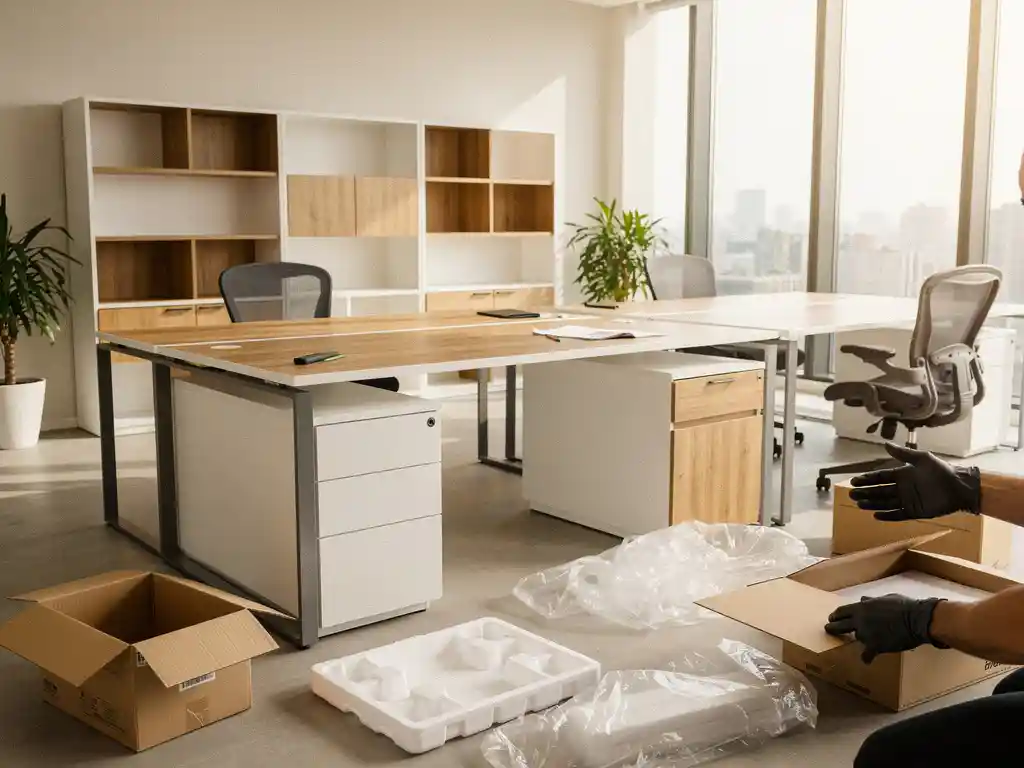
Turnkey fit-out logistics is a fully managed service where a single logistics partner handles every stage of furnishing and equipping a space, from initial transport and storage through to final installation and handover. Rather than coordinating multiple contractors, the client receives a completed, ready-to-use interior. It makes the most sense for large-scale, time-sensitive, or geographically complex projects where fragmented coordination creates real risk. The sections below answer the most common questions about how turnkey fit-out logistics works and whether it is the right approach for your project.
What does ‘turnkey’ actually mean in a fit-out context?
In a fit-out context, turnkey means that a single service provider takes full responsibility for delivering a furnished, functional space, so the client simply turns the key and walks in. The term signals complete end-to-end ownership: the logistics partner manages everything from the moment goods leave the supplier to the moment the last piece of furniture is in place and inspected.
The word originated in construction, where a contractor would hand over a finished building ready for immediate use. Applied to fit-out logistics, it carries the same promise: no loose ends, no coordination gaps, and no need for the client to manage separate parties for transport, storage, assembly, and installation. The client defines the outcome, and the logistics partner is accountable for delivering it.
What services are included in turnkey fit-out logistics?
Turnkey fit-out logistics typically includes international or domestic transport, interim warehousing, pre-delivery inspection, assembly, installation, waste removal, and final site handover. The exact scope varies by project, but the defining characteristic is that all services are coordinated and delivered by one accountable partner rather than split across multiple vendors.
In practice, a comprehensive turnkey service covers:
- Transport and freight: Moving goods from suppliers or manufacturers to a consolidation point or directly to site, including customs clearance for international shipments
- Warehousing and staging: Holding goods in a dedicated warehousing facility until the site is ready, with stock management and damage checks
- Pre-assembly and quality control: Preparing products before delivery to reduce on-site time and catch defects early
- On-site installation: Placing, assembling, and configuring furniture, fixtures, and equipment according to floor plans and specifications
- Debris and packaging removal: Clearing the site after installation so it is genuinely ready for use
- Project coordination: A dedicated project manager who aligns timelines, communicates with all parties, and resolves issues as they arise
The depth of each service element depends on the project. A hotel fit-out across multiple floors requires more complex staging and sequencing than a single office floor, but the principle remains the same: one partner, one point of contact, complete accountability.
How does turnkey fit-out logistics differ from standard furniture delivery?
Standard furniture delivery ends at the threshold: goods are transported to the address and unloaded. Turnkey fit-out logistics begins where standard delivery stops, continuing through assembly, installation, and final handover. The key difference is accountability: a delivery service is responsible for transit only, while a turnkey partner is responsible for the finished result.
With standard furniture transport, the client or their team coordinates what happens after the truck leaves. That works well for straightforward, single-location deliveries where the receiving team can handle the rest. It becomes a significant burden when the project involves hundreds of items, tight installation windows, multiple suppliers, or sites that are not yet fully accessible.
Turnkey fit-out logistics also involves far more planning before a single vehicle moves. Detailed floor plans, sequenced delivery schedules, site access assessments, and supplier coordination all happen in advance. This upfront investment in planning is precisely what prevents delays and damage once work begins on site.
When does turnkey fit-out logistics make the most sense?
Turnkey fit-out logistics makes the most sense when the complexity, scale, or time pressure of a project makes fragmented coordination genuinely risky. If the cost of a delay, a damaged item, or a missed installation window is high, consolidating responsibility under one partner reduces that risk significantly.
Specific situations where the turnkey approach delivers clear value include:
- Multi-location rollouts: Fitting out offices, retail units, or hotel rooms across several sites simultaneously requires centralised planning that no single site team can manage alone
- Tight handover deadlines: When a building must open on a specific date, such as a school before term starts or a hotel before its launch, coordinated installation scheduling is essential
- International projects: Cross-border fit-outs introduce customs, language barriers, and unfamiliar local regulations that a specialist partner navigates routinely
- High-value or fragile items: Artwork, bespoke furniture, and precision equipment need specialist handling throughout the chain, not just during transit
- Limited on-site resource: When the client has no in-house project or facilities team available to manage installation, outsourcing the entire process is the practical solution
Conversely, for a straightforward single-office delivery where the client has a capable internal team and no hard deadline, standard delivery may be entirely sufficient. The decision comes down to what the client can realistically manage themselves and what the consequences of getting it wrong would be.
Who typically uses turnkey fit-out logistics services?
Turnkey fit-out logistics is most commonly used by property developers, interior contractors, corporate real estate teams, hotel groups, healthcare providers, and educational institutions. What they share is a need to furnish and equip large or complex spaces to a defined standard, within a fixed timeline, without managing every logistics detail themselves.
Interior fit-out contractors often use turnkey logistics partners to handle the supply chain while they focus on the physical installation work. Corporate clients rolling out a new office design across multiple countries rely on a single logistics partner to ensure consistency. Hotel groups opening new properties need everything from beds to restaurant furniture delivered, assembled, and in place before the first guest arrives.
Our project logistics solutions serve clients across all of these sectors, delivering fit-out projects in offices, schools, hospitals, hotels, and government buildings across more than 150 locations worldwide. The common thread is that the client needs certainty, not coordination tasks.
What should you look for in a turnkey fit-out logistics partner?
When choosing a turnkey fit-out logistics partner, look for demonstrated project management capability, sector-specific experience, a reliable network of local partners, and a single point of contact who owns the outcome from start to finish. Operational scale matters, but so does the ability to solve problems quickly when something unexpected happens on site.
Key qualities to evaluate include:
- End-to-end service ownership: The partner should handle transport, warehousing, installation, and clearance without subcontracting critical elements to parties outside their control
- Pre-project planning depth: A strong partner maps every detail before work begins, using floor plans, access assessments, and supplier timelines to eliminate surprises
- International reach with local knowledge: For cross-border projects, the partner needs both a global network and trusted local contacts who understand site conditions and regulations
- Responsiveness under pressure: Fit-out projects rarely go entirely to plan. The partner’s ability to adapt quickly and find solutions without escalating every issue to the client is a genuine differentiator
- Transparent communication: Regular updates, clear escalation paths, and honest reporting on progress and issues build the trust that complex projects require
Experience in your specific sector is also worth prioritising. A partner who has fitted out hospitals understands infection control constraints. One who has worked on hotel openings knows what a phased room handover looks like. That contextual knowledge reduces the briefing burden on your side and reduces the risk of avoidable mistakes on theirs.
We have been delivering complex fit-out logistics projects since 1924, with a team of more than 200 logistics professionals and the international reach of the Logistics Plus network. If you are planning a project and want to explore what a turnkey approach could look like, get in touch with our team to discuss the details.