




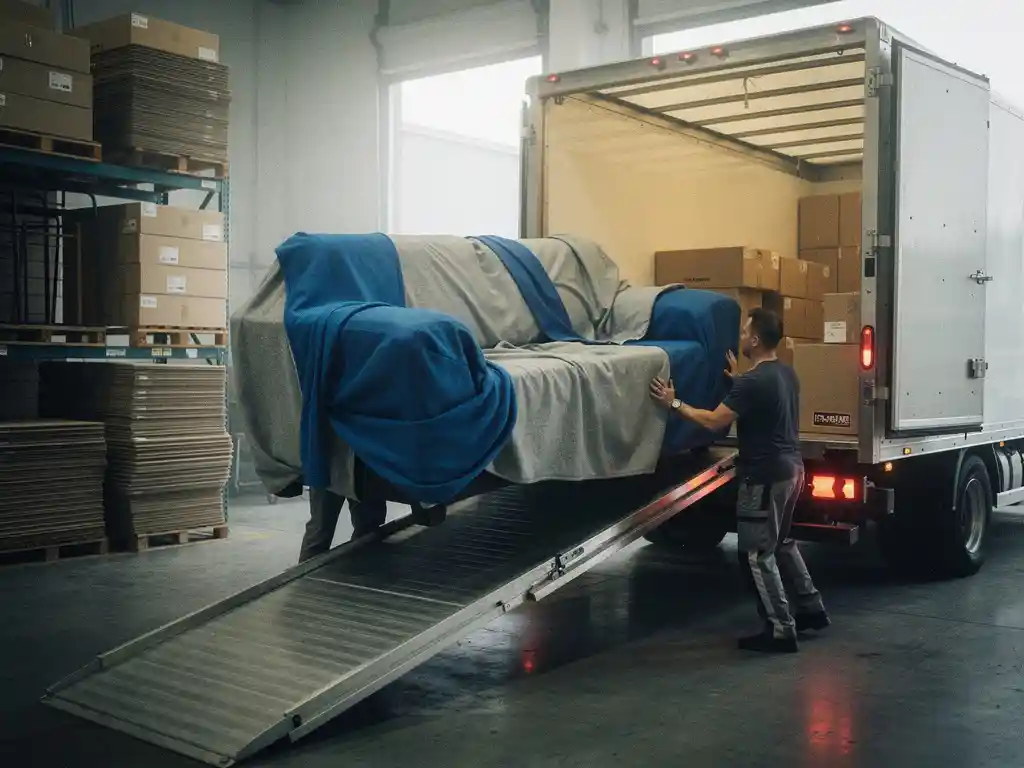
A furniture manufacturer should look for a logistics partner with proven industry-specific experience, end-to-end service capabilities, strong geographic reach, and reliable warehousing infrastructure. The right partner understands the unique challenges of handling large, fragile, and high-value items and can manage the full supply chain from the factory floor to the final destination. Below, we answer the key questions every furniture manufacturer should ask before choosing a logistics provider.
What services should a furniture logistics partner offer?
A furniture logistics partner should offer a fully integrated suite of services including transport, distribution, warehousing, assembly, installation, and customs handling. Furniture supply chains are complex, and relying on multiple separate providers introduces unnecessary risk and coordination overhead. A single partner capable of managing each stage reduces errors, speeds up delivery, and gives you one point of accountability.
At a minimum, look for a provider that covers:
- Transport and distribution across domestic and international routes
- Warehousing with the capacity and infrastructure to handle bulky items safely
- Assembly and installation services for furniture delivered directly to end customers or project sites
- Customs and compliance handling for cross-border shipments
- Value-added services such as quality checks, repackaging, and labelling
The more of these services a partner can deliver under one roof, the more streamlined your furniture transport and distribution process becomes. Fragmented logistics chains create gaps where damage, delays, and miscommunication are most likely to occur.
How does industry-specific experience affect logistics quality?
Industry-specific experience directly improves logistics quality because furniture handling requires knowledge that general freight providers simply do not have. Oversized dimensions, delicate finishes, flat-pack assembly requirements, and white-glove delivery expectations all demand specialist handling procedures. A provider without this experience is more likely to cause damage, miss delivery windows, or mishandle customer-facing installations.
An experienced furniture logistics partner will have developed processes for protecting items during transit, trained staff who understand how to handle and position furniture correctly, and established relationships with specialist subcontractors for last-mile delivery in challenging locations. They will also understand the seasonal demand peaks common in the furniture industry and plan capacity accordingly.
When evaluating experience, ask specifically about the types of furniture handled, the scale of projects managed, and how long the provider has been active in the sector. Longevity in the industry is a meaningful signal. We have been operating in European logistics since 1924, with deep specialisation in furniture, kitchen, and project logistics built over decades of hands-on experience.
What geographic coverage should a furniture logistics partner have?
A furniture logistics partner should offer geographic coverage that matches your current distribution footprint and your growth ambitions. For manufacturers selling across Europe or globally, this means established routes, local partner networks, and the ability to coordinate deliveries to project sites in multiple countries simultaneously.
Pan-European coverage is a baseline requirement for most furniture manufacturers operating today. But coverage alone is not enough. What matters equally is the depth of that coverage: can the partner reach urban high-rises, remote retail locations, or international project sites with the same reliability as standard routes? Look for a provider with local knowledge in key markets and a network of trusted partners who can handle final-mile delivery where direct operations are not practical.
Membership in specialist logistics networks adds further reach. Being part of a global furniture logistics network, for example, allows a provider to coordinate deliveries across more than 150 locations worldwide, giving furniture manufacturers access to consistent service standards far beyond their home market.
How important is warehousing capacity for furniture manufacturers?
Warehousing capacity is critical for furniture manufacturers because furniture is bulky, difficult to stack, and often requires careful storage conditions to prevent damage. Insufficient or poorly equipped warehousing creates bottlenecks, increases the risk of product damage, and limits your ability to manage inventory flexibly around demand fluctuations.
When assessing warehousing, consider both scale and capability. A large footprint matters, but so does the quality of the facility and the processes within it. Key factors to evaluate include:
- Total floor space and whether it can accommodate your volume at peak periods
- Racking and handling equipment suited to large and irregular item sizes
- Inventory management systems that give you real-time visibility of stock
- Value-added services available on-site, such as quality inspection, repackaging, or kitting
- Location relative to your production sites and key distribution routes
Our warehousing solutions span more than 60,000 square metres across strategically located facilities, designed specifically to support the needs of furniture and interior logistics operations.
What should furniture manufacturers know about customs and compliance?
Furniture manufacturers importing or exporting goods need a logistics partner with strong customs expertise to avoid costly delays, fines, and compliance failures. Customs requirements vary significantly by country and product category, and incorrect documentation or tariff classification can hold up entire shipments at the border.
A competent logistics partner will handle customs declarations accurately, stay current with changing trade regulations, and advise you on the most efficient import and export structures for your supply chain. This is particularly relevant for manufacturers sourcing materials or components from outside the EU, or distributing finished products to markets with complex trade agreements.
Beyond documentation, compliance also covers product labelling, packaging regulations, and country-specific delivery requirements. A full-service logistics partner with in-house customs handling removes this burden from your team and reduces the risk of non-compliance at any point in the supply chain.
How do you evaluate a logistics partner’s reliability and track record?
To evaluate a logistics partner’s reliability, look at their track record across three dimensions: delivery performance, problem resolution, and industry recognition. A reliable partner will be transparent about their service levels, able to provide references or case studies, and willing to discuss how they have handled disruptions in the past.
Concrete indicators of reliability include:
- Industry awards and certifications that reflect third-party validation of service quality
- Years of operation in the furniture logistics sector specifically
- Client case studies demonstrating successful delivery of complex or large-scale projects
- Technology infrastructure for tracking, reporting, and proactive communication
- Financial stability and the scale of their operations
Ask prospective partners how they respond when things go wrong. A reliable provider will have clear escalation processes, dedicated account management, and a team that acts quickly when unexpected challenges arise. You can explore our client cases to see how we have delivered results across a wide range of complex furniture and project logistics challenges.
Ultimately, choosing the right furniture manufacturer logistics partner comes down to finding a provider that combines genuine sector expertise with the service breadth, geographic reach, and operational reliability your supply chain demands. Taking the time to ask the right questions before committing to a partner will pay dividends across every stage of your logistics operation.