




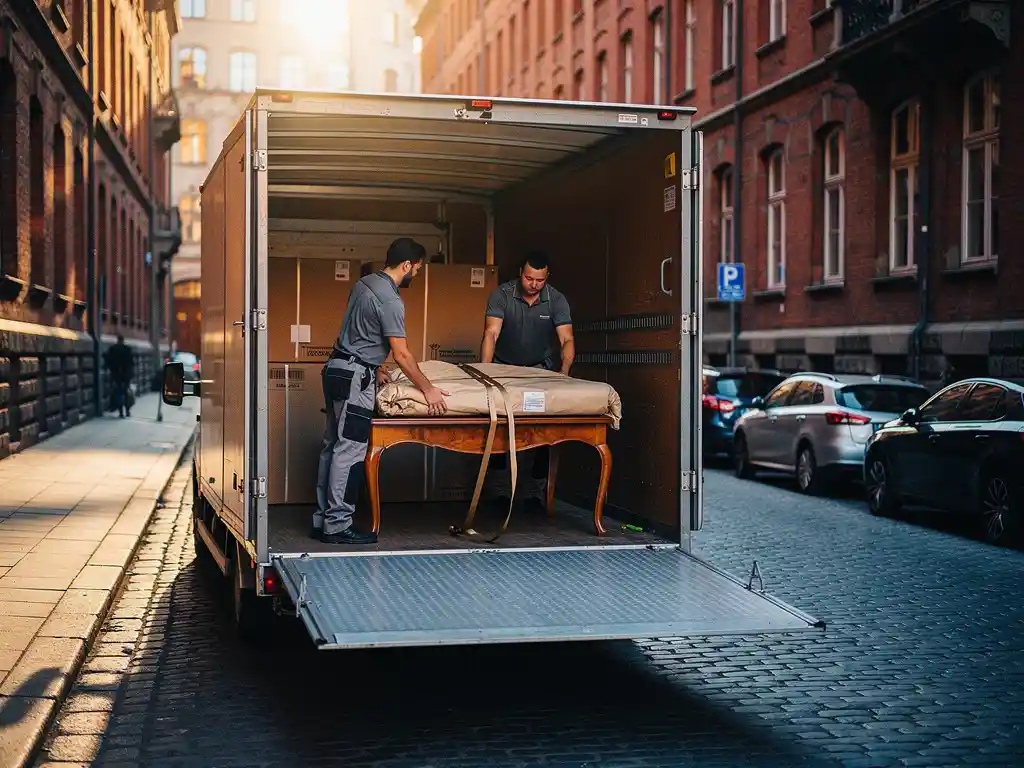
Transporting furniture to city centers presents unique logistical challenges that require careful planning and specialized expertise. From navigating narrow streets and strict vehicle restrictions to coordinating complex delivery schedules, urban furniture transport demands a strategic approach that balances efficiency with regulatory compliance.
Successfully managing furniture delivery in dense urban environments requires an understanding of local regulations, route optimization for accessibility, and protective measures that ensure products arrive in perfect condition. Whether you’re handling office relocations, residential moves, or commercial installations, mastering city center logistics is essential for maintaining customer satisfaction and operational efficiency.
What are the main challenges of delivering furniture to city centers?
City center furniture delivery faces three primary challenges: limited access routes, strict time restrictions, and complex parking regulations. Urban areas typically feature narrow streets, low bridges, and weight-limited roads that restrict large delivery vehicles, while many cities enforce delivery windows and require special permits for commercial transport.
Traffic congestion significantly impacts delivery schedules, often doubling transport times compared to suburban routes. Peak-hour restrictions mean deliveries must be carefully timed, typically requiring early-morning or late-evening slots when commercial vehicle access is permitted. Additionally, many city centers have established low-emission zones that restrict older vehicles, requiring logistics providers to maintain modern, compliant fleets.
Building access presents another layer of complexity, particularly in historic city centers where structures may lack freight elevators or have narrow staircases. Coordinating with building management, securing loading dock access, and arranging temporary parking permits all require advance planning and local knowledge to execute successfully.
What vehicle restrictions apply to furniture transport in urban areas?
Urban furniture transport typically faces weight limits of 7.5 to 12 tons, height restrictions under 3.5 meters, and length limits of around 12 meters in most city center zones. Many cities also enforce Low Emission Zone requirements, mandating Euro 6 diesel engines or electric vehicles for commercial deliveries.
Time-based restrictions are equally important, with most cities prohibiting heavy goods vehicles during peak hours, typically 7–9 AM and 5–7 PM on weekdays. Some city centers implement complete bans on large vehicles during certain hours, requiring deliveries to occur during designated windows, often between 6–11 AM or after 7 PM.
Specific vehicle requirements vary by location but commonly include mandatory side guards, audible reversing alarms, and enhanced mirror systems for urban safety. Additionally, many cities require delivery vehicles to display permits or authorization stickers, and some mandate GPS tracking systems to monitor compliance with restricted routes and time windows.
How do you plan efficient furniture delivery routes in cities?
Efficient city furniture delivery routes require advanced planning using GPS systems that account for vehicle restrictions, real-time traffic data, and delivery time windows. Route optimization should prioritize consolidating deliveries within specific zones and scheduling them during permitted hours to minimize travel time and fuel costs.
Successful route planning begins with mapping all delivery addresses against local restrictions, identifying which locations require special permits or have building access limitations. Clustering deliveries by geographic proximity and time windows allows for maximum efficiency while ensuring compliance with local regulations.
Technology plays a crucial role in dynamic route adjustment, with modern fleet management systems providing real-time updates on traffic conditions, road closures, and parking availability. Pre-delivery surveys of challenging locations help identify potential obstacles, allowing teams to prepare appropriate equipment and coordinate with building management in advance.
What permits and documentation are needed for city furniture deliveries?
City furniture deliveries typically require loading permits for stopping in restricted zones, vehicle access permits for size or weight exemptions, and building access authorization from property managers. Most cities issue temporary loading permits valid for specific time periods, usually ranging from 1 to 4 hours depending on delivery complexity.
Documentation requirements commonly include commercial vehicle registration, goods transport licenses, and driver certification for operating in urban zones. Some cities require advance notification of large deliveries, particularly for oversized items that may temporarily block traffic or require a police escort.
Insurance documentation is essential, including goods-in-transit coverage and public liability insurance with minimum coverage levels specified by local authorities. For international deliveries, additional customs documentation and temporary import permits may be required, especially for high-value furniture or antique pieces.
How do you handle furniture protection during urban transport?
Urban furniture transport protection requires multi-layer wrapping systems, specialized padding materials, and secure loading techniques to prevent damage from frequent stops, vibrations, and handling. Professional-grade moving blankets, plastic wrap, and corner protectors form the foundation of effective protection strategies.
Vehicle selection plays a critical role, with air-ride suspension systems reducing vibration damage during city driving with frequent stops and starts. Proper load securing using adjustable strapping systems and load bars prevents shifting during urban navigation, while climate-controlled vehicles protect sensitive materials from temperature fluctuations.
Handling procedures must account for tight spaces and multiple transfer points common in city deliveries. This includes using furniture dollies suitable for elevators, protective floor coverings for building interiors, and specialized lifting equipment for navigating stairs or narrow doorways safely.
What technology solutions improve city center furniture delivery?
Modern city center furniture delivery relies on integrated GPS tracking systems, route optimization software, and real-time communication platforms to coordinate complex urban logistics. These technologies provide live updates on delivery progress, automatically adjust routes for traffic conditions, and enable instant communication between drivers, dispatchers, and customers.
Fleet management systems monitor vehicle performance, fuel efficiency, and compliance with urban restrictions while providing detailed analytics on delivery times and route effectiveness. Electronic proof-of-delivery systems streamline the completion process and provide immediate confirmation to all stakeholders.
Advanced planning tools incorporate city-specific databases of restrictions, permits, and building access requirements, enabling logistics coordinators to identify potential challenges before dispatch. Mobile applications allow drivers to access building-specific delivery instructions, contact information, and real-time updates on parking availability or route changes.
How Jan Krediet helps with city center furniture delivery
We specialize in complex urban logistics challenges through our comprehensive project logistics expertise, providing end-to-end solutions for city center furniture delivery across Europe and beyond. Our experienced team understands the intricacies of urban transport regulations and maintains the specialized equipment and permits necessary for efficient city deliveries.
Our city center delivery solutions include:
- Advanced route planning with real-time traffic optimization
- Permit acquisition and regulatory compliance management
- Specialized urban delivery vehicles with air-ride suspension
- Professional packing and protection services
- Coordination with building management and local authorities
- Real-time tracking and communication systems
With over 200 logistics professionals and operations in more than 150 locations worldwide, we combine local expertise with international capabilities to ensure your furniture reaches its city center destination safely and on schedule. Contact us today to discuss your urban delivery requirements and discover how our proven logistics solutions can streamline your city center operations.