




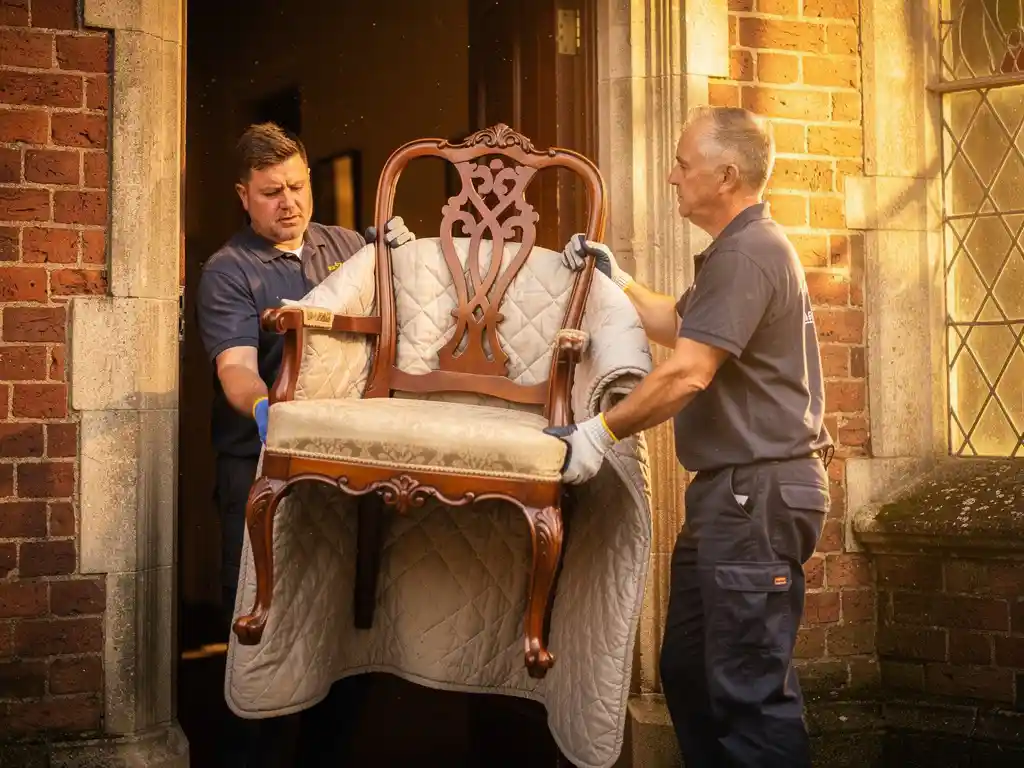
Transporting furniture to listed buildings and heritage properties requires careful planning and specialist knowledge that goes far beyond standard delivery services. These historic structures, protected by conservation laws and building regulations, present unique challenges that can turn a routine furniture delivery into a complex logistical operation.
Whether you’re furnishing a restored Georgian townhouse, delivering pieces to a converted abbey, or outfitting offices in a protected industrial building, understanding the specific requirements for heritage property deliveries is essential to avoid delays, damage, and regulatory complications.
What makes transporting furniture to listed buildings different?
Listed buildings require specialist furniture transport approaches due to strict conservation requirements, structural limitations, and regulatory oversight that don’t apply to modern properties. These heritage structures often feature narrow doorways, steep staircases, fragile architectural elements, and access restrictions that demand careful planning and expert handling techniques.
The primary differences stem from the building’s protected status under heritage legislation. Any transport operation must preserve the historic integrity of the structure, which means standard delivery methods—such as using lifting equipment against exterior walls or removing modern fixtures—may be prohibited. Many listed buildings also have weight restrictions on floors, particularly on upper levels where original timber structures may not support heavy modern furniture.
Environmental considerations add another layer of complexity. Historic buildings often lack climate-control systems, making them sensitive to temperature and humidity changes that can occur when doors remain open during extended delivery periods. The age and condition of these structures also mean that vibrations from moving heavy furniture could potentially damage delicate plasterwork, original flooring, or period features.
What permissions do you need for furniture delivery to historic properties?
Furniture deliveries to listed buildings typically require advance notification to local conservation officers and may require formal consent for any temporary modifications to access points. The specific permissions depend on the building’s listing grade and the scope of the delivery operation, with Grade I and II* properties generally requiring more stringent approvals than Grade II buildings.
Most local planning authorities require at least 48–72 hours’ notice for significant furniture deliveries to heritage properties. This notification should include details of delivery vehicles, proposed routes through the building, any temporary protective measures, and the estimated duration of the operation. For complex deliveries involving crane access or the temporary removal of period features such as window frames, listed building consent may be mandatory.
Property owners or tenants should coordinate with building managers and conservation bodies early in the planning process. Some heritage properties have established protocols for furniture deliveries, including approved contractors, specific delivery windows, and mandatory protective measures. Documentation of the building’s condition before and after delivery is often required to demonstrate that no damage has occurred to protected elements.
How do access restrictions affect furniture transport to heritage buildings?
Access restrictions in heritage buildings significantly affect furniture transport, due to limited door widths, narrow staircases, low ceiling heights, and restrictions on using mechanical lifting equipment that could damage historic façades or structural elements.
Traditional Georgian and Victorian buildings commonly feature doorways between 30 and 36 inches wide, compared with modern standard widths of 36 to 42 inches. This means large furniture pieces often require disassembly before transport and reassembly on site. Staircases in heritage properties frequently have steep angles, narrow treads, and tight turns that make manoeuvring bulky items extremely challenging.
Many listed buildings prohibit the use of external lifting equipment or cranes that could damage stonework, render, or period windows. This restriction forces deliveries through internal routes only, requiring detailed pre-delivery surveys to identify the optimal path and potential obstacles. Weight restrictions on historic floors may also limit the size and number of items that can be moved simultaneously.
Some heritage properties have designated delivery windows to minimise disruption to other occupants and reduce the risk of damage during peak usage periods. These time constraints require precise scheduling and efficient execution to complete deliveries within approved timeframes.
What special handling techniques are required for listed building deliveries?
Listed building deliveries require specialist protective measures, including floor coverings to prevent damage to original surfaces, padding for architectural features, controlled movement techniques to minimise vibrations, and climate monitoring to prevent environmental damage during extended delivery periods.
Professional furniture transport teams use heavy-duty protective sheeting on all floor surfaces, particularly over original stone, wood, or tile flooring that cannot be easily repaired or replaced. Door frames, cornices, and other architectural details receive temporary padding to prevent impact damage during furniture manoeuvring. This protection must be carefully applied to avoid using adhesives or fixings that could damage period features.
Movement techniques focus on controlled, gradual progress rather than speed. Teams use specialist equipment such as furniture dollies with soft wheels, shoulder straps for manual lifting, and custom ramps to navigate level changes without jarring movements. Large pieces are often broken down into the smallest possible components to reduce handling stress on both the furniture and the building structure.
Environmental monitoring becomes crucial during extended deliveries. Teams track temperature and humidity levels, particularly in rooms with period wallpaper, wooden panelling, or other moisture-sensitive historic materials. Delivery schedules are planned to minimise the time doors remain open, preventing dramatic environmental changes that could damage both the building and its contents.
How do you choose the right logistics partner for heritage property deliveries?
The right logistics partner for heritage property deliveries must demonstrate proven experience with listed buildings, comprehensive insurance coverage for historic properties, specialist equipment for restricted-access situations, and detailed knowledge of conservation requirements and building regulations.
Experience with heritage properties is non-negotiable. Look for providers who can demonstrate successful deliveries to similar listed buildings and understand the unique challenges these properties present. They should be familiar with conservation terminology, regulatory requirements, and the careful handling techniques necessary to protect both furniture and historic fabric.
Insurance coverage must specifically include heritage property work, with sufficient limits to cover potential damage to irreplaceable architectural features. Standard commercial insurance may not adequately cover the specialist risks associated with listed building deliveries, making this a critical verification point when selecting a provider.
Equipment capabilities should include specialist tools for restricted-access situations, protective materials suitable for historic surfaces, and monitoring equipment for environmental conditions. The logistics partner should also maintain relationships with conservation professionals and regulatory bodies, enabling smooth coordination when permissions or specialist advice are required.
How Jan Krediet helps with heritage property furniture transport
We understand the unique challenges of delivering furniture to listed buildings and heritage properties. Our specialist furniture transport service combines decades of experience with the careful attention to detail that historic buildings demand.
Our approach to heritage property deliveries includes:
- Pre-delivery surveys to assess access routes and identify potential challenges
- Comprehensive protective measures for floors, walls, and architectural features
- Specialist equipment designed for restricted-access situations
- Experienced teams trained in conservation-conscious handling techniques
- Full coordination with conservation officers and building managers
- Comprehensive insurance coverage for heritage property work
As part of the MACH-3000 network of specialist furniture transporters, we have successfully completed furniture deliveries to heritage properties across Europe. Our team understands that protecting these irreplaceable buildings is just as important as delivering your furniture safely and efficiently.
Planning a furniture delivery to a listed building or heritage property? Contact us to discuss your specific requirements and discover how our specialist approach can ensure a smooth, compliant delivery that respects both your furniture and the historic building it’s destined for.