




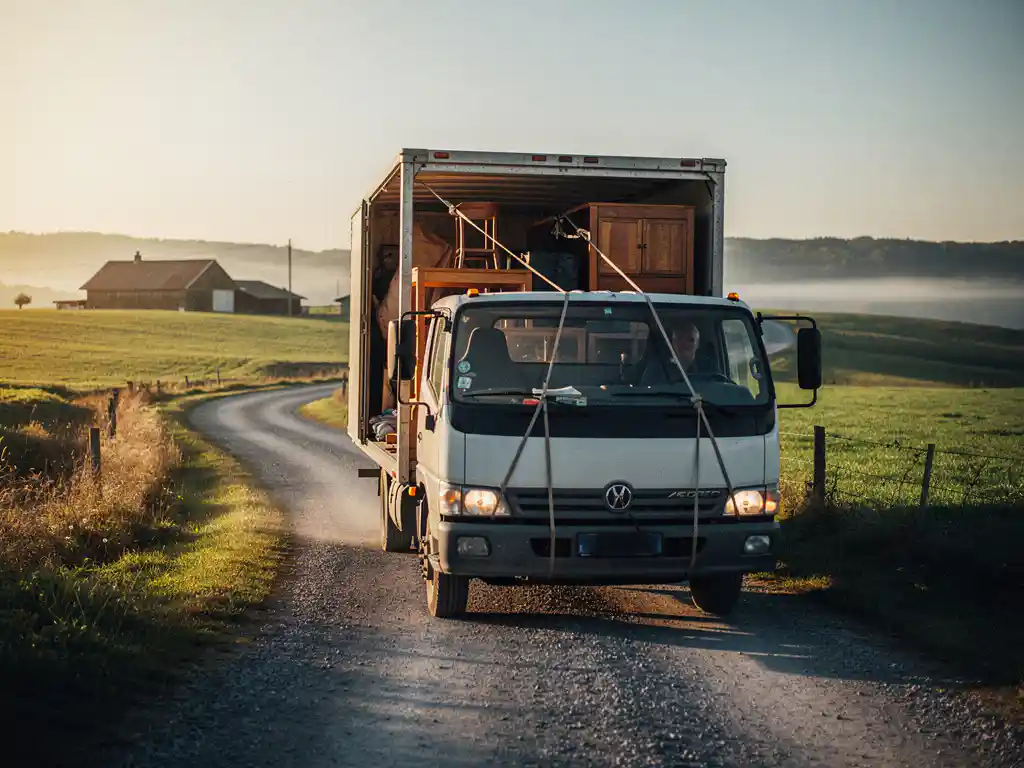
Transporting furniture to rural areas presents unique logistical challenges that urban delivery services often struggle to navigate. From longer distances and limited infrastructure to restricted delivery windows and specialized handling requirements, rural furniture transport demands careful planning and expertise. Understanding these challenges—and knowing how to address them—can save time, money, and frustration when moving furniture to countryside locations.
Whether you’re furnishing a remote office, delivering to a rural home, or managing a project in an isolated location, successful furniture transport to these areas requires strategic planning and the right logistics partner. The key lies in understanding the specific obstacles and preparing accordingly.
What makes furniture transport to rural areas more challenging?
Rural furniture transport faces significantly more obstacles than urban delivery due to infrastructure limitations, distance constraints, and accessibility issues. Remote locations often lack proper road access, have weight restrictions on bridges, and may require specialized vehicles for safe navigation.
The primary challenges include longer travel distances, which increase fuel costs and delivery times. Many rural roads are narrow, unpaved, or poorly maintained, making it difficult for large delivery trucks to access properties safely. Weather conditions can also severely impact delivery schedules, as rural roads may become impassable during storms or seasonal changes.
Limited local infrastructure means fewer distribution centers and service points in rural areas. This forces logistics companies to travel greater distances from urban hubs, increasing operational costs and complexity. Additionally, rural addresses can be difficult to locate due to inadequate signage or limited GPS coverage, leading to delays and potential delivery failures.
Communication challenges also arise in areas with poor cellular coverage, making it difficult to coordinate delivery times or provide real-time updates. These factors combine to create a more complex logistics environment that requires specialized planning and execution.
How much does rural furniture delivery typically cost?
Rural furniture delivery costs typically range from 20% to 50% higher than standard urban delivery rates due to increased distance, specialized handling requirements, and additional logistical complexity. The exact premium depends on remoteness, accessibility, and specific delivery requirements.
Several factors influence rural delivery pricing. Distance from distribution centers is the primary cost driver, as longer routes require more fuel, driver time, and vehicle wear. Many logistics companies apply surcharges for deliveries beyond certain distance thresholds, often starting at 50 to 100 kilometers from major urban centers.
Accessibility challenges can add significant costs. Properties requiring special vehicles, multiple handling stages, or manual carrying over long distances will incur additional charges. Some locations may require smaller vehicles or even hand-carrying, which increases labor costs substantially.
Delivery scheduling also affects pricing. Rural areas often have limited delivery windows due to longer travel times, meaning companies may charge premium rates to guarantee specific time slots. Emergency or expedited deliveries to remote locations can cost two to three times standard rates due to the specialized coordination required.
What delivery options are available for rural furniture transport?
Rural furniture delivery options include standard freight services, specialized rural carriers, white-glove delivery services, and self-pickup arrangements. Each option offers different service levels, costs, and delivery capabilities suited to various rural transport needs.
Standard freight services provide the most economical option for rural deliveries, typically offering curbside delivery to accessible locations. These services work well for sturdy furniture items that don’t require special handling, though delivery windows may be less flexible than those of urban services.
Specialized rural carriers focus specifically on remote-area deliveries and often have better knowledge of local roads and conditions. These companies typically offer more flexible scheduling and may provide inside delivery services, though at higher costs than standard freight.
White-glove delivery services provide comprehensive handling, including inside placement, assembly, and packaging removal. While expensive, these services are valuable for delicate or complex furniture items requiring professional installation in remote locations.
Self-pickup from regional distribution centers offers the most cost-effective solution for customers with appropriate vehicles and handling capabilities. Many logistics companies maintain pickup points in smaller towns, reducing the rural delivery distance significantly.
How do you prepare for furniture delivery in remote locations?
Preparing for rural furniture delivery requires detailed planning, including route assessment, access verification, communication coordination, and contingency planning. Proper preparation ensures smooth delivery execution and prevents costly delays or complications.
Start by providing detailed location information, including GPS coordinates, landmark references, and specific access instructions. Take photos of your property entrance, driveway, and any potential obstacles, such as low-hanging branches or narrow gates. Measure access points to ensure the furniture can fit through doorways and hallways.
Coordinate timing carefully with the delivery company. Rural deliveries often require longer time windows due to travel distances and potential complications. Ensure someone will be available throughout the delivery window, as rescheduling rural deliveries can be particularly costly and time-consuming.
Prepare the delivery site by clearing access routes, securing pets, and ensuring adequate lighting if the delivery extends into the evening. Consider weather conditions and have contingency plans for adverse conditions that might affect delivery timing.
Establish reliable communication methods with the delivery team. Provide multiple contact numbers and consider alternative communication methods if cellular coverage is poor in your area.
What should you ask logistics companies about rural delivery capabilities?
When evaluating logistics companies for rural furniture transport, ask about their rural coverage area, vehicle capabilities, delivery guarantees, insurance coverage, and contingency procedures. These questions help identify providers with genuine rural delivery expertise and appropriate service levels.
Inquire about specific rural coverage areas and delivery frequency to your location. Some companies only service rural areas on specific days or routes, which could affect delivery scheduling. Ask about vehicle size limitations and whether they can navigate your specific access requirements.
Ask about their experience with similar deliveries and request references from rural customers. Companies experienced in rural logistics will have established procedures for common challenges and can provide realistic delivery timelines and cost estimates.
Discuss insurance coverage and liability for rural deliveries. Remote locations may present higher risks of damage or loss, so ensure adequate protection is in place. Ask about their procedures for weather delays, access problems, or other rural-specific complications.
Understand their communication protocols and tracking capabilities for rural deliveries. Companies should provide regular updates and have procedures for maintaining contact even in areas with poor cellular coverage.
How Jan Krediet helps with rural furniture transport
We specialize in complex logistics challenges, including rural furniture transport, through our comprehensive project logistics expertise. Our team understands the unique requirements of remote-area deliveries and provides tailored solutions for countryside furniture transport.
Our rural delivery capabilities include:
- Detailed route planning and site assessment for remote locations
- Specialized vehicle selection based on access requirements
- Comprehensive project coordination from pickup to final placement
- Local partner networks for enhanced rural coverage
- Weather contingency planning and flexible scheduling
- Full insurance coverage and professional handling
With over 100 years of logistics experience and operations across 150+ global locations, we bring proven expertise to even the most challenging rural furniture transport projects. Our project team conducts thorough planning using location data and site maps to ensure successful delivery execution, regardless of remoteness or complexity.
Ready to solve your rural furniture transport challenges? Contact our logistics experts today to discuss your specific requirements and receive a customized solution for your remote delivery needs.