


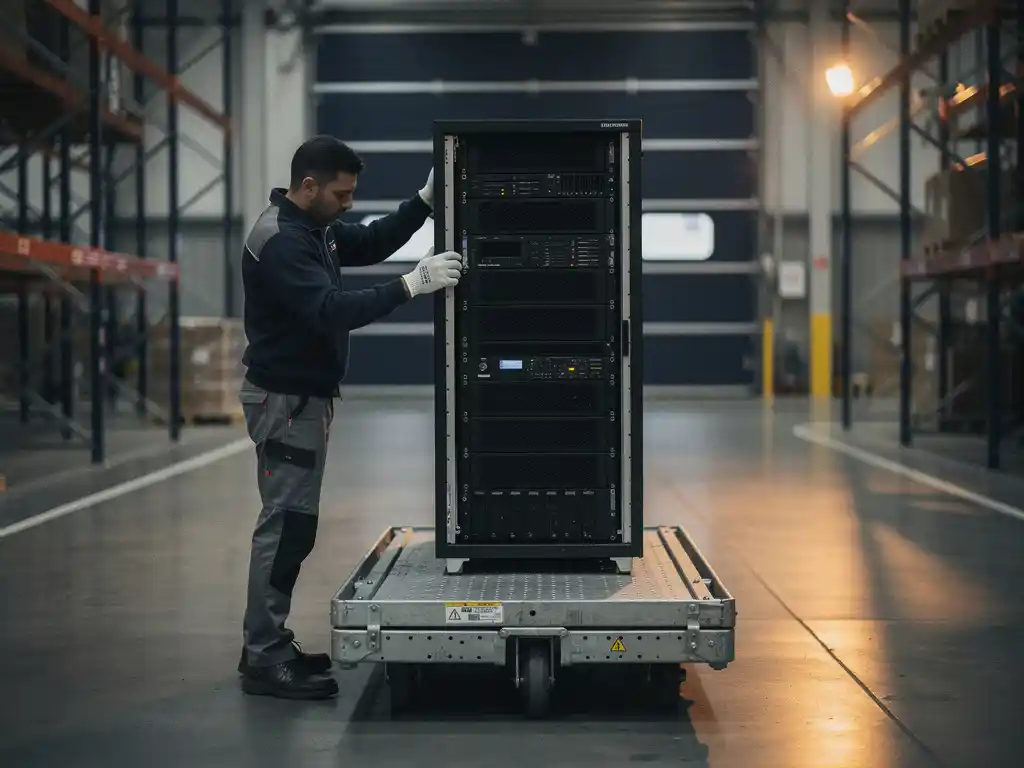
Safely relocating critical IT infrastructure requires careful planning, specialist packing, thorough documentation, and a logistics partner with proven experience handling sensitive technology. The risks are real: physical damage, data loss, customs delays, and extended downtime can all result from a poorly managed move. The questions below break down exactly what a successful IT infrastructure relocation involves, from risk assessment to choosing the right logistics partner.
What are the biggest risks when relocating IT infrastructure?
The biggest risks when relocating critical IT infrastructure are physical damage to equipment, data loss, extended downtime, and chain-of-custody failures. Servers, storage arrays, and networking hardware are precision instruments that can be permanently damaged by vibration, electrostatic discharge, temperature fluctuations, or improper handling during transit. Each of these risks compounds when the move crosses borders or involves multiple handoffs.
Physical shock is the most immediate concern. Hard drives and SSDs are sensitive to impact even when powered off, and a single drop or rough corner can render a storage unit unreadable. Beyond hardware, there is the risk of data exposure if devices are not properly secured or tracked throughout the move.
Downtime is often underestimated. Organizations frequently plan for the transit window but overlook delays caused by customs holds, incorrect documentation, or logistical bottlenecks at the destination. Every additional hour offline has a direct operational and financial cost. A structured risk assessment before the move begins is the single most effective way to identify and mitigate these vulnerabilities before they become incidents.
How should critical IT equipment be packed for transport?
Critical IT equipment should be packed using anti-static materials, custom foam inserts, and purpose-built flight cases or original manufacturer packaging wherever possible. Each item should be individually wrapped, clearly labeled, and secured to prevent movement within the outer container. Fragile or high-value components such as server blades and network switches require additional internal bracing.
Anti-static and environmental protection
Electrostatic discharge is invisible but destructive. All circuit boards, drives, and sensitive components must be placed in anti-static bags before being packed into foam-lined cases. Temperature and humidity control matter too: equipment that moves from a cold warehouse to a warm vehicle and back again is at risk of condensation forming on internal components. Where possible, climate-controlled transport should be used for the most sensitive hardware.
Labeling and orientation
Every package should carry a clear label indicating its contents, handling instructions, fragility status, and the correct upright orientation. Numbered labeling that corresponds to a master inventory list makes unpacking and verification at the destination far more efficient. This also supports chain-of-custody tracking, which is essential for auditable IT moves.
What documentation is needed before an IT infrastructure move?
Before moving critical IT infrastructure, you need a complete asset inventory, chain-of-custody documentation, data handling declarations, and, for cross-border moves, the correct customs paperwork including commercial invoices, packing lists, and any applicable export or import permits. Missing or incorrect documentation is one of the most common causes of delays and compliance failures during IT relocations.
The asset inventory should capture serial numbers, asset tags, hardware specifications, and the current physical condition of every item being moved. This record serves as the baseline for verifying that equipment arrives intact and that nothing is lost or substituted during transit.
Data handling declarations are increasingly important from a regulatory standpoint. Depending on the jurisdiction and the nature of the data stored on the equipment, organizations may need to demonstrate that data was protected throughout the move and that access was restricted to authorized personnel only. For organizations operating under frameworks such as GDPR, this documentation is not optional.
For international moves, customs documentation must be prepared well in advance. Temporary import or export licenses, ATA carnets for equipment crossing borders temporarily, and accurate harmonized tariff codes all need to be in place before the shipment moves. Errors at this stage can result in equipment being held at the border for days or longer.
Who should be involved in planning a data center relocation?
Planning a data center relocation should involve IT and infrastructure teams, facilities management, a dedicated project manager, senior leadership with sign-off authority, and a specialist logistics partner. For larger moves, legal, compliance, and security teams should also have input. Relying solely on an internal IT team without logistics expertise is one of the most common planning mistakes.
The internal IT team understands the technical dependencies between systems and can sequence the move to minimize downtime. Facilities management handles physical access, power requirements, and environmental conditions at both the origin and destination sites. A project manager coordinates timelines, tracks dependencies, and ensures that every party knows their responsibilities and deadlines.
The logistics partner should be brought into the planning process early, not just at the point of physical collection. An experienced provider will identify risks in the proposed timeline, advise on packing standards, and flag documentation requirements for cross-border moves well before they become problems. Our project logistics team works this way as standard: dedicated project managers are assigned to each engagement from the planning phase through to final installation, ensuring that no detail is left unmanaged.
How do logistics providers handle customs clearance for cross-border IT moves?
Experienced logistics providers handle customs clearance for cross-border IT moves by preparing and submitting the required import and export declarations, classifying equipment under the correct tariff codes, managing duty and tax calculations, and acting as the customs representative on behalf of the client. This removes the administrative burden from the client and significantly reduces the risk of border delays.
The classification of IT equipment for customs purposes is more complex than it appears. A server, for example, may be classified differently depending on its configuration, intended use, and whether it is being permanently imported or temporarily moved for maintenance. Incorrect classification leads to incorrect duty assessments, which can trigger audits or cause shipments to be held.
For equipment that is moving temporarily across borders, such as hardware being sent for repair and returned, an ATA carnet is often the most efficient solution. This document acts as an international customs passport, allowing goods to cross multiple borders without paying duties at each point. Managing this process requires both customs expertise and close coordination with the logistics timeline.
We manage the complete administrative process for our clients, including customs clearance, so that the move proceeds without unnecessary interruption. You can explore the full scope of what we offer across our industries and sectors page.
What should you look for in a logistics partner for IT equipment moves?
When choosing a logistics partner for IT equipment moves, look for demonstrated experience with high-value and sensitive technology, clean-room or controlled-environment handling capabilities, robust chain-of-custody procedures, customs clearance expertise, and a dedicated project management structure. General freight carriers without specialist experience in technology logistics carry significantly higher risk for this type of move.
Experience matters more than scale. A provider that has physically handled server cabinet assembly, warehoused IT hardware in dust-free environments, and managed worldwide distribution for technology clients brings a level of operational understanding that a generalist carrier simply cannot replicate. Ask for specific examples of comparable moves rather than general capability claims.
Chain-of-custody procedures should be non-negotiable. Every handoff, every vehicle transfer, and every storage period should be logged and traceable. For regulated industries, this audit trail is a compliance requirement. For all organizations, it is the clearest indicator that the logistics partner takes accountability seriously.
A single point of contact throughout the move is also a practical necessity. When multiple partners, modalities, and border crossings are involved, fragmented communication creates gaps. The best providers assign one dedicated contact who manages all coordination internally, keeping the client informed without requiring them to chase updates across multiple parties.
We have been handling complex, high-stakes logistics since 1924, and our work in high-tech logistics includes assembling server cabinets in dust-free clean rooms, warehousing and refurbishing IT hardware, and managing worldwide distribution for major technology clients. If you are planning an IT infrastructure relocation and want to discuss your specific requirements, get in touch with our team directly.