




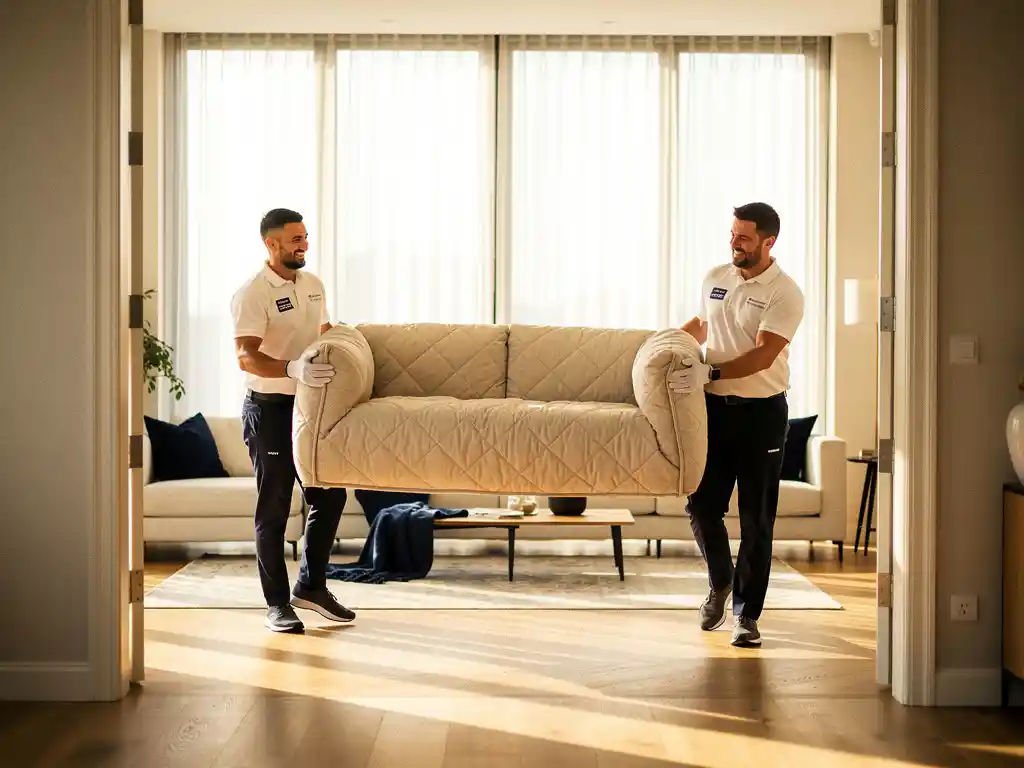
Customers typically expect room of choice delivery for furniture as soon as an item is large, heavy, or complex enough that placing it at the doorstep creates a genuine problem. For most buyers, that threshold kicks in with sofas, beds, wardrobes, dining tables, and other bulky pieces that cannot reasonably be carried and positioned by one person. The sections below unpack exactly when those expectations arise, what drives them, and how logistics providers can meet them reliably.
What counts as room of choice delivery for furniture?
Room of choice delivery means the carrier brings a furniture item inside the customer’s home and places it in the specific room the customer designates, rather than leaving it at the front door, on the doorstep, or in a communal hallway. It is a step up from threshold delivery and a step below full white glove service. The delivery team carries the item through the property, navigates stairs or tight corridors if needed, and positions the piece exactly where the customer wants it.
The key defining feature is placement in a named room. The customer chooses the destination inside their home, and the delivery crew fulfils that choice. Room of choice delivery does not automatically include unpacking, assembly, or removal of packaging materials, though some providers bundle those extras. What it always includes is the physical act of bringing the item to the right room safely and without damage to the product or the property.
Why do customers expect room of choice for large furniture items?
Customers expect room of choice delivery for large furniture because the physical reality of the items makes doorstep delivery impractical or even impossible without professional help. A king-size bed frame, a three-seater sofa, or a large wardrobe cannot be moved through a home by a single person. Expecting the customer to manage that alone after the driver leaves is not realistic, and most buyers know this before they even place an order.
Beyond the practical barrier, there is a clear value alignment at play. When a customer spends a significant sum on a piece of furniture, their expectation of the delivery experience rises proportionally. A premium product arriving at the doorstep in a box, with no further assistance, creates a mismatch between the purchase experience and the delivery experience. That gap damages satisfaction and trust, even when the product itself is perfect.
There is also a liability dimension. If a customer attempts to move a heavy wardrobe up a flight of stairs without help and damages a wall, a banister, or the item itself, the frustration lands squarely on the retailer and the logistics provider. Room of choice delivery removes that risk by keeping trained professionals in control of the item until it reaches its final position.
When do room of choice expectations typically kick in?
Room of choice expectations typically kick in when a furniture item exceeds roughly 30 to 40 kilograms in weight, requires two people to carry safely, or is too large to fit through a standard doorway without careful manoeuvring. In practice, this covers most upholstered seating, beds, large dining tables, display cabinets, and modular shelving systems. Smaller items like side tables, desk chairs, or flat-pack boxes that one person can carry comfortably generally do not trigger the same expectation.
The type of purchase also matters. Customers buying from specialist furniture retailers or through interior design services arrive with higher delivery expectations than those ordering a small accent piece from a general marketplace. When a brand positions itself in the mid-to-premium segment, room of choice delivery is effectively a baseline expectation rather than a premium add-on.
Timing in the customer journey is relevant too. Customers who have waited several weeks for a made-to-order piece, coordinated their schedule around a delivery window, and cleared space in their home are fully invested by the time the truck arrives. At that moment, the expectation of a complete, professional delivery experience is at its highest. Delivering only to the threshold at that point creates a sharp drop in satisfaction right at the finish line.
What happens when room of choice delivery isn’t offered?
When room of choice delivery is not offered for items where customers expect it, the most immediate consequence is a spike in complaints and returns. Customers who receive a heavy sofa at their front door and cannot get it inside may refuse the delivery entirely, triggering a costly return journey and a replacement order. Even when they manage to get the item in, the effort involved leaves a negative impression that surfaces in reviews and reduces the likelihood of repeat purchases.
Returns in furniture logistics are expensive for everyone involved. The item must be collected, inspected, potentially refurbished, and either restocked or written off. The customer is inconvenienced twice. The retailer absorbs the cost and the reputational damage. Offering room of choice delivery as a standard option for qualifying items is almost always cheaper than managing the downstream consequences of not offering it.
There is also a competitive dimension. In 2026, room of choice delivery has become a standard expectation in the mid-to-premium furniture segment. Brands and logistics providers that still treat it as an optional extra are increasingly out of step with what the market considers normal. Customers who find a competitor offering room of choice as standard are unlikely to return to a provider that does not.
How does room of choice delivery differ from white glove service?
Room of choice delivery and white glove delivery are related but distinct service levels. Room of choice delivery means bringing the item to the customer’s chosen room and positioning it there. White glove service goes further and typically includes unpacking, full assembly, placement, and removal of all packaging waste. White glove is the complete end-to-end experience; room of choice is the placement step within that broader service.
The practical difference matters for both pricing and customer communication. Room of choice delivery is appropriate for items that arrive assembled or in a single piece, such as a sofa or a dining table. White glove service is more relevant for flat-pack furniture, modular systems, or kitchen installations where assembly is part of the delivery scope. Customers ordering a pre-assembled armchair do not need white glove service, but they do expect the chair to end up in the right room.
For logistics providers, understanding this distinction is important for furniture transport planning. Offering a clearly defined room of choice tier alongside a white glove tier allows retailers to match the service level to the product and the customer, rather than applying a one-size-fits-all approach that either over-delivers on simple items or under-delivers on complex ones.
How should logistics providers plan for room of choice delivery?
Logistics providers should plan for room of choice delivery by building it into the operational model from the start rather than treating it as an exception. That means deploying two-person delivery crews for all items above a defined weight or size threshold, training staff on safe handling inside residential properties, and building realistic time windows into route planning to account for the extra time each delivery takes compared to a doorstep drop.
Communication is equally important. Customers should be informed at the point of purchase that room of choice delivery is included or available, and they should receive a clear delivery window so they can be present and have the destination room accessible. Last-minute surprises in either direction, whether a customer expects room of choice and does not receive it, or a crew arrives to find the room blocked and inaccessible, create avoidable friction.
Route and capacity planning must also reflect the reality that room of choice deliveries take longer per stop. A truck covering ten doorstep drops in a morning cannot cover ten room of choice deliveries in the same window. Providers who fail to account for this end up with rushed crews, damaged goods, and missed time slots. Building accurate time allowances per delivery type into scheduling software is a practical step that protects both service quality and driver wellbeing.
We combine specialist two-person crews, careful route planning, and decades of experience in last mile furniture logistics to make room of choice delivery reliable at scale. Whether you need consistent residential delivery across a single region or coordinated project delivery across multiple sites, get in touch with our team to discuss how we can support your delivery operation.