




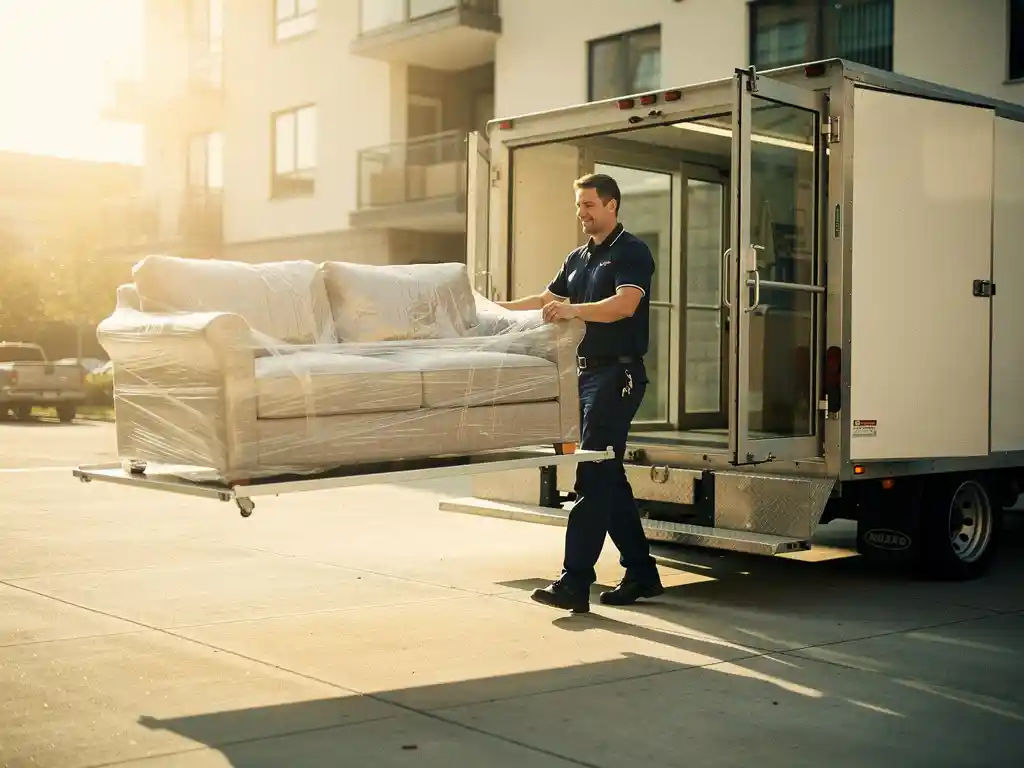
You should choose furniture transport with an unloading service when the delivery involves heavy, bulky, or fragile items that cannot safely be handled by a single driver, or when the recipient is unable to assist with unloading. This applies equally to residential deliveries, commercial fit-outs, and large-scale project installations. The sections below answer the most common questions about how unloading services work and when they are the right choice.
What does an unloading service for furniture transport include?
An unloading service for furniture transport includes the physical removal of items from the delivery vehicle, carrying them to a designated location, and placing them in the correct room or position. Depending on the service level, it can also cover unpacking, light assembly, and removal of packaging materials. This goes well beyond simply dropping goods at the door.
In practice, a standard unloading service typically covers the following:
- Safe removal of furniture from the truck using appropriate equipment
- Carrying items into the building, including navigating stairs or lifts
- Placing furniture in the room specified by the customer
- Unpacking and removing cardboard, foam, and protective wrapping
- Basic placement checks to confirm items are undamaged
At a more comprehensive level, often referred to as white glove delivery, the service can extend to full assembly, installation, and even wall mounting. This is particularly relevant for specialist furniture logistics involving office environments, hotel fit-outs, or residential interiors where precision placement matters.
How does furniture transport with unloading differ from standard delivery?
Standard furniture delivery means the driver brings the goods to the agreed address and unloads them at the kerbside or entrance. Furniture transport with an unloading service goes further by bringing items inside the building and placing them where the customer needs them. The key difference is where the driver’s responsibility ends.
With a standard delivery, the recipient is expected to be present with enough people to move items from the vehicle. This works for smaller or lighter goods, but it creates real problems with large sofas, wardrobes, dining tables, or modular office furniture. The physical effort required is significant, and the risk of damage to both the furniture and the property increases considerably without trained handlers.
Furniture transport with an unloading service shifts that responsibility to the logistics team. The delivery crew arrives prepared with the right tools, protective equipment, and the manpower needed to handle the job safely. For businesses ordering large quantities or for private customers receiving a full room of furniture, this difference is not a luxury. It is a practical necessity.
Who is responsible for furniture placement during an unloading service?
During an unloading service, the logistics provider is responsible for carrying and placing furniture according to the customer’s instructions at the time of delivery. The customer or their representative directs where each item goes. The delivery team carries out the physical placement, but the customer confirms the final position.
This shared responsibility model is important to understand before the delivery takes place. The logistics team handles the heavy lifting and safe navigation of items through corridors, stairwells, and doorways. The customer or a designated contact person needs to be on-site to guide the crew and sign off on placement.
For large project deliveries, such as furnishing an entire office floor or a hotel development, a site coordinator is often assigned to work alongside the delivery team throughout the process. We at Jan Krediet regularly manage project logistics at scale, which means our teams are experienced in coordinating placement across complex environments with multiple stakeholders involved.
When is an unloading service required rather than optional?
An unloading service becomes required rather than optional when items are too heavy or large for a single person to handle, when building access requires navigating stairs or lifts, when the recipient cannot physically assist with unloading, or when the delivery is part of a commercial installation. In these situations, attempting a standard delivery creates safety and liability risks.
There are several specific scenarios where an unloading service is not just convenient but essential:
- Elderly or physically limited recipients who cannot assist with moving heavy items
- High-rise residential buildings where furniture must be carried through lifts or up multiple floors
- Commercial deliveries to offices, hotels, or retail spaces where no labour is available on-site
- Fragile or high-value furniture where mishandling by untrained people could cause damage
- Large-volume orders where the sheer quantity of items makes self-unloading impractical
Insurance coverage can also be a factor. Many furniture logistics contracts specify that damage caused during unloading is only covered when a trained crew performs the work. Choosing standard delivery in a situation that clearly requires professional unloading can leave the customer liable for any damage that occurs.
What should you arrange before a furniture delivery with unloading?
Before a furniture delivery with unloading, you should confirm a clear access route, ensure a responsible person is on-site to direct placement, measure doorways and corridors in advance, and communicate any specific requirements to the logistics provider beforehand. Preparation on both sides prevents delays and protects the furniture and property.
Here is a practical checklist to work through before the delivery date:
- Measure access points including front doors, internal doorways, stairwell widths, and lift dimensions
- Clear the route from the entrance to the destination room, removing obstacles and protecting floors if needed
- Designate a contact person who will be present for the full duration of the delivery
- Communicate special requirements such as fragile items, specific placement instructions, or time constraints
- Confirm parking and loading access for the delivery vehicle, especially in urban areas
- Check assembly needs and clarify whether assembly is included in the agreed service
The more information the logistics team has in advance, the smoother the delivery will run. If you are unsure about what is included in your specific service agreement, it is always worth contacting the provider directly before delivery day. You can get in touch with us to clarify exactly what your unloading service covers and what preparation is needed on your end.