




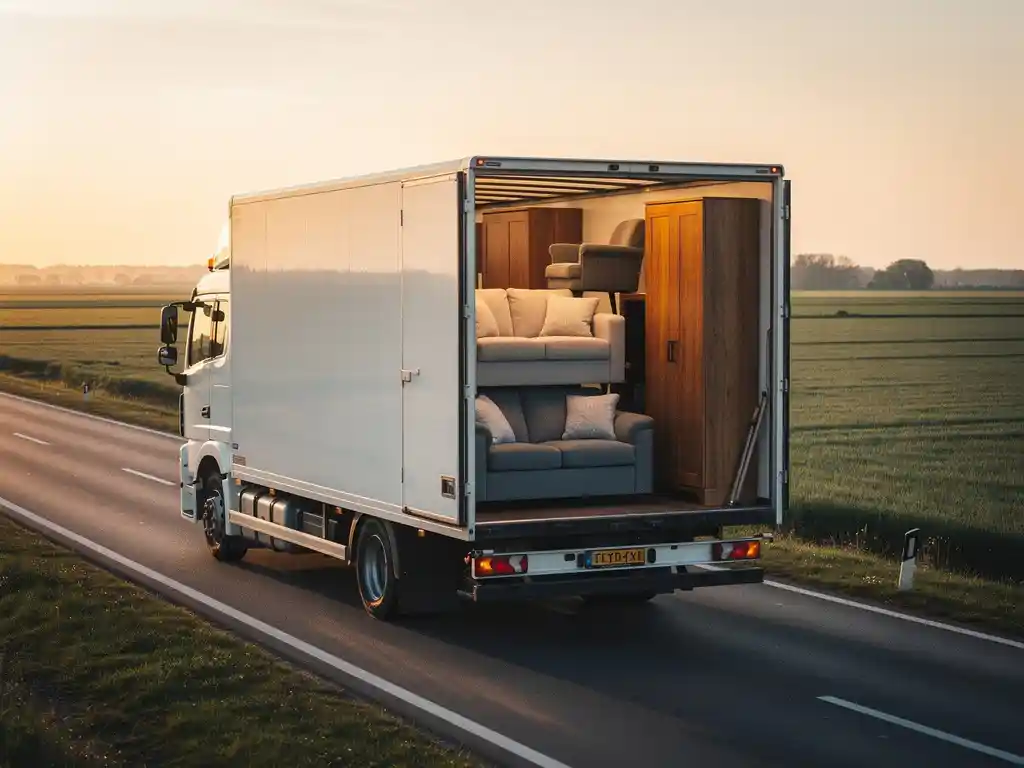
Fixed-route distribution makes smart business sense for furniture retailers when delivery volume is consistent, predictable, and concentrated in specific geographic areas. When those conditions are met, a structured route reduces cost per delivery, improves planning reliability, and creates a better customer experience. The sections below break down each factor so you can decide whether a fixed-route model fits your operation.
What does fixed-route distribution actually involve?
Fixed-route distribution is a delivery model where vehicles follow a predetermined sequence of stops on a regular schedule, rather than building new routes dynamically for each delivery wave. The route, timing, and service zones are agreed in advance, and deliveries run on that structure week after week. For furniture retailers, this typically means dedicated vehicles covering the same regions on set days.
In practice, fixed-route distribution involves three core elements. First, geographic zoning: your delivery area is divided into defined territories, each assigned to a specific route. Second, a recurring schedule: each zone is served on the same day or days each week, so customers and staff know what to expect. Third, capacity planning: vehicles are loaded according to predicted demand for each zone, and volume is balanced across routes over time.
This structure is different from ad hoc or on-demand delivery, where routes are assembled fresh based on orders received. Fixed routes trade flexibility for consistency, and that trade-off only works when demand patterns justify it. For retailers moving significant furniture volume through the same corridors regularly, the model creates a reliable operational backbone that is difficult to replicate with purely reactive route planning.
What volume of deliveries justifies a fixed route?
A fixed route becomes financially justified when you have enough regular deliveries in a defined area to fill a vehicle to a worthwhile capacity on each scheduled run. As a practical benchmark, if a specific region consistently generates enough orders to keep a truck meaningfully loaded on the same day each week, a fixed route is worth structuring. Below that threshold, flexible routing is usually more cost-efficient.
Volume alone is not the only measure. Consistency matters just as much. A retailer delivering 30 items one week and 5 the next in the same zone will struggle to justify a fixed route, because the low weeks create wasted capacity that erodes the cost advantage. The sweet spot is steady, predictable demand that allows capacity to be planned with confidence.
Furniture retailers entering new markets or scaling up should track delivery density by postcode or region over several weeks before committing to a fixed route. Once a zone shows a reliable weekly pattern, that is the signal to formalise the route. Starting with one or two anchor routes and expanding from there is a lower-risk approach than trying to structure an entire network at once.
How does fixed-route distribution compare to flexible delivery models?
Fixed-route distribution prioritises cost efficiency and planning certainty, while flexible delivery models prioritise responsiveness and adaptability. The key difference is where the optimisation happens: fixed routes optimise at the network level over time, while flexible models optimise at the order level in real time. Neither is universally better; the right choice depends on your delivery volume, geographic spread, and customer expectations.
Fixed-route distribution: strengths and limitations
Fixed routes shine when volume is stable and delivery zones are well-established. They allow for better vehicle utilisation, more predictable staffing, and clearer communication with customers about delivery windows. Drivers become familiar with their routes, which reduces errors and improves handling quality for large, fragile items like furniture. The limitation is that fixed routes are slow to adapt when demand shifts suddenly or when one-off deliveries fall outside the existing zone structure.
Flexible delivery models: strengths and limitations
Flexible models, including dynamic routing software that builds daily routes from incoming orders, are better suited to retailers with highly variable demand or a wide geographic spread without concentrated delivery clusters. They can absorb sudden spikes and accommodate last-minute orders more easily. The trade-off is higher planning complexity, less predictable costs, and sometimes longer lead times for customers as routes are assembled from scratch each day.
Many furniture retailers find that a hybrid approach works well in practice: fixed routes for core zones with high, consistent volume, and flexible routing for outlying areas or overflow demand. This gives the cost benefits of structure where volume supports it, without sacrificing responsiveness at the edges.
What are the main benefits of fixed routes for furniture retailers?
Fixed-route distribution delivers four primary benefits for furniture retailers: lower cost per delivery, more reliable customer communication, better driver performance on large-item handling, and simpler operational planning. Together, these advantages compound over time as routes become more refined and drivers more experienced on their specific runs.
- Lower cost per delivery: Consistent routes allow for better vehicle fill rates and reduce the time and fuel wasted on inefficient sequencing. Over weeks and months, the savings per delivery are meaningful.
- Predictable delivery windows: Customers can be given accurate time slots in advance because the route structure is known. For furniture deliveries, where someone needs to be home to receive and often to inspect items, this reduces failed delivery attempts significantly.
- Improved handling quality: Drivers who run the same route regularly learn the access conditions at each stop, including tight stairwells, parking restrictions, and building entry points. This local knowledge reduces damage and speeds up each delivery.
- Simpler planning and staffing: A fixed structure makes it easier to plan vehicle maintenance, manage driver schedules, and forecast warehouse outbound capacity. Operations teams spend less time rebuilding routes from scratch each day.
For retailers handling large, high-value pieces, the handling quality benefit is particularly significant. Furniture damage during delivery is costly both financially and in terms of customer trust. A route structure that gives drivers familiarity and predictability directly reduces that risk. Our furniture transport solutions are built around exactly this kind of structured, specialist approach.
When does fixed-route distribution stop making sense?
Fixed-route distribution stops making sense when delivery volume in a zone drops below the level needed to justify a dedicated run, when demand becomes too unpredictable to plan routes in advance, or when your geographic footprint expands faster than your route network can be structured. In these situations, the costs of running underloaded fixed routes outweigh the planning benefits.
Seasonal businesses face this challenge acutely. A furniture retailer with strong spring and summer sales but quiet winters may find fixed routes cost-effective for eight months and wasteful for four. The solution is not necessarily to abandon fixed routes entirely, but to review route frequency and capacity during low seasons rather than running the same structure year-round.
Fixed routes also become impractical when your product mix shifts toward highly customised or made-to-order items with long and variable lead times. If delivery dates are unpredictable at the order level, it becomes difficult to aggregate enough volume for a specific zone on a specific day. In that case, a more flexible or consolidated model, where orders are batched when enough volume accumulates for a zone, is a better fit than a rigid weekly schedule.
How should furniture retailers set up their first fixed route?
Setting up a first fixed route should start with data, not assumptions. Analyse at least two to three months of delivery history to identify which geographic zones generate consistent, recurring volume. Choose the single strongest zone as your pilot route, define a realistic service day and time window, and run that route for a trial period before expanding the model further.
A practical setup process looks like this:
- Map your delivery history: Plot past deliveries by postcode and identify clusters where volume is both high and consistent week over week.
- Define zone boundaries: Set clear geographic limits for the pilot route, keeping the zone tight enough to maintain a manageable route length.
- Set a service schedule: Assign a specific day or days for the route and communicate this to your team and, where relevant, to customers and retail partners in that zone.
- Plan vehicle capacity: Match the vehicle size to the expected volume, leaving a small buffer for growth rather than running at full capacity from day one.
- Brief your driver: Share all relevant access information for stops in the zone, and encourage the driver to document new access details during the first few runs.
- Review after four to six weeks: Assess fill rates, delivery success rates, and customer feedback before deciding whether to expand to additional routes.
Working with an experienced logistics partner can accelerate this process significantly. We have been helping retailers build structured distribution networks since 1924, and our contract logistics services are designed to support exactly this kind of phased, data-driven route development. If you are ready to explore what a fixed-route model could look like for your operation, get in touch with our team to discuss your specific delivery patterns and goals.