




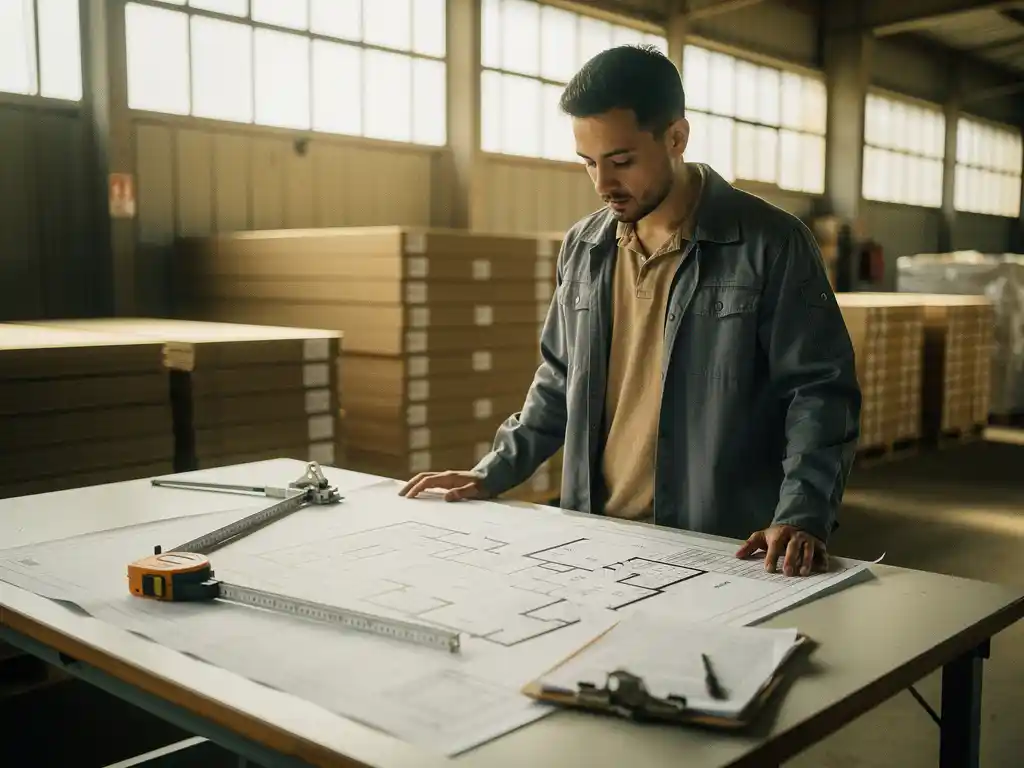
You should outsource logistics management for fit-out projects when the complexity, scale, or geographic reach of a project exceeds what your in-house team can reliably coordinate. For most businesses, that tipping point arrives when projects span multiple suppliers, tight installation windows, or international delivery routes. The sections below unpack the specific signs, project types, and provider qualities that make outsourcing the right call.
What are the signs that fit-out logistics has outgrown in-house capacity?
Fit-out logistics has outgrown in-house capacity when your team is regularly firefighting delivery delays, struggling to coordinate multiple suppliers simultaneously, or missing installation windows because of sequencing failures. Other clear signals include rising freight costs from unplanned last-minute bookings, difficulty managing customs documentation, and a lack of dedicated warehousing to stage goods before the site is ready.
In practice, these signs tend to cluster together. A project that involves furniture, joinery, AV equipment, and specialist fixtures arriving from different countries requires a level of coordination that goes well beyond booking a few trucks. When your team spends more time chasing shipments than managing the project itself, the logistics function has become a bottleneck rather than a support function.
Temporary storage is another common pressure point. Fit-out sites are rarely ready to receive all goods at once, and without proper warehousing solutions in place, goods either arrive too early and get damaged on site, or too late and stall the entire installation schedule. If your team is improvising storage arrangements project by project, that is a strong indicator that a structured logistics partner is needed.
What types of fit-out projects benefit most from outsourced logistics?
The fit-out projects that benefit most from outsourced logistics management are large-scale, multi-location, or internationally supplied projects where timing, sequencing, and specialist handling are critical. This includes office fit-outs in high-rise buildings, hotel and hospitality refurbishments, healthcare facility installations, educational campuses, and retail rollouts across multiple sites.
Projects with tight installation windows gain particular value from outsourcing. A school refurbishment that must be completed during a half-term break, or a hotel renovation that needs to be done floor by floor while the building remains operational, leaves no room for logistics errors. In these situations, having a dedicated project logistics team that has mapped every delivery against the installation sequence is not a luxury, it is a necessity.
Internationally sourced fit-outs add another layer of complexity. When furniture comes from Italy, lighting from Scandinavia, and flooring from Asia, coordinating customs clearance, consolidation, and final-mile delivery requires expertise that most in-house teams simply do not have. Our project logistics services are specifically built for exactly this kind of multi-origin, deadline-driven environment, covering more than 150 locations worldwide.
How does outsourced logistics management work for fit-out projects?
Outsourced logistics management for fit-out projects works by transferring the planning, coordination, and execution of all goods movements to a specialist third-party provider. The provider takes responsibility for supplier collection, consolidation, customs clearance, warehousing, sequenced delivery, and on-site installation support, operating as an extension of your project team rather than a separate vendor.
The process typically begins well before any goods move. A fit-out logistics partner reviews floor plans, supplier lists, and installation schedules to build a detailed logistics plan. Every delivery is mapped against site access constraints, elevator capacity, installation sequences, and handover milestones. This upfront planning is what separates a genuine project logistics partner from a standard freight service.
Coordination and real-time problem solving
During execution, the logistics provider manages communication between suppliers, hauliers, customs brokers, and site teams. When something unexpected happens, such as a production delay from a supplier or a site access restriction, the provider adapts the plan and communicates the impact immediately. This proactive approach prevents small disruptions from cascading into major project delays.
Warehousing and just-in-time delivery
Most fit-out logistics operations include a warehousing phase where goods are received, inspected, and held until the site is ready. Deliveries are then sequenced to arrive just-in-time for each installation phase, keeping the site clear and the installation team productive. This staged approach is one of the most tangible ways that outsourcing reduces on-site chaos and rework costs.
What’s the difference between a freight forwarder and a fit-out logistics partner?
A freight forwarder moves goods from A to B and handles the documentation required to do so, including customs clearance and carrier booking. A fit-out logistics partner does all of that, but also takes responsibility for project planning, installation sequencing, on-site coordination, and the full supply chain from supplier collection to final placement. The distinction is between transactional shipping and end-to-end project management.
Freight forwarders are transaction-focused. They are excellent at optimising individual shipments, consolidating cargo, and navigating import regulations. However, they do not typically engage with your installation programme, manage supplier relationships on your behalf, or coordinate the sequencing of deliveries against a live project schedule.
A fit-out logistics partner, by contrast, is embedded in the project from the outset. They understand that a boardroom table arriving two days before the flooring contractor has finished is just as problematic as it arriving two weeks late. That project-level thinking, combined with the operational capability to execute it, is what makes the difference on complex fit-out projects. It is also why businesses managing recurring fit-out programmes increasingly move toward contract logistics arrangements rather than booking freight on a project-by-project basis.
What should you look for in a fit-out logistics provider?
When choosing a fit-out logistics provider, look for demonstrated experience with complex, deadline-driven installation projects, strong warehousing infrastructure, international reach, and a team that engages at the planning stage rather than just the execution stage. The provider’s ability to handle customs clearance, manage multiple suppliers, and solve problems in real time is equally important selection criteria.
Specific capabilities to evaluate include:
- Project planning depth: Does the provider review floor plans and installation schedules before a single shipment moves? Planning capability is the clearest differentiator between a fit-out specialist and a general haulier.
- Warehousing capacity: Can they receive, inspect, and store your goods until the site is ready, and deliver in the sequence your installation team needs?
- International network: For projects with overseas suppliers or international installation sites, does the provider have the customs expertise and local partner network to deliver reliably across borders?
- Specialist handling: Fit-out goods often include fragile, high-value, or oversized items. Does the provider have the equipment and trained staff to handle them without damage?
- Responsiveness: Fit-out projects move fast and change often. A provider that communicates proactively and adapts quickly is worth far more than one that offers the lowest initial quote.
Track record matters too. Reviewing case studies or speaking directly with a provider’s project team gives you a realistic sense of how they perform under pressure. We have been delivering complex project logistics since 1924, and our team brings that depth of experience to every fit-out engagement, whether it is a single office building or a multi-site rollout across Europe. If you want to explore what that looks like in practice, you are welcome to get in touch with our team directly.