




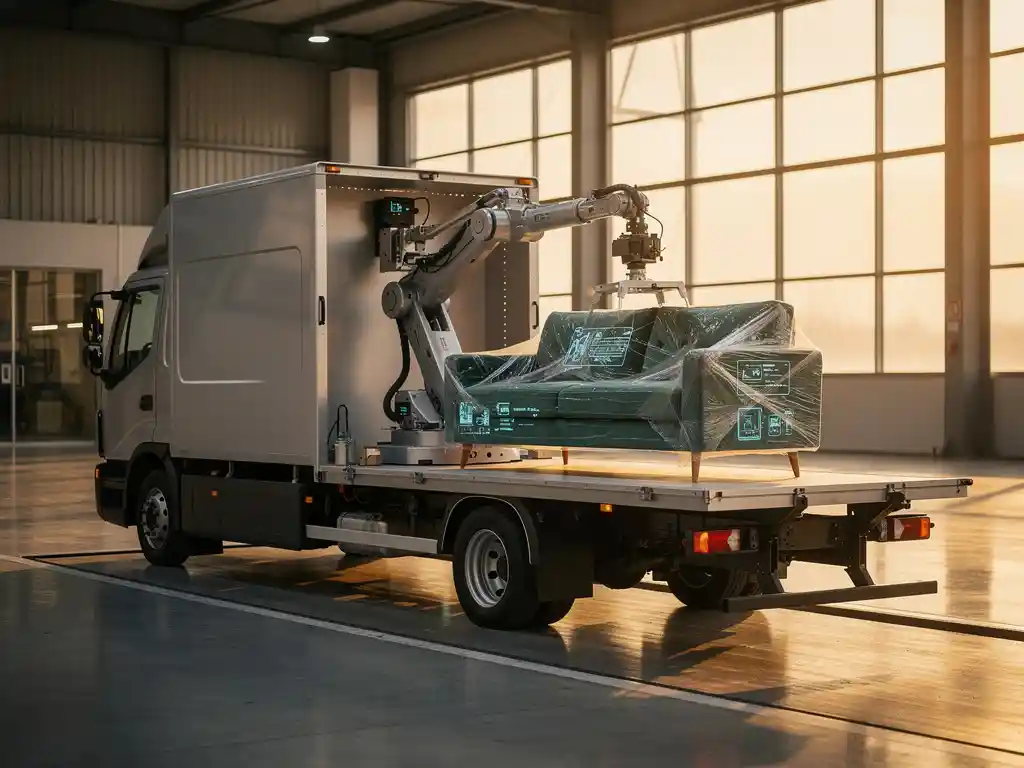
The furniture transport industry is experiencing a technological revolution that is reshaping how goods move from manufacturers to consumers. Modern furniture transport innovations are transforming traditional logistics through smart tracking systems, automated warehousing, and sustainable delivery solutions that improve efficiency while reducing environmental impact.
These advancements are particularly crucial in furniture logistics, where items are often fragile, oversized, and require careful handling throughout the supply chain. From IoT sensors that monitor shipment conditions to AI-powered route optimization, technology is solving longstanding challenges in delivery accuracy and customer satisfaction.
What new technologies are revolutionising furniture transport?
Artificial intelligence, IoT sensors, autonomous vehicles, and blockchain technology are revolutionising furniture transport by enabling real-time tracking, predictive maintenance, route optimisation, and transparent supply chain management. These technologies work together to create smarter, more efficient logistics networks.
AI-powered route-planning algorithms analyse traffic patterns, delivery windows, and vehicle capacity to optimise delivery schedules. This reduces fuel consumption and ensures more reliable delivery times for customers. Machine learning systems also predict potential delays before they occur, allowing logistics providers to proactively adjust schedules.
Autonomous delivery vehicles and drones are beginning to handle last-mile deliveries in urban areas, particularly for smaller furniture items. While still in the early stages, these technologies promise to reduce delivery costs and improve accessibility to remote locations.
Blockchain technology enhances transparency by creating immutable records of each item’s journey through the supply chain. This is especially valuable for high-end furniture, where provenance and authenticity matter to consumers.
How is IoT tracking changing furniture delivery accuracy?
IoT tracking systems improve furniture delivery accuracy by providing real-time location data, environmental monitoring, and condition alerts throughout transit. Smart sensors detect temperature, humidity, vibration, and handling impacts that could damage furniture during transport.
These sensors attach directly to furniture pieces or packaging, transmitting data continuously to logistics management systems. When environmental conditions exceed safe parameters, alerts trigger immediate corrective action. For example, if humidity levels rise too high during the transport of wooden furniture, the system can notify drivers to adjust climate controls.
GPS-enabled IoT devices provide precise location tracking that automatically updates customers on delivery progress. This eliminates guesswork around delivery windows and allows customers to prepare for arrival. Advanced systems can even predict arrival times within 15-minute windows based on current traffic and route conditions.
Impact sensors detect rough handling or potential damage events, creating detailed logs that help identify where problems occur in the supply chain. This data drives continuous improvement in handling procedures and training programmes.
What’s the difference between traditional and automated furniture warehousing?
Traditional furniture warehousing relies on manual processes for inventory management, picking, and packing, while automated systems use robotics, AI, and sophisticated software to handle these tasks with minimal human intervention. Automated warehouses can process orders three to five times faster, with significantly higher accuracy rates.
In traditional warehouses, workers manually locate items using paper lists or basic handheld scanners, then physically move furniture to packing areas. This process is time-intensive and prone to errors, especially with large furniture inventories where similar items might be stored in different locations.
Automated warehousing employs several key technologies:
- Robotic picking systems that can handle various furniture sizes and weights
- Automated storage and retrieval systems (AS/RS) that maximise space utilisation
- AI-powered inventory management that predicts demand and optimises stock placement
- Conveyor systems and automated guided vehicles (AGVs) for internal transport
The space-efficiency gains are substantial. Automated systems can store up to 40% more inventory in the same footprint by utilising vertical space more effectively and eliminating wide aisles needed for human navigation.
How are sustainable transport solutions transforming furniture logistics?
Electric vehicles, alternative fuels, route optimisation software, and consolidated shipping methods are transforming furniture logistics by reducing carbon emissions by up to 60% while maintaining delivery reliability. These solutions address growing environmental concerns while often reducing operational costs.
Electric delivery vehicles are becoming increasingly viable for furniture transport, especially for urban last-mile deliveries. Modern electric trucks can handle loads of up to 26 tons, with ranges exceeding 200 miles, making them suitable for most regional furniture delivery routes.
Consolidated shipping practices reduce environmental impact by combining multiple orders into single shipments. Advanced planning software identifies opportunities to group deliveries by geographic area, reducing the total number of vehicles needed and cutting emissions per delivered item.
Alternative-fuel vehicles using compressed natural gas (CNG) or hydrogen fuel cells offer another path toward sustainability. These technologies provide longer ranges than current electric options while producing significantly lower emissions than traditional diesel vehicles.
Packaging innovations also contribute to sustainability goals. Reusable protective materials and right-sized packaging reduce waste while maintaining furniture protection standards during transport.
Which digital platforms are improving furniture supply chain visibility?
Cloud-based transportation management systems (TMS), supply chain control towers, and integrated ERP platforms are improving furniture supply chain visibility by providing real-time data sharing between manufacturers, logistics providers, and retailers. These platforms create end-to-end transparency from production to delivery.
Modern TMS platforms integrate with multiple carriers and provide unified tracking across different transportation modes. Customers and business partners can access real-time shipment status, estimated delivery times, and proof of delivery through web portals or mobile applications.
Supply chain control towers aggregate data from various sources to create comprehensive dashboards showing inventory levels, shipment status, and potential disruptions. These systems use predictive analytics to identify risks before they impact deliveries, enabling proactive problem-solving.
API integrations connect different systems seamlessly, allowing furniture manufacturers to share production schedules with logistics providers automatically. This integration ensures transport capacity aligns with production output and reduces delays between manufacturing completion and shipment initiation.
Customer-facing platforms provide self-service options for delivery scheduling, address changes, and special handling requests. This reduces administrative overhead while improving customer satisfaction through greater control over their delivery experience.
How Jan Krediet Helps With Furniture Transport Innovation
We leverage cutting-edge technologies and innovative solutions to deliver superior furniture logistics services across Europe and beyond. Our approach combines traditional expertise with modern innovations to ensure your furniture reaches its destination safely and efficiently.
Our innovative solutions include:
- Advanced tracking systems providing real-time shipment visibility
- Specialised loading equipment, including innovative swap-body containers that reduce loading times
- Climate-controlled transport for sensitive furniture materials
- Expert assembly and installation services at destination
- Sustainable transport options to meet environmental objectives
- Global network coverage through the MACH-3000 partnership
With over 250 vehicles, 60,000 square metres of warehouse space, and more than 200 logistics professionals, we have the infrastructure and expertise to handle furniture transport projects of any scale. Our proven track record includes recognition as the best Transport and Logistics company in the Netherlands.
Ready to experience the future of furniture transport? Contact us today to discuss how our innovative logistics solutions can optimise your furniture supply chain and improve customer satisfaction.