




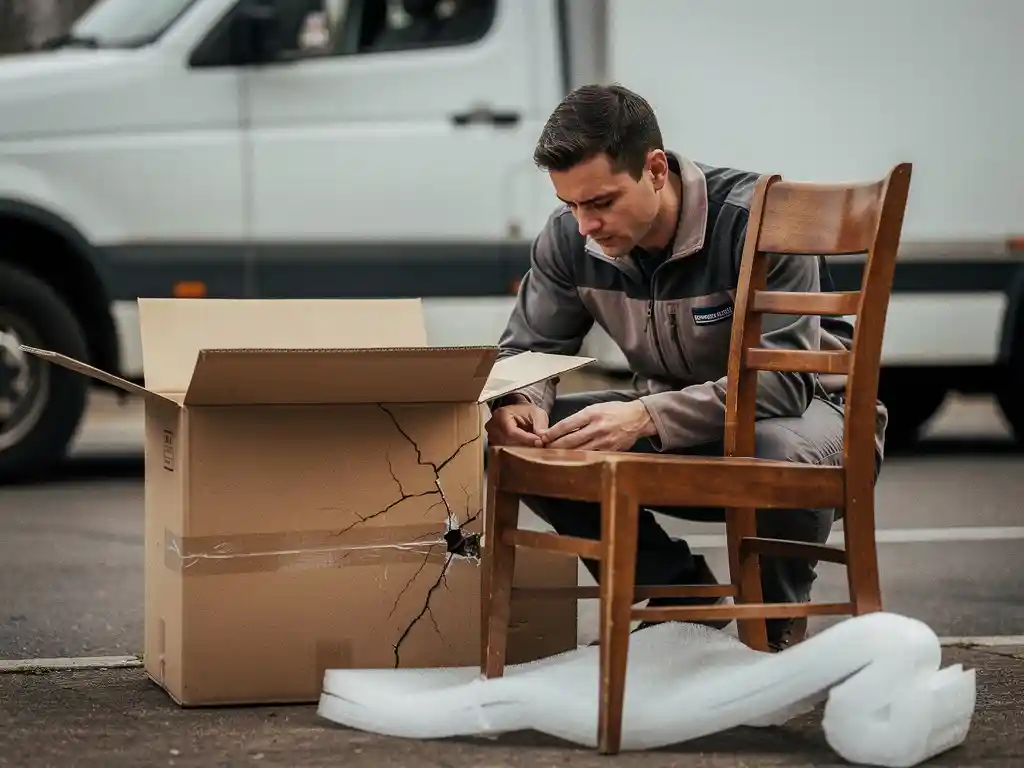
Responsibility for damaged furniture on delivery is shared between the carrier, the retailer, and sometimes the buyer, depending on where and how the damage occurred. If the damage happened during transit, the carrier or logistics provider is typically liable. If the item was already damaged before shipping, responsibility falls on the retailer or manufacturer. Understanding who is liable, how to document damage, and when to file a claim can make the difference between a full replacement and an uphill dispute.
Who pays when furniture arrives damaged?
Who pays for damaged furniture on delivery depends on where in the supply chain the damage occurred and what the delivery contract specifies. In most cases, the carrier is financially responsible for damage that happens during transit, while the retailer is responsible for items that were defective or improperly packaged before shipping. The buyer rarely bears the cost unless the damage was caused after delivery was accepted without documented protest.
In practice, payment responsibility often follows the claims process rather than a simple rule. A carrier may dispute liability if the packaging was inadequate. A retailer may point to the carrier if the item left their warehouse in perfect condition. This is why documenting damage at the point of delivery is so important. Without clear evidence of when and how the damage occurred, resolving the dispute fairly becomes much harder for everyone involved.
Consumer protection laws in most countries also give buyers the right to a repair, replacement, or refund when goods arrive damaged. Even if the retailer and carrier are still disputing liability between themselves, the buyer’s contract is typically with the retailer, who carries the primary obligation to deliver goods in acceptable condition.
What determines liability for furniture damage in transit?
Liability for furniture damage in transit is determined by several factors: the terms of the transport contract, the condition of the packaging, the handling standards applied during loading and unloading, and whether the damage was noted at the point of delivery. International shipments are also governed by conventions such as the CMR Convention for road freight, which sets out default liability rules for carriers in Europe.
Under standard transport law, a carrier is presumed liable for goods damaged in their custody unless they can demonstrate that the damage resulted from an inherent defect in the goods, inadequate packaging by the sender, or an unavoidable event outside their control. This shifts the burden of proof to the carrier in most disputes, which is an important protection for shippers and buyers alike.
The value declared for the shipment also plays a role. Carriers often apply a maximum liability per kilogram of goods unless a higher declared value has been agreed and insured. For high-value furniture, this standard limit may fall well short of the actual replacement cost, which is why specialist furniture transport arrangements with appropriate coverage matter significantly.
How does the claims process work for damaged furniture deliveries?
The furniture damage claim process begins at the moment of delivery. The recipient must inspect the goods, note any visible damage on the delivery receipt, and notify the carrier or retailer in writing as quickly as possible. Most carriers require written notice of visible damage at the time of delivery and written notice of concealed damage within a defined window, often three to seven days depending on the applicable contract or legal framework.
Once a claim is submitted, the carrier or their insurer will typically request supporting documentation. This usually includes photographs of the damage, a copy of the signed delivery receipt with damage noted, the original order or invoice, and any packaging photographs if available. The stronger and more complete this documentation, the faster and more favorably the claim is likely to be resolved.
If the carrier rejects the claim or offers an inadequate settlement, the next step is escalation, either through the retailer, through a formal dispute resolution process, or in some cases through legal action. For high-value items, it may be worth seeking an independent assessment of the damage before accepting any settlement offer.
What should be noted on a delivery receipt when furniture is damaged?
When furniture arrives damaged, the delivery receipt should include a specific, written description of the damage before the recipient signs. Accepting delivery with a signature and no notation is widely treated as confirmation that the goods arrived in good condition, which can significantly weaken or invalidate a subsequent damage claim.
The notation should be as specific as possible. Rather than writing “damaged,” describe what you observe: “corner of sofa frame cracked,” “glass panel of cabinet broken,” or “upholstery torn on right armrest.” Vague notations such as “subject to inspection” carry much less legal weight and are sometimes rejected by carriers as insufficient protest.
If the delivery driver refuses to wait while you inspect the goods, note this on the receipt as well. Photograph the packaging before opening it, photograph the damage as soon as it is discovered, and follow up immediately in writing to the carrier and retailer. Timeliness and specificity are the two most important factors in protecting your right to claim.
Does packaging quality affect who is responsible for transit damage?
Yes, packaging quality directly affects liability for furniture damage in transit. If a carrier can demonstrate that the damage resulted from inadequate or inappropriate packaging provided by the sender, they can use this as a defense to reduce or eliminate their liability. This is a recognized exception under most transport law frameworks, including the CMR Convention.
This means that retailers and manufacturers bear a real responsibility to package furniture in a way that is appropriate for the rigors of road, sea, or air transport. Furniture that is fragile, heavy, or awkwardly shaped requires specialist packaging, protective wrapping, and secure internal bracing to prevent movement during transit. When these precautions are not taken and damage results, the carrier is in a strong position to argue that they are not at fault.
For buyers, this is a useful point to understand when a carrier disputes a claim. If the outer packaging shows no signs of impact or mishandling but the item inside is broken, the packaging may genuinely have been insufficient. Conversely, if the outer box shows clear signs of crushing, dropping, or rough handling, the carrier’s packaging defense becomes much weaker.
When should a professional logistics provider handle furniture delivery?
A professional logistics provider should handle furniture delivery whenever the items are high in value, fragile, large, or require assembly or installation at the destination. Standard parcel carriers are not equipped for the specialist handling that quality furniture requires, and the risk of damage increases significantly when furniture is treated as general cargo rather than a specialist consignment.
Professional furniture logistics providers bring several advantages that reduce the risk of delivery damage claims from the outset. These include trained handling teams who understand how to move heavy or delicate pieces safely, appropriate vehicles with protective lining and securing systems, and specialist packaging expertise. For large projects such as office fit-outs, hotel furnishing, or residential developments, a professional provider also manages the coordination complexity that would otherwise create damage risk through rushed or disorganized delivery.
We have been handling specialist furniture logistics since 1924, operating across Europe and globally through the Mach 3000 network. Our team manages every stage of the delivery process, from warehousing and assembly through to final installation, with the care and expertise that high-quality furniture deserves. When the cost of damage, replacement, and reputational harm is weighed against the cost of getting the delivery right the first time, professional logistics is rarely the more expensive option.
If you are regularly experiencing furniture delivery damage, or if you are planning a project that involves large-scale furniture distribution, get in touch with our team to discuss how we can help you build a delivery process that protects your goods and your customer relationships.