




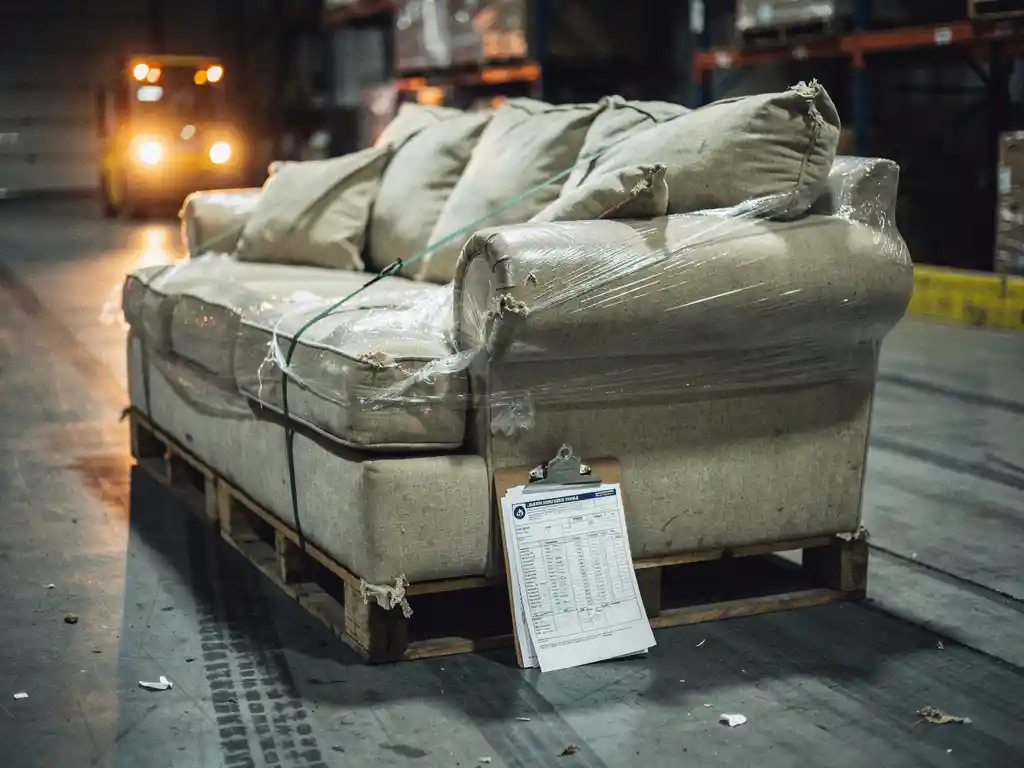
Return costs in furniture transport are high because furniture is bulky, fragile, and difficult to handle efficiently in reverse. Unlike small parcels that can be reprocessed quickly, returned furniture requires specialist vehicles, careful repackaging, condition assessment, and often refurbishment before it can be resold. These factors stack up fast, making furniture one of the most expensive product categories to return in all of retail logistics.
The core challenge is that every step of the return journey demands skilled labor and dedicated equipment, with little room to cut corners without risking further damage. The sections below break down exactly where those costs come from and what can realistically be done about them.
What makes furniture returns more expensive than other goods?
Furniture returns are more expensive than returns of most other goods because of the combination of size, weight, fragility, and the specialist handling required at every stage. A sofa, wardrobe, or dining table cannot be dropped into a standard return box and collected by a courier. It needs a dedicated vehicle, trained handlers, and protective packaging, all of which carry significant cost.
Several factors compound this baseline expense:
- Volume and weight: Large items occupy more vehicle space, reducing the number of returns that can be consolidated into a single trip.
- Fragility: Upholstered pieces, glass components, and lacquered surfaces are easily damaged in transit, requiring careful wrapping and often two-person handling teams.
- Assembly and disassembly: Many furniture items were assembled on delivery. Returning them means either disassembling them on-site or transporting them fully assembled, both of which add time and labor.
- Access challenges: Collecting a large item from an upper-floor apartment or a narrow hallway is operationally demanding in ways that parcel collection simply is not.
When you combine these elements, the cost of a single furniture return can easily represent a significant portion of the original product value, which is why return costs in furniture transport are a serious concern for retailers and logistics providers alike.
Why does reverse logistics cost more than forward logistics?
Reverse logistics costs more than forward logistics because the return journey lacks the planning efficiency of the outbound one. Forward deliveries are scheduled in advance, routed optimally, and consolidated by geography. Returns, by contrast, are unpredictable in timing, location, and condition, making efficient planning far harder.
In forward furniture logistics, a vehicle can be loaded with multiple deliveries along a planned route, maximizing capacity and minimizing cost per drop. In reverse logistics, pickups are often scattered, unscheduled, and may involve only one or two items per vehicle trip. This dramatically increases the cost per unit.
There are also hidden costs that forward logistics does not face to the same degree:
- Condition assessment: Every returned item must be inspected to determine whether it can be resold, refurbished, or written off.
- Repackaging: Original packaging is rarely available or reusable, so returned pieces need new protective materials.
- Warehouse handling: Returned stock must be received, logged, and processed separately from new inventory, adding administrative and physical labor.
- Unpredictability: Returns spike after peak sales periods, creating surges that are difficult to staff and route efficiently.
As a specialist in furniture transport, we see this dynamic regularly. The reverse journey is rarely a mirror image of the forward one, and the operational gaps between the two are where costs accumulate.
What happens to a returned piece of furniture after pickup?
After a piece of furniture is picked up from a customer, it typically goes through a multi-step reverse logistics process: transportation back to a warehouse or returns center, condition inspection, cleaning or refurbishment if needed, repackaging, and then either restocking, resale through secondary channels, or disposal. Each of these steps carries a cost.
The inspection stage is particularly important and often underestimated. A returned sofa might have a minor scuff that requires professional cleaning, a structural issue that needs repair, or damage significant enough to make it unsaleable. Determining which category a returned item falls into requires trained staff and time, neither of which is free.
Items that can be restocked go back into inventory, but often at a reduced price point to reflect their status as returned goods. Items that need refurbishment go through repair or cleaning processes before they can re-enter the sales cycle. Items that are too damaged to resell must be disposed of responsibly, which in itself carries environmental and financial costs.
Our warehousing solutions are designed to handle this kind of value-added processing, including inspection, assembly, and preparation of furniture for secondary distribution. Having these capabilities under one roof reduces the number of handoffs and helps control the total cost of the returns process.
How do return rates in furniture compare to other retail sectors?
Furniture return rates are generally lower than those in fashion or consumer electronics, but the cost per return is significantly higher. While clothing returns can run into very high percentages of total sales, furniture return rates tend to be more modest. However, because each individual furniture return is so operationally intensive, even a relatively low return rate can represent a substantial financial burden.
The nature of the purchase plays a role here. Furniture is typically a considered, higher-value buy. Customers spend more time deciding before purchasing, which reduces impulse returns. However, when returns do happen, they are often driven by factors that are difficult to anticipate: the item does not fit through the door, the color looks different in natural light, or the dimensions were misjudged in the space.
Online furniture retail has shifted this dynamic. As more customers buy furniture without seeing it in person, return rates in the sector have edged upward. The inability to assess scale, texture, and color accuracy from a product page leads to more mismatched expectations, and more returns as a result. This trend makes managing furniture delivery returns an increasingly central challenge for retailers operating in digital channels.
Can furniture return costs be reduced without raising prices?
Yes, furniture return costs can be reduced without raising prices, but it requires investment in smarter logistics processes, better product presentation, and more efficient reverse logistics infrastructure. The goal is to reduce both the volume of returns and the cost of processing the ones that do occur.
There are several practical approaches that make a meaningful difference:
- Improved product information: Accurate dimensions, realistic photography, and augmented reality tools that let customers visualize furniture in their own space reduce returns driven by mismatched expectations.
- Consolidated return routing: Rather than collecting each return individually, batching pickups by geography and scheduling them alongside forward deliveries reduces the cost per unit significantly.
- Faster condition assessment: Standardized inspection protocols and trained returns staff reduce the time items spend in limbo between pickup and reprocessing.
- Refurbishment capability: Having in-house or closely integrated refurbishment capacity means more returned items can re-enter the sales cycle rather than being written off.
- Clear return policies: Transparent, well-communicated return conditions reduce disputes and speed up the administrative side of processing returns.
The most effective cost reductions come from treating reverse logistics for furniture as a planned, structured operation rather than an afterthought to the forward delivery process. Logistics partners who specialize in furniture, and who understand the specific handling requirements of large and fragile items, are better placed to build efficient return workflows than general-purpose carriers.
If you want to explore how a specialist partner can help you manage high return costs in furniture more effectively, get in touch with us to discuss your specific situation.