


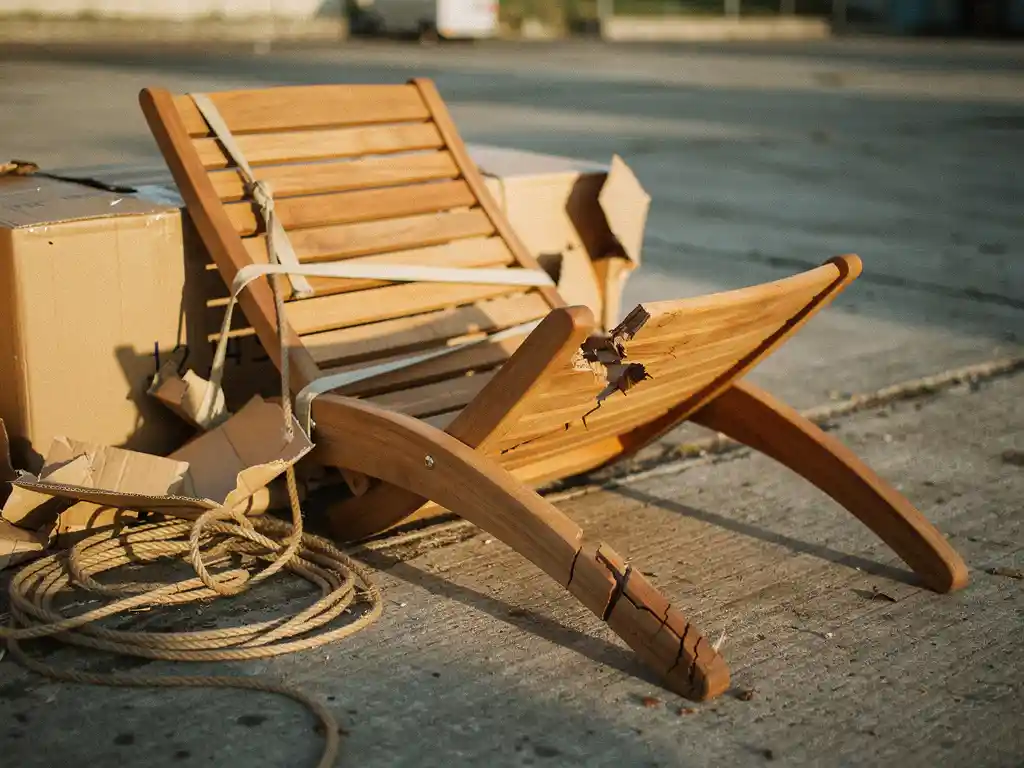
Standard transport fails for premium garden furniture because it treats all cargo the same way, using handling methods, packaging standards, and delivery processes designed for durability and speed rather than protection and presentation. Premium outdoor pieces are large, heavy, fragile in finish, and often awkwardly shaped, making them genuinely incompatible with general freight systems. The sections below unpack each dimension of that problem and explain what a better approach looks like.
What makes premium garden furniture so difficult to transport safely?
Premium garden furniture is difficult to transport safely because it combines size, weight, material sensitivity, and high perceived value in ways that standard freight infrastructure is not built to accommodate. A single dining set might include tempered glass tabletops, powder-coated aluminium frames, teak wood components, and thick cushion sets, each requiring different handling conditions and protection methods.
The physical dimensions alone create problems. Oversized loungers, sectional sofa sets, and large parasol bases do not stack efficiently, which means more space is consumed per item and securing loads becomes harder. Irregular shapes shift during transit if not braced correctly, and any movement against adjacent cargo or the vehicle wall can scratch, dent, or chip a surface that costs hundreds or thousands of euros to produce.
Material sensitivity adds another layer of complexity. Teak and other hardwoods can be damaged by moisture exposure during loading and unloading in poor weather. Woven rattan and synthetic weave can tear or deform under compression. Powder-coated and lacquered surfaces scratch on contact with unpadded straps or bare metal fixtures. None of these vulnerabilities are unique to garden furniture, but they combine in a single product category in ways that demand specialist awareness from the moment a piece leaves the warehouse.
How does standard transport handle oversized and fragile items?
Standard transport handles oversized and fragile items by applying general freight protocols, which typically means volume-based loading, shared trailer space, and handling by staff who are not trained in furniture-specific care. Items are often consolidated with unrelated cargo, moved through sortation hubs, and transferred between multiple vehicles before reaching the end customer.
In a standard freight network, the priority is throughput. Drivers and warehouse operatives handle dozens of different product types each shift, and while basic care is expected, the system is optimised for speed and cost efficiency rather than product preservation. Fragile stickers and handling instructions are noted, but there is no structural guarantee that a 40 kg garden chair will be lifted, positioned, and secured in a way that accounts for its specific finish or construction.
Oversized items present a further operational challenge. Many standard carriers impose size and weight thresholds, and items that exceed them are either refused, surcharged, or handled as exceptions, meaning they move outside the normal workflow and are more likely to be mishandled at transition points. For premium garden furniture shipping, this exception status is not the exception but the rule.
What types of damage occur most often during standard furniture delivery?
The most common types of damage during standard furniture delivery are surface scratches, corner impacts, moisture damage, and compression deformation. These occur at predictable points in the delivery chain: loading and unloading, consolidation at freight hubs, and the final-mile drop-off, where handling is often done by a single operative without specialist equipment.
- Surface scratches and scuffs: Caused by contact with unpadded surfaces, straps, or adjacent cargo during transit. Particularly common on lacquered wood, powder-coated metal, and glass panels.
- Corner and edge impacts: Occur when items are set down heavily or slide against hard surfaces. Corners are structurally vulnerable on both wooden and metal frames.
- Compression damage: Woven materials, cushions, and lightweight frames can deform permanently if heavier items are stacked on top of them during consolidated freight runs.
- Moisture and weather exposure: Items left on doorsteps, loaded in rain without covers, or stored in non-climate-controlled environments can absorb moisture that warps wood or stains fabric.
- Assembly and installation errors: When delivery includes basic assembly and the operative is not trained for the specific product, incorrect fitting can cause structural damage that is not immediately visible.
For premium garden furniture transport, any of these damage types creates a costly outcome: a return, a replacement, a customer complaint, or all three. The financial and reputational cost of a single damaged high-value item often exceeds the savings made by choosing a cheaper carrier.
What’s the difference between standard delivery and white glove furniture logistics?
The key difference between standard delivery and white glove furniture logistics is the level of care, specialisation, and service applied at every stage of the journey. Standard delivery moves goods from A to B. White glove delivery treats each item as high-value, using trained two-person teams, protective packaging, room-of-choice placement, assembly, and post-delivery inspection as standard parts of the service.
What standard delivery includes
Standard delivery typically covers collection, transit, and doorstep or threshold drop-off. The customer is responsible for moving items inside, unpacking, assembling, and disposing of packaging. Handling is functional rather than careful, and the delivery operative may have no product-specific training.
What white glove delivery adds
White glove furniture logistics extends the service into the customer’s home or project site. Trained specialists carry items to the designated room, unpack them using protective techniques, assemble components according to manufacturer specifications, position pieces as directed, and remove all packaging waste. For premium garden furniture delivery, this often includes a final quality check to confirm no damage occurred in transit and that all components are correctly fitted.
The difference in outcome is significant. A customer receiving a premium outdoor sofa set via white glove delivery experiences a service that matches the value of the product. The same set arriving via standard freight, left at the front door in flat-pack boxes, creates a disconnect between the purchase price and the delivery experience that damages brand perception regardless of whether the furniture itself arrives intact.
When should a retailer use specialist furniture logistics instead of standard carriers?
A retailer should use specialist furniture logistics instead of standard carriers whenever the product value, size, material sensitivity, or customer expectation makes general freight an unacceptable risk. In practice, this means any item over a certain size threshold, any product with a delicate finish or fragile component, and any customer segment where the delivery experience is part of the brand promise.
The business case becomes clear when retailers calculate the true cost of standard carrier failures. Damage claims, replacement shipments, return logistics, and customer service resources add up quickly, and for high-value garden furniture, a single incident can wipe out the margin saved on cheaper shipping. Specialist furniture transport services are priced higher per shipment but deliver a lower total cost when damage rates, returns, and customer satisfaction are factored in.
Retailers selling into project markets, hospitality, or commercial outdoor spaces face additional reasons to choose specialists. A hotel terrace refurbishment or a restaurant patio installation involves coordinated delivery to a live site, assembly by trained operatives, and often a tight installation window. Standard carriers cannot reliably deliver on those requirements, and the consequences of failure are far more serious than a single consumer complaint.
How does specialist garden furniture transport actually work?
Specialist garden furniture transport works by applying furniture-specific handling, equipment, and processes at every stage from warehouse to final placement. It begins with protective packing using materials matched to the product, continues through dedicated or carefully consolidated transport using vehicles equipped for furniture, and ends with trained two-person teams completing delivery, assembly, and installation at the destination.
We operate within the MACH 3000 network, a European network of specialist furniture carriers, which means premium garden furniture shipping can be coordinated across more than 150 locations worldwide using partners who share the same handling standards. This network structure allows consistent service quality whether a delivery is going to a residential address in the Netherlands or a commercial project site in another country.
The warehouse stage is equally important. Before transport begins, items may be inspected, assembled in part, or prepared with specific protective packaging in a controlled environment. Our warehousing solutions include the space and specialist capability to handle these pre-transport stages properly, reducing the risk of damage before a vehicle even leaves the facility.
On the road, dedicated furniture vehicles use load-securing systems designed for irregular shapes and sensitive surfaces. Padded bars, adjustable restraints, and loading configurations that prevent contact between items are standard rather than optional. At the delivery end, trained operatives follow a consistent process: protective floor coverings, careful manoeuvring through access points, correct assembly, and a final check before the job is signed off. The result is a complete project delivery experience that standard freight simply cannot replicate.